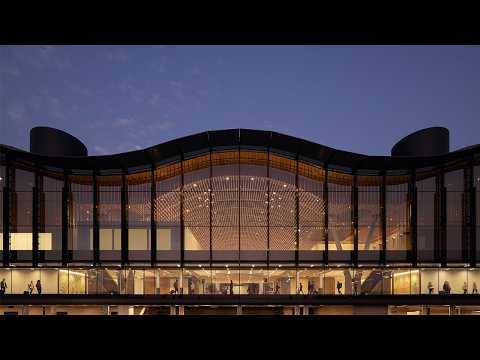
Portland International Airport has undergone a transformative renovation, becoming one of the most beautiful and sustainable airports in the world, showcasing innovative design and local materials while maintaining operational efficiency during construction.
Airports around the world are often celebrated for their stunning architecture and innovative designs. From Singapore's Changi Airport to the Zayed International Airport in the UAE, these hubs of travel are not just functional but also beautiful. Surprisingly, none of the top 20 airports globally are located in the United States, a country known for its aviation history. However, this narrative is changing with the recent transformation of Portland International Airport (PDX) in Oregon.
Portland International Airport has long been recognized as one of America's better airports, but it was in dire need of an upgrade. The original terminal, built in 1956, had expanded over the years into eleven separate buildings, each constructed under different structural and seismic codes. This patchwork design made it challenging to modernize essential features like security checkpoints. Recognizing the need for a significant refresh, the Port of Portland initiated a project that would redefine the airport's infrastructure.
With an investment of over $2 billion, the renovation of PDX is not just a minor facelift; it is the largest public works project in Oregon's history and the largest mass timber project of its kind globally. The goal was to create a terminal that felt accessible and reflective of the natural beauty of the Pacific Northwest, integrating the outdoors into the airport experience.
The design team, led by ZGF Architects, focused on sustainability and local craftsmanship. The new terminal features a stunning wooden ceiling made from Douglas fir timber sourced from within a 300-mile radius of the airport. This approach not only supports local economies but also emphasizes the importance of sustainable building practices. The terminal incorporates over 5,000 plants, including mature trees, and utilizes 49 skylights to maximize natural light, creating a serene environment for travelers.
The biophilic design philosophy was central to the renovation, aiming to lower stress levels and enhance the travel experience. By incorporating natural elements, the airport seeks to create a calming atmosphere, challenging the conventional perception of airports as stressful environments.
One of the most remarkable aspects of the renovation was that PDX remained operational throughout the three years of construction. Managing a live site with 500 flights daily posed significant logistical challenges. Key operations were strategically relocated to allow for the demolition and reconstruction of the terminal while keeping essential services running.
The construction of the new roof was a feat of engineering. It was prefabricated in three massive sections, each weighing between 270,000 and 635,000 kilos. The roof was transported across an active taxiway at a slow pace, ensuring minimal disruption to airport operations. Additionally, the roof's design includes seismic considerations, crucial for an area prone to earthquakes. The roof is engineered to move as a single unit during seismic events, ensuring safety and structural integrity.
The completion of the renovation positions Portland International Airport to double its capacity by 2045, with projections of accommodating 35 million travelers annually. The airport's design reflects the city's unique character, including playful nods to local culture, such as the iconic PDX carpet, which has been preserved and integrated into the new design.
While the first phase of the renovation has been completed, phase two is already underway, which includes the addition of new restaurants, shops, and improved passenger amenities. The goal is to have all construction completed by late 2025, further enhancing the airport's appeal.
Portland International Airport's transformation is a significant milestone in American aviation, setting a new standard for airport design and sustainability. As it strives for recognition among the world's best airports, PDX exemplifies how innovative architecture and thoughtful design can create a beautiful and functional travel experience. This project not only enhances the airport's capacity but also serves as a model for future developments in the aviation industry.