President Trump has publicly criticized ABC News and other mainstream media outlets for biased and false reporting, particularly regarding Iran strikes. He supports FCC Chairman Brendan Carr's efforts to hold broadcasters accountable for operating in the public interest, warning that licenses could be revoked for spreading misinformation. This has sparked debate over media fairness, free speech, and the future of network television.
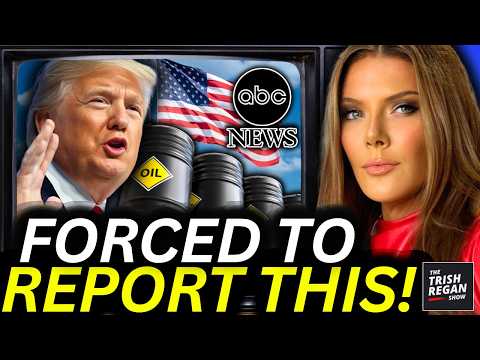
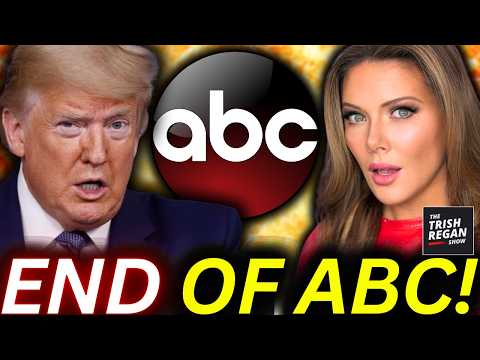
The mainstream media has been under intense scrutiny from President Donald Trump, who has repeatedly accused outlets like ABC News of corruption and biased reporting. This tension escalated over the weekend when Trump openly called out an ABC reporter on his plane, labeling the network as "one of the most corrupt news organizations on the planet."
During a press interaction on his plane, President Trump expressed his frustration with ABC News, describing their questions as obnoxious and their reporting as corrupt. He specifically criticized a female reporter, calling her obnoxious and accusing ABC of being highly biased. This is not an isolated incident; Trump has a history of targeting ABC, which is notable given its association with George Stephanopoulos and a recent $156 million payout related to controversies.
There is an ongoing investigation into ABC and its parent company Disney concerning Diversity, Equity, and Inclusion (DEI) policies. Allegations suggest that these policies may have led to reverse discrimination, where individuals were excluded from roles based on skin color. This controversy adds to the narrative Trump uses to label ABC as corrupt.
Trump took to True Social to express his dissatisfaction with how the media, including ABC, covered the Iran strikes. He accused Iran of media manipulation and the use of AI-generated disinformation to portray false victories. Trump highlighted specific instances, such as fake reports of kamikaze boats and damaged U.S. refueling planes, which he claims were inaccurately reported by outlets like the Wall Street Journal.
He emphasized that the USS Abraham Lincoln aircraft carrier was falsely shown burning, stating it was neither attacked nor damaged. Trump went as far as to suggest that media outlets spreading such false information should be charged with treason.
Brendan Carr, Chairman of the Federal Communications Commission (FCC), has responded to these concerns by warning broadcasters that they must operate in the public interest or risk losing their licenses. Carr’s stance is significant because broadcast networks like ABC, CBS, and NBC operate under FCC licenses, which come with obligations to serve their communities fairly.
Trump and Carr have criticized late-night hosts and political talk shows, accusing them of spreading lies and receiving large salaries despite poor ratings. The threat to revoke licenses has caused panic among legacy media, with some viewing it as an authoritarian move.
Senator Elizabeth Warren condemned the FCC’s license threats as unconstitutional censorship, arguing that the government cannot suppress free speech. Trump countered by citing Supreme Court rulings that clarify broadcasters do not have a First Amendment right to a license and must serve the public interest.
Media analysts have noted that while cable channels like CNN are not regulated by the FCC, local TV stations are, and Carr’s threats primarily target these affiliates. However, legal experts suggest that any attempt to revoke licenses would lead to prolonged court battles.
Despite the threats, many journalists and media organizations have vowed to continue their reporting without intimidation. The Radio, Television, Digital News Association stated that journalists are not scared by government pressure and will keep reporting.
CNN’s CEO Mark Thompson affirmed the network’s commitment to truthful reporting despite White House pressure. However, critics argue that CNN’s access to Iran for reporting indicates a level of cooperation with Iranian propaganda.
Local affiliates of major networks receive programming from their parent companies but hold their own FCC licenses. If the parent company feeds biased or false content, affiliates risk losing their licenses. This dynamic has led some affiliates to reconsider airing certain shows, such as "The View," which has faced criticism and declining ratings.
There is a growing call for legacy broadcasters to return to unbiased, trustworthy journalism that serves the public interest. Recent mergers, such as SkyDance’s acquisition of CBS and Paramount’s interest in Warner Brothers (including CNN), present opportunities for reform.
Industry insiders hope these changes will lead to less partisan reporting and more balanced news coverage. The pressure from the FCC and the Trump administration is seen by some as a catalyst for this potential shift.
President Trump’s public attacks on ABC and other legacy media outlets, combined with FCC Chairman Brendan Carr’s warnings about license renewals, have ignited a fierce debate about media bias, free speech, and the responsibilities of broadcasters. While critics view these moves as authoritarian, supporters argue they are necessary to ensure fair and accurate reporting in the public interest.
The future of network television and broadcast journalism may hinge on how these conflicts unfold, with potential implications for media regulation, journalistic integrity, and the political landscape in the United States.
This ongoing saga highlights the complex relationship between government, media, and the public, underscoring the importance of transparency, accountability, and balanced reporting in a democratic society.