Since Sir Alex Ferguson's retirement, Manchester United has struggled to find consistent success under various managers. This article ranks each post-Ferguson manager from worst to best, analyzing their tenure, challenges, achievements, and the overall impact on the club's fortunes.
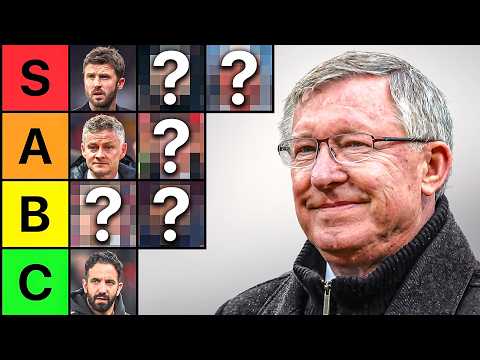
Replacing a legend like Sir Alex Ferguson is never easy. Ferguson's incredible legacy at Manchester United includes 13 league titles, five FA Cups, and two Champions League trophies. However, his successors have struggled to replicate this level of success, with some faring worse than others. This article ranks every Manchester United manager since Ferguson, from the worst to the best, examining their time at the club and their influence on its trajectory.
Ralf Rangnick, hailed as a football genius and the godfather of modern German football, was credited with developing the tactical style that helped Jürgen Klopp's Liverpool win the league. He had success with Schalke and RB Leipzig, making him seem like the perfect candidate for a long-term rebuild at Manchester United.
However, instead of a long-term appointment, Rangnick was hired as an interim manager for the second half of the 2021-22 season. This decision was questionable, as Rangnick had spent most of the previous decade in executive roles rather than on the training pitch.
Rangnick started well, losing only once in his first 10 games. But things deteriorated after a penalty shootout loss to Middlesbrough in the FA Cup and a 1-0 defeat to Atletico Madrid in the Champions League knockout stage. With no trophies to play for and players aware of his impending departure, motivation plummeted.
Manchester United finished the season with just 58 points, their worst Premier League tally at the time. Rangnick's consultancy role was quietly shelved, and his tenure is remembered as a symptom of the club's broader mismanagement.
Rúben Amorim took over mid-season when United was 13th in the league. Despite a brief bounce with a win against Everton, the team suffered six defeats in eight games, including heavy home losses to Bournemouth and Newcastle. Amorim even suggested relegation was a possibility, highlighting the dire state of the squad.
United finished 15th, their worst league finish since the 1970s, and were knocked out of the FA Cup by Fulham. They reached the Europa League final but lost 1-0 to Tottenham Hotspur.
Amorim's tenure was marked by embarrassing defeats, including a Carabao Cup loss to lower-league Gimby Town, and he became a social media meme due to his tactical board. Despite a new strike force and some improvement in the following season, poor results continued, leading to his dismissal.
After Ferguson's retirement in 2013, Manchester United made a critical error by appointing David Moyes, who had never managed a title-chasing club. Moyes was given a six-year contract but struggled from the start, losing key matches and failing to maintain United's high standards.
His signings were poor, and he brought his Everton staff, which did not fit well with United's culture. Early exits from the League Cup and FA Cup, coupled with a poor league run, led to his sacking.
Moyes' tenure is often summarized as bringing an Everton mentality to Manchester United, resulting in a seventh-place finish and a significant decline in the club's fortunes.
Following Moyes, United appointed Louis van Gaal, a manager with a proven track record including Champions League and domestic league titles. Van Gaal inherited a squad in transition, with many Ferguson-era stars aging.
He initiated a major squad overhaul, bringing in players like Ángel Di María, Radamel Falcao, Luke Shaw, and Ander Herrera. Despite a slow start and some embarrassing defeats, United finished fourth in his first season.
Van Gaal's second season saw a stronger start and a climb to the top of the league at one point, but inconsistency led to a fifth-place finish. However, he guided United to the FA Cup final, where they won their first post-Ferguson trophy by defeating Crystal Palace.
Ole Gunnar Solskjær, initially appointed as interim manager, brought immediate positivity with a 5-1 win against Cardiff City and an eight-game winning streak. His tenure was marked by a rollercoaster of form, with periods of unbeaten runs and disappointing losses.
Solskjær's best season was 2020-21, where United briefly topped the league and finished second with 74 points. The team also reached the Europa League final but lost on penalties.
Despite bringing joy and good vibes back to the club, Solskjær struggled to deliver trophies and was eventually sacked after a poor start to the following season.
José Mourinho, known as the Special One, is widely regarded as the best Manchester United manager since Ferguson. He brought immediate success, winning the Community Shield in his first game and securing the League Cup and Europa League in his first season.
Mourinho's teams were hard to beat, going on an extended unbeaten run in the Premier League, but a high number of draws limited their league position to sixth.
In his second season, United finished second with 81 points, the only post-Ferguson season to surpass 80 points. They also reached the FA Cup final but lost to Chelsea.
Despite a poor start to his third season, Mourinho was sacked while United were sixth. His tenure was marked by trophies and competitiveness but also controversy and eventual decline.
Michael Carrick has had a promising start as caretaker manager, showing potential to bring trophies back to Old Trafford. However, it is still too early to determine if he has what it takes to restore Manchester United to its former glory.
Manchester United's post-Ferguson era has been a turbulent journey with managerial appointments ranging from underqualified to highly experienced. While some managers brought trophies and moments of joy, none have matched Ferguson's unparalleled success.
The club's initial decision to appoint David Moyes set a challenging tone for the years that followed. Managers like Mourinho and Van Gaal brought silverware but could not sustain long-term dominance. Rangnick and Amorim struggled amid internal issues and poor squad dynamics.
Ole Gunnar Solskjær rekindled fan optimism but ultimately fell short of delivering major trophies. Now, with Michael Carrick at the helm, there is cautious hope for a brighter future.
The question remains: can Manchester United find a manager capable of restoring the club to its rightful place at the pinnacle of world football? Only time will tell.
What do you think? Is Michael Carrick the man to bring back the glory days, or should the club look elsewhere for its future?