
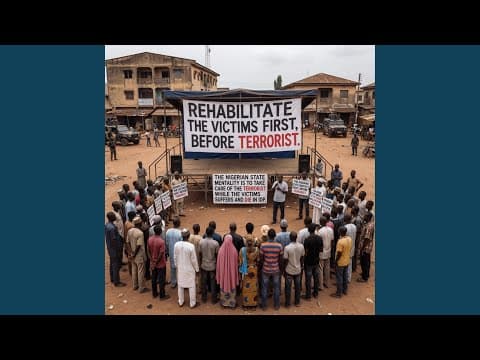
This article highlights the urgent need to prioritize the rehabilitation of victims affected by terrorism, especially those displaced and suffering in IDP camps. It emphasizes restoring farmlands, providing justice, and addressing the humanitarian crisis before focusing solely on combating terrorists, to rebuild communities and bring hope back to the affected regions.
The devastating impact of terrorism extends far beyond the immediate violence. Entire communities are left shattered, homes destroyed, and livelihoods lost. In regions like Maiduguri, the scars of terror are visible not only in the physical destruction but also in the deep emotional and economic wounds borne by the victims. This article explores the urgent need to prioritize the rehabilitation of victims before focusing solely on combating terrorists.
The imagery of burning homes and scattered belongings paints a grim picture of the destruction left behind. Families who once lived peacefully on their farms now find their lands barren and unsafe. The walls that once stood strong have crumbled, turning stories of hope into memories of loss.
Children who grew up in these environments face a harsh reality. Many were born in displacement camps, deprived of the simple joys of childhood and the security of a stable home. Their lives are marked by sorrow and uncertainty, with no place to rest and no safe space to play.
Internally Displaced Persons (IDP) camps have become the reluctant homes for many victims. These camps, meant to be temporary shelters, often lack adequate resources and support. Victims cry out for help, their voices echoing in the silence of neglect.
The pain is compounded by hunger and the inability to return to their farms. Roads once used for farming activities are now dangerous, littered with hidden bombs that prevent any agricultural revival. The soil refuses to yield crops, and farmers are left with nothing but sorrow.
There is a pressing call to rehabilitate the victims first before focusing on the terrorists. This means:
Without addressing these fundamental needs, efforts to combat terrorism may overlook the human cost and fail to rebuild the communities that terrorism seeks to destroy.
Justice remains elusive for many victims. Promises of hope often give way to hardship, and the lack of accountability deepens the wounds. It is crucial to uncover the truth and make the world aware of the suffering endured.
Sharing a common bowl under a dry sky symbolizes the shared pain and resilience of the affected communities. Their stories must be heard, and their rights upheld to restore dignity and hope.
The path to peace and stability lies not only in defeating terrorists but also in healing the victims left in their wake. Rehabilitation efforts must take precedence to rebuild homes, restore livelihoods, and bring justice. Only then can communities rise from the ashes and look forward to a future free from fear and despair.
Rehabilitate the victims first, for in their recovery lies the true victory over terrorism.



















