
This blog post explores the hypothetical scenario of civilization starting over, detailing the emergence of a new society in Oman, its expansion into Mesopotamia, and the subsequent formation of rival nations, highlighting the complexities of governance, rebellion, and exploration.
In this blog post, we embark on a fascinating journey exploring what would happen if civilization were to start over. This scenario has captivated many, leading to the creation of a new series that delves into the intricacies of societal development, governance, and exploration.
Imagine a world where civilization has been wiped out, leaving only a small group of survivors. In this case, we find ourselves in the coastal region of Oman, where a tribe of about 50 people begins to establish a new society. The initial stages of civilization are slow, as the tribe must transition from hunting and gathering to forming a structured community.
As decades pass, the population grows to around 10,000, and the society becomes more organized. They begin to explore their surroundings, utilizing the coast for survival. However, the sandy terrain presents challenges, and the tribe aspires to reach the fertile lands of Mesopotamia, which promise better agricultural opportunities.
Fast forward to a time when this civilization has expanded to the United Arab Emirates, with a population now nearing one million. A centralized government emerges, ruled by a king who is resistant to further expansion into Mesopotamia. This leads to internal conflict, as a significant portion of the population desires to explore and settle in more fertile areas.
The discontent among the populace culminates in a rebellion against the king. The reformist faction, which advocates for expansion, gains overwhelming support, leading to the overthrow of the monarchy. A new government is established, characterized by an aristocratic system where power is shared among a group of elites.
With a new government in place, the civilization sets its sights on Mesopotamia. Upon arrival, they find a land rich in resources and suitable for farming. Over the next few decades, the population continues to grow, and the capital shifts to this new region, marking a significant transformation in their societal structure.
As the civilization flourishes in Mesopotamia, a cultural divide begins to emerge between the original coastal inhabitants and the new settlers. The former rely on fishing, while the latter embrace agriculture, leading to differing ideologies and lifestyles.
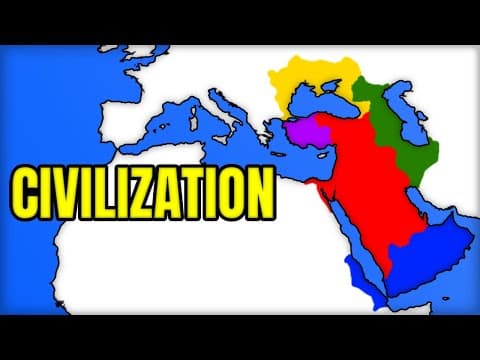
As time progresses, the civilization expands further, reaching the Caspian Sea and the Mediterranean. However, internal strife continues, with factions breaking away to form new nations. One such group, dissatisfied with the central government, declares independence, leading to the establishment of a new territory in Iran.
Meanwhile, the original civilization, now divided into multiple nations, continues to explore. The blue faction ventures into Africa, seeking to establish colonies and expand their influence. This rivalry between nations fosters a competitive spirit, driving each to explore and claim new territories.
As the world evolves, we witness the emergence of four distinct civilizations, each with its own governance and aspirations. The red team focuses on consolidating power in Arabia, while the blue team seeks to dominate the African coast. The yellow team expands into Europe, and the purple team remains a nomadic group, exploring the world without settling in one place.
The red team, despite its size, struggles with organization, leading to further internal conflicts and the rise of new factions. The green team, having gained independence, expands rapidly, highlighting the importance of geography and resources in the survival of nations.
In this reimagined world, we see the complexities of civilization as it evolves from a small tribe to a collection of powerful nations. The interplay of governance, rebellion, and exploration shapes the trajectory of these societies, illustrating the challenges and triumphs of human civilization. As we conclude this first episode of our series, we invite readers to ponder the possibilities of what lies ahead in this new world.



















