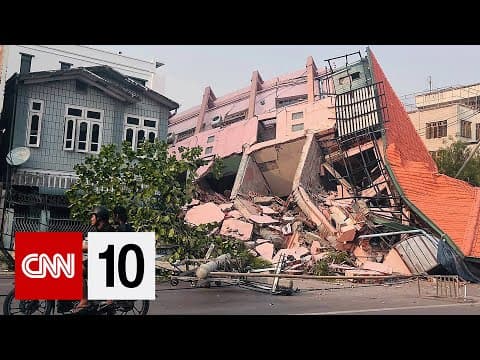
A powerful 7.7 magnitude earthquake struck Myanmar, resulting in significant casualties and destruction, particularly in Mandalay. Rescue operations are ongoing as international aid begins to arrive, but challenges remain due to the country's isolation and ongoing civil conflict.
On March 31, 2025, the world was shaken by news of a catastrophic 7.7 magnitude earthquake that struck Myanmar, leading to a humanitarian crisis of significant proportions. This earthquake, the largest the country has experienced in over a century, has left thousands trapped under rubble and has resulted in a rising death toll.
The earthquake hit Myanmar on Friday, with the epicenter located near the second largest city, Mandalay. As of now, approximately 1,700 people have been confirmed dead, but rescue teams fear that this number will continue to rise as they work tirelessly to locate survivors. The devastation is widespread, with entire neighborhoods in Mandalay reduced to rubble, including homes, historic buildings, and places of worship.
Geologists have described the earthquake as having the energy equivalent to hundreds of atomic bombs. The tremors were felt hundreds of miles away, even reaching the capital of Thailand, Bangkok, where buildings swayed dangerously and some structures collapsed.
Rescue crews are racing against time to free those trapped in the debris. The situation is dire, with many people feared to be buried under collapsed structures. Search and rescue teams are employing sniffer dogs and drones to locate signs of life amidst the chaos. However, as hours pass without finding survivors, hope is dwindling for many families.
In the wake of this disaster, international aid has begun to flow into Myanmar, with assistance coming from countries such as China, Russia, and India. However, aid organizations report significant shortages of medical supplies and resources, complicating the relief efforts. The military government of Myanmar, which has faced criticism for its handling of the civil war and isolationist policies, has made a rare appeal for international assistance.
Myanmar has been grappling with civil unrest and a military coup for several years, which has severely limited its ability to respond to such disasters. The earthquake's timing, coinciding with Friday prayers, has compounded the tragedy, as many mosques collapsed, trapping worshippers inside.
The aftermath of the earthquake is expected to leave parts of Myanmar uninhabitable due to the extensive damage. As rescue operations continue, the focus will also shift to long-term recovery and rebuilding efforts, which will be critical for the impoverished nation.
The earthquake in Myanmar serves as a stark reminder of the vulnerabilities faced by nations already in crisis. As the world watches and responds, the resilience of the Myanmar people will be tested in the coming weeks and months. The need for continued support and aid is paramount as the nation begins to navigate the path to recovery from this devastating event.