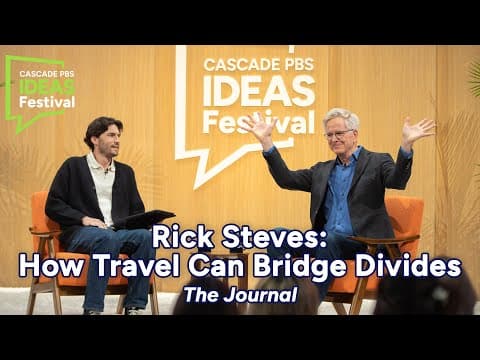
Rick Steves discusses the transformative power of travel in bridging cultural divides, the importance of stepping out of comfort zones, and the need for Americans to embrace global perspectives amidst rising isolationism.
In a recent conversation at the Cascade PBS Ideas Festival, renowned travel expert Rick Steves shared his insights on how travel can serve as a powerful tool for fostering understanding and bridging cultural divides. Moderated by Ryan Knutson, the discussion delved into the paradox of increased travel among Americans alongside a growing trend of isolationism and nativism in the U.S.
Rick Steves, who has been a prominent figure in the travel industry since the 1990s, believes that travel is not just a leisure activity but a political act that can challenge stereotypes and combat xenophobia. He argues that experiencing different cultures firsthand can lead to a more nuanced understanding of the world, which is crucial in today's increasingly polarized society.
Steves shared his personal experiences traveling with children, emphasizing the educational value of exposing them to different cultures. He encouraged parents to consider family trips to Europe, suggesting that such experiences can provide children with a broader perspective that they might not receive in a traditional classroom setting. He humorously advised that if parents are unsure about traveling with young kids, they might as well stop by the grandparents' house on the way to the airport.
Reflecting on his own travels, Steves recounted his journey along the Hippie Trail in 1978, where he packed enough film for just nine photos a day. This starkly contrasts with today's travel culture, where smartphones allow for instant documentation of experiences. He noted that while the physical adventure of travel has changed, the essence of seeking serendipity and stepping out of one's comfort zone remains vital.
Steves categorizes travelers into three groups: tourists, travelers, and pilgrims. He believes that while many Americans default to a tourist mindset, true travel involves a deeper engagement with the world. He encourages travelers to embrace culture shock as a constructive experience that broadens their perspectives.
Despite the rise in Americans traveling abroad—76% have left the country at least once—Steves pointed out a troubling trend of increasing isolationism and nativism in the U.S. He argued that those who travel are often not the ones who need it most, as many Americans remain fearful of the world outside their borders. Steves emphasized that building walls, both literal and metaphorical, only sows seeds of instability and fear.
Steves lamented the current climate of fear that permeates American society, suggesting that it stems from a lack of understanding and exposure to different cultures. He believes that travel can counteract this fear by fostering connections and empathy among people from diverse backgrounds. He stated, "Fear is for people who don't get out very much," highlighting the importance of travel in dispelling misconceptions.
As a public figure, Steves has become more outspoken about his political views, advocating for issues such as the legalization of marijuana and expressing his concerns about the current political climate. He believes that his business's strength allows him to speak freely without fear of alienating customers. Steves noted that many travelers are eager to engage in discussions about politics and culture, which can lead to enriching experiences.
Steves emphasized the need for solidarity in the face of rising autocracy and division within the U.S. He advocates for understanding both sides of the political spectrum, likening the metaphorical walls in American society to the physical walls seen in places like the Holy Land. He encourages travelers to seek out diverse perspectives and engage in meaningful conversations that can bridge these divides.
Rick Steves' insights remind us that travel is more than just a means of escape; it is a vital tool for understanding and connecting with the world. As Americans navigate a complex political landscape, embracing the transformative power of travel can help foster empathy, challenge stereotypes, and ultimately bridge the divides that separate us. Steves' call to action is clear: to travel not just for leisure, but as a means of building a more connected and understanding world.