This blog post explores the complex decision-making process for early retirees regarding Roth conversions and healthcare subsidies, highlighting the financial implications of reported income on healthcare costs and tax liabilities.
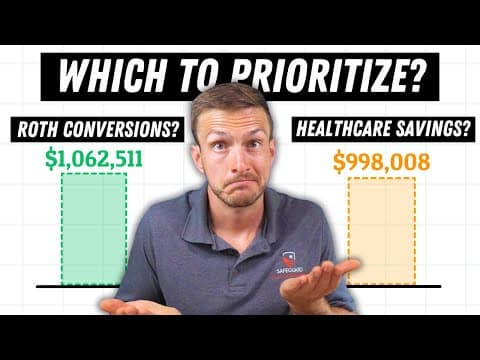
In today's financial landscape, early retirees face a critical decision: whether to prioritize Roth conversions or healthcare subsidies. This choice can significantly impact their financial future, especially when considering the complexities of reported income and its effects on healthcare costs.
Healthcare subsidies are designed to assist individuals in affording insurance through public marketplaces, such as Covered California. These subsidies are contingent on reported income; the lower the reported income, the larger the subsidy. For example, a couple reporting an income of $40,000 may pay only $225 per month for healthcare, while another couple reporting $440,000 pays over $2,000 per month for the same plan. This discrepancy can lead to an annual savings of $23,000, making it a crucial factor for early retirees.
The challenge arises when retirees consider how to manage their income. While living on a lower reported income can yield substantial healthcare savings, it may not be feasible for everyone. Strategic planning allows retirees to withdraw funds from various accounts without significantly impacting their reported income. For instance:
This flexibility enables retirees to maintain a comfortable lifestyle while minimizing their reported income.
As retirees age, they must navigate the implications of required minimum distributions (RMDs) from tax-deferred accounts. These distributions can dramatically increase tax liabilities, often pushing retirees into higher tax brackets. For example, a retiree may enjoy low taxes in the early years of retirement, but RMDs can lead to six-figure tax bills later on. Roth conversions can help mitigate this issue by spreading out tax liabilities over time, but they also increase reported income in the short term.
Retirees often find themselves paralyzed by the decision to prioritize immediate healthcare savings or future tax liabilities. Some may choose to forgo Roth conversions to maintain their healthcare subsidies, while others may opt for higher healthcare costs to avoid future tax burdens.
To illustrate this dilemma, consider a couple who decides not to perform any Roth conversions for the first four years of retirement to maximize their healthcare subsidy. This decision may limit their tax planning options and leave them vulnerable to higher RMDs and associated penalties later on. Conversely, if they initiate Roth conversions early, they may sacrifice immediate healthcare savings but avoid higher tax brackets in the future.
Understanding the healthcare marketplace is essential for retirees. Subsidies are based on a percentage of the federal poverty level, which varies depending on household size. For a single retiree, the federal poverty level is approximately $155,000, while for a couple, it is around $205,000. The contribution towards healthcare premiums increases with reported income, making it crucial for retirees to manage their income strategically.
Currently, the subsidy system is set to change in 2026, reverting to a more complex structure that includes a cost cliff at 400% of the federal poverty level. This means that retirees must plan not only for their current situation but also for potential changes in the subsidy landscape.
To assist retirees in making informed decisions, a two-step process can be employed:
The decision between Roth conversions and healthcare subsidies is complex and highly contextual. Retirees must carefully evaluate their financial situations, considering both immediate healthcare costs and long-term tax implications. By employing strategic planning and utilizing tax crafting tools, retirees can navigate these challenges effectively, ensuring a more secure financial future.
In summary, understanding the interplay between reported income, healthcare subsidies, and tax liabilities is essential for early retirees. With careful planning, it is possible to optimize both healthcare costs and tax strategies, leading to a more comfortable retirement.