This blog post explores the importance of Roth IRA conversions as a strategic tool for minimizing taxes and maximizing retirement benefits. It discusses the risks associated with retirement planning, the impact of taxes, and the advantages of utilizing Roth conversions, particularly in light of recent legislative changes.
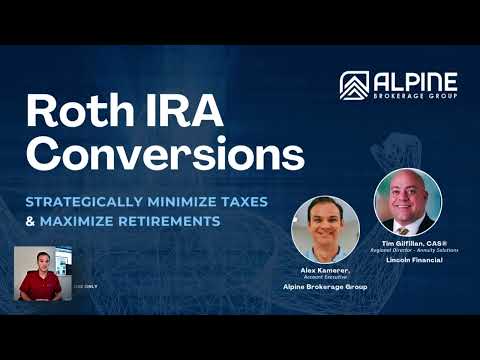
In the journey towards retirement, effective tax planning is crucial. This blog post delves into Roth IRA conversions as a strategic tool that can empower clients to take control of their tax obligations as they approach retirement. With insights from Tim Gilffinland of Lincoln Financial, we will explore the risks associated with retirement planning, the significance of taxes, and how Roth conversions can optimize retirement outcomes.
Retirement planning can be likened to climbing a mountain. The ascent represents the accumulation phase, where individuals focus on growth and returns. However, the descent into retirement requires a shift in focus towards distribution and risk management.
As clients prepare for retirement, they face several unpredictable risks:
Taxes may become the largest expense for retirees. With the national debt rising, there is a growing concern that tax rates may increase in the future. Understanding the current tax landscape is essential for effective retirement planning. Historically, tax rates are relatively low, but with a national debt exceeding $30 trillion, the potential for future tax increases looms large.
Roth IRA conversions present a viable strategy for minimizing tax liabilities in retirement. Here are three key reasons to consider this approach:
Clients have several options when it comes to managing their retirement accounts:
Lincoln Financial has introduced a simplified approach to Roth conversions known as the mirrored Roth conversion. This strategy allows clients to create two contracts—one for their IRA and one for their Roth—enabling them to convert funds between the two accounts flexibly. Clients can choose how much to convert each year and decide whether to pay taxes from the conversion or from their personal funds.
Consider a client with a substantial 401(k) balance of $1 million who wishes to initiate a Roth conversion. By converting $100,000 to a Roth IRA, the client can benefit from tax-free growth and reduce their future RMDs. As the IRA balance decreases, the RMD calculations will also decrease, allowing for more efficient tax management.
Roth IRA conversions offer a powerful strategy for retirees looking to minimize taxes and maximize their retirement benefits. By understanding the risks associated with retirement and leveraging the advantages of Roth conversions, clients can take control of their financial futures. As tax laws evolve, staying informed and proactive in tax planning will be essential for successful retirement outcomes.
For financial professionals, engaging in these conversations with clients can lead to more effective retirement strategies and ultimately help clients navigate their retirement journey successfully.