
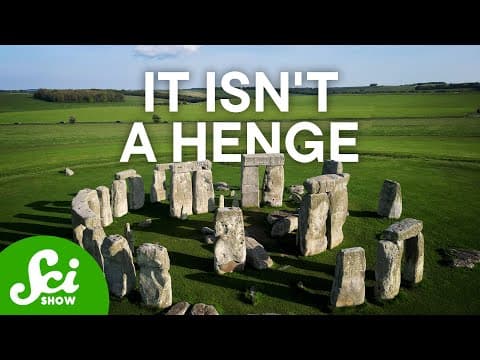
Stonehenge, often misunderstood, is not a true henge but a complex monument with a rich history. This blog explores seven fascinating facts about its construction, the stones, and the people behind it, revealing the ongoing mysteries and discoveries surrounding this iconic site.
Stonehenge is one of the most iconic and mysterious monuments in the world, located in England. For centuries, researchers have been captivated by its origins and purpose. In this blog post, we will explore seven surprising facts about Stonehenge that may change your understanding of this ancient site.
Stonehenge is a ring of giant standing stones, with more than 90 visible stones or stone fragments today. The structure consists of two types of stones: the larger sarsens and the smaller bluestones. The sarsens are made of sedimentary rock, while the bluestones are known for their unique properties. Stonehenge was constructed and used by different peoples over a span of approximately 1500 years, from around 3000 BCE to 1500 BCE.
Despite its name, Stonehenge is not a true henge. A henge is an archaeological term that refers to a circular earthwork with a ditch and an outer bank, typically constructed between 3000 and 2000 BCE. While Stonehenge began as a dirt ring, it evolved into a stone monument, making it more of a "proto-henge." The main ditch of Stonehenge is located outside the earthwork, which sets it apart from traditional henges.
Interestingly, the term "henge" itself is derived from Stonehenge. The word likely comes from the Germanic phrase "stan-hengen," meaning "stone hanging." This term was first documented in a poem from 1792. As archaeologists began to study similar structures, they adopted the term "henge" to describe them, even though it originated from the name of this famous monument.
The fascination with Stonehenge dates back hundreds of years. Early scholars, known as antiquaries, documented their findings about the site. Notable figures include John Aubrey, who created a detailed drawing of Stonehenge in 1666, and William Stukeley, who published observations in 1740. Stukeley was the first to document the alignment of Stonehenge with the summer solstice sunrise.
Charles Darwin, the renowned naturalist, studied earthworms and their impact on soil, including at Stonehenge. He noted that earthworm activity could have contributed to the burial of the stones over time, as they created new soil layers by consuming organic matter and excreting castings. This highlights the interconnectedness of nature and archaeology at this historic site.
Stonehenge has undergone numerous restoration attempts throughout the 20th century. After being privately owned for many years, the land was gifted to the nation of England in 1918 by Cecil Chubb. Restoration efforts included using heavy machinery to restack stones and even pouring concrete to stabilize them. However, these changes have sparked debate among archaeologists about the authenticity of the monument and the need for transparency regarding its alterations.
The bluestones of Stonehenge are particularly intriguing. They were transported from over 200 kilometers away, possibly from a pre-existing stone circle in Wales. Researchers speculate that these stones were chosen for their unique acoustic properties, as they can produce resonant sounds when struck. This raises questions about their significance and the intentions of the builders.
Recent advancements in DNA analysis have provided insights into the people who constructed Stonehenge. Genetic studies suggest that the early builders were likely a mix of Western European hunter-gatherers and Early European Farmers. The arrival of the Bell Beaker culture introduced new dynamics, as they coexisted with the indigenous groups for centuries before merging.
Stonehenge remains a site of intrigue and mystery, with ongoing research revealing new insights into its construction and the people behind it. While many questions remain unanswered, the progress made in understanding this ancient monument is a testament to the power of science and archaeology. As we continue to explore Stonehenge, we uncover not only its history but also the stories of the people who interacted with it over millennia.



















