Shideh Faramand, an Australian-Iranian writer and director, reflects on her personal and family journey from Iran to Australia, exploring themes of hope, cultural identity, and the power of storytelling. She discusses her film 'I Love You, I Miss You, I Kiss You,' which portrays the experiences of a Bahai family fleeing persecution, and highlights the sacrifices made across generations for freedom and choice.
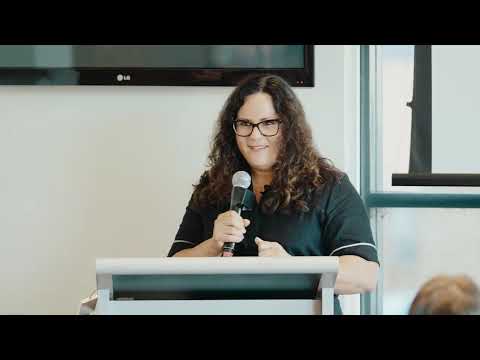
Shideh Faramand, an Australian-Iranian writer, director, cultural creative producer, actor, and mother of four, recently shared her heartfelt journey during a talk that intertwined her personal history, cultural identity, and creative work. Despite having only one hour of sleep after an intense week, she expressed gratitude for the opportunity to connect and share her story.
Shideh began by acknowledging the First Nations people of the land, recognizing them as the original storytellers. She also honored her parents and grandparents, acknowledging their sacrifices and contributions that have shaped her life.
She introduced herself in a way inspired by her friend, filmmaker Katrina Graham, by naming her parents and grandparents, emphasizing the importance of family and heritage in her identity.
A central theme in Shideh's talk was the word "Koorsu," which means "a faint glimmer of hope." She shared that she had never heard this word before and was curious about its meaning. When she asked her parents, they too were unfamiliar with it, as they had left Iran over 40 years ago and language evolves over time.
This concept of a faint glimmer of hope resonated deeply with Shideh, especially as she reflected on the past five to six years of her life, which felt like a constant struggle to keep her head above water. She admitted she had not had the chance to fully sit with or explore the poetic and soulful implications of hope until recently.
Shideh shared the story of her parents' courageous decision to leave Iran. Her mother, who strongly believed in gender equality—a value rooted in their Bahai faith—did not want to raise daughters in Iran. This conviction led them to take an enormous leap of faith and migrate to Australia.
This migration marked the beginning of Shideh's own journey of creativity and cultural understanding. Growing up caught between two cultures, she found her voice through writing, acting, and storytelling, exploring the complexities of identity and belonging.
Shideh is the writer and director of the feature film I Love You, I Miss You, I Kiss You, which is loosely based on her life and the experiences of the women in her family. The film delves into the love and wisdom that connect three generations of women and introduces audiences to a Bahai family fleeing persecution after the Iranian revolution—a story rarely portrayed in feature films.
The narrative reveals the sacrifices and choices made by her grandmother and mother to secure freedom and autonomy for future generations. Shideh emphasizes that beneath the surface of seemingly friendly and hospitable Persian women lies a complex and strategic resilience.
While the film contains elements of a romantic comedy, it transcends genre to offer a profound exploration of family, faith, and freedom.
Shideh Faramand's story is one of resilience, hope, and the power of storytelling to bridge cultures and generations. Through her creative work and personal reflections, she invites audiences to consider the sacrifices made for freedom and the enduring strength found in family bonds.
Her journey reminds us that even a faint glimmer of hope—Koorsu—can illuminate the path forward, inspiring us to keep moving day by day, little by little.