
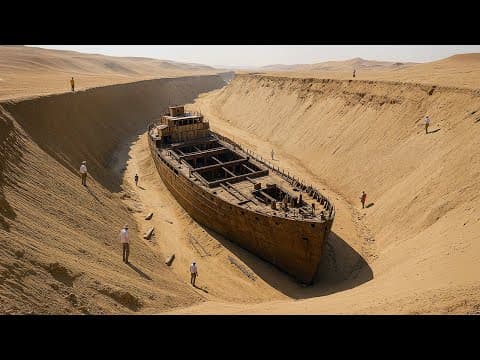
A Portuguese shipwreck, the Bomb Jesus, containing treasures worth over $13 million, was discovered in the Namibian desert after nearly 500 years. The ship, believed to have sunk in the 16th century, was carrying valuable cargo including gold coins, copper ingots, and elephant tusks. This find highlights the historical significance of maritime trade and the mysteries of ancient shipwrecks.
In a remarkable discovery, a shipwreck full of treasures worth over $13 million was found in the Namibian desert, nearly 500 years after it sank. Initially, the worker who stumbled upon the wreck was searching for diamonds but ended up uncovering a significant piece of history.
The find included various artifacts such as blocks of copper, wooden pipes, and elephant tusks. Upon realizing the significance of the discovery, the miners called for an archaeologist who quickly identified the site as a shipwreck rather than a disturbed beach. Evidence pointed to the wreck being that of the Portuguese trading vessel Bomb Jesus, which went missing in the 16th century.
Experts believe that the Bomb Jesus was a special type of ship, larger and stronger than its predecessors from Portugal and Spain. These ships were designed for long voyages to distant lands such as India, China, and Japan, returning with valuable cargo. The Bomb Jesus was likely transporting treasures from Lisbon, Portugal, to western India when it encountered a fierce storm near Namibia. This storm pushed the ship too close to shore, causing it to hit a rock, tip over, and ultimately sink.
Archaeologists have since recovered over 40 tons of cargo from the wreck. Among the most exciting finds were:
DNA samples from the tusks revealed they originated from West African forests and savannah elephants. The shipwreck's location in a restricted diamond mining area helped protect it from scavengers, allowing archaeologists to study it in detail.
The Bomb Jesus is now recognized as the oldest and most valuable shipwreck discovered off the western coast of Sub-Saharan Africa. This discovery adds to the growing list of significant shipwrecks found around the world, each telling a unique story of maritime history.
The Bomb Jesus is not alone in its historical significance. Other shipwrecks have been discovered in various locations, each revealing insights into ancient maritime trade:
While the allure of sunken treasures is strong, recovering them is fraught with challenges. Many shipwrecks are protected by laws that classify them as cultural heritage, making unauthorized recovery illegal. For instance, the SS Central America, which sank in 1857 with a significant amount of gold, led to legal battles over ownership when it was finally discovered.
The discovery of the Bomb Jesus and other shipwrecks serves as a reminder of the rich history hidden beneath the ocean and desert sands. These finds not only provide valuable artifacts but also tell stories of exploration, trade, and the challenges faced by those who sailed the seas centuries ago. As archaeologists continue to uncover these maritime mysteries, we gain a deeper understanding of our past and the intricate web of human history.



















