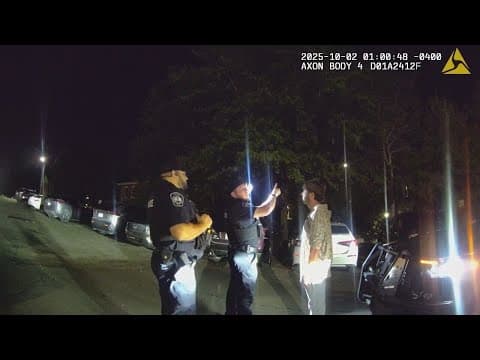
A sober 19-year-old college football player was wrongfully arrested for DUI based on field sobriety tests, raising serious concerns about their accuracy. Despite clean toxicology reports, the athlete faced jail time and lasting consequences. Experts and investigations reveal high rates of false impairment classifications, prompting calls for reform in DUI arrest procedures.
A troubling incident involving a 19-year-old college football player, Mlan Feneran, has brought renewed scrutiny to the reliability of field sobriety tests used by police to determine impairment. Despite being sober at the time of his arrest, Feneran was charged with DUI, spent a night in jail, and now faces lasting repercussions. This case highlights significant issues with how law enforcement interprets field sobriety tests, especially for drug impairment.
Mlan Feneran, a student-athlete at Shorter University in Rome, was involved in a minor accident where he hit a parked car after studying for a midterm exam. He responsibly called the police to report the accident. However, what followed was unexpected and distressing.
Upon arrival, police administered field sobriety tests and a breathalyzer. The breathalyzer showed a zero blood alcohol level, but officers suspected impairment from drugs based on Feneran's performance on the field sobriety tests. Despite his insistence that he neither drinks alcohol nor uses drugs, he was arrested for DUI and spent the night in jail.
Toxicology reports from the Georgia Bureau of Investigation (GBI) later confirmed that Feneran had no illegal or prescription drugs in his system. His blood and urine tests were completely clean. Despite this, the arrest and charge had already caused significant damage.
Feneran expressed his shock and frustration, stating he had never been in such a situation before and that the experience was traumatizing. The DUI charge has since been dropped, but the incident has led him to enter the transfer portal, feeling compelled to leave Shorter University and Rome behind.
Feneran's parents and others have raised serious questions about the reliability of field sobriety tests. If a sober college athlete cannot pass these tests, it suggests a systemic problem.
Channel 2 Action News previously investigated the accuracy of field sobriety tests for drug impairment. Their findings, supported by studies such as one published in the Journal of American Medicine, indicate that officers often misclassify sober individuals as impaired. For example, in one study, officers classified 49% of sober participants as impaired during marijuana-related field sobriety tests.
Joshua A., a former trainer of police officers on field sobriety testing, remarked that the tests can be so subjective that officers might as well flip a coin to decide impairment.
The arresting officer in Feneran's case was disciplined, but not for the wrongful arrest itself. Instead, the discipline was related to deficiencies in report documentation.
The Rome Police Department defended the arrest, stating that the responding officer had sufficient probable cause based on the field sobriety test results. They emphasized that a prosecutor's later decision to dismiss charges does not imply the arrest was improper but reflects a different stage in the legal process.
This case is not isolated. Last month, Channel 2 Action News Investigates revealed that after a 2017 lawsuit, Cobb County police revised their marijuana arrest policy. Now, drivers are released with citations only if marijuana impairment is suspected, and alternative transportation options are provided.
However, other departments, including Atlanta Police and DeKalb County Police, continue to make arrests in marijuana-related cases, indicating inconsistency in enforcement and policy.
The wrongful DUI arrest of a sober college football player underscores the urgent need to reevaluate the use and interpretation of field sobriety tests, especially for drug impairment. With toxicology results often taking months to return, police rely heavily on these subjective tests, which can lead to false arrests and significant personal and professional consequences for innocent individuals.
This case serves as a call to action for law enforcement agencies, policymakers, and the public to demand more accurate, fair, and scientifically validated methods for assessing impairment to prevent similar injustices in the future.