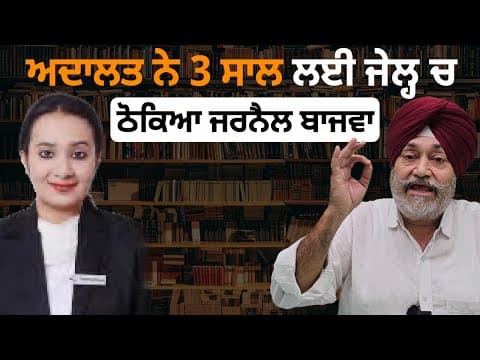
Jarnail Singh Bajwa, a developer associated with Sunny Enclave, has been sentenced to three years in prison for fraud. The case, presided over by Judge Chahat Chhabra, reveals a complex scheme involving false land claims and deceitful agreements with government officials. This blog post explores the details of the case, the fraudulent activities, and the implications for the real estate sector.
In a significant legal development, Jarnail Singh Bajwa, the developer behind Sunny Enclave, has been sentenced to three years in prison for committing fraud. This verdict was delivered by the JMIC court in Kharar on the 19th of this month. Judge Chahat Chhabra's ruling has raised eyebrows due to the shocking nature of the findings against Bajwa, who has been implicated in a large-scale land fraud scheme.
The case revolves around a fraudulent organization that aimed to provide affordable housing to retired government employees. This organization, known as the Government Officials Welfare Organization (GOWO), was led by its chairman, MP Bathla. In 2012, Bajwa approached Bathla with a proposal to start a joint venture to construct 1,500 flats on a claimed 25 acres of land in Harpalpur village.
An irrevocable agreement was established between Bajwa and the GOWO, leading to the formation of a new company named IA Housing Solutions Private Limited (IAHSPL). This company was intended to facilitate the construction of the promised flats. However, as the project was set to commence, Bajwa allegedly misappropriated funds from the GOWO, collecting approximately 2.47 crore rupees (around 2.5 million rupees) through checks under false pretenses.
Bajwa claimed ownership of land in Harpalpur, specifically referencing khasra numbers 17, 18, 20, 21, 22, and 29. However, it was later revealed that the land he claimed did not belong to him. This deception led to significant unrest among the government employees who had invested in the project, believing they would receive flats as promised.
The aggrieved employees escalated their complaints to the then SSP of Mohali, and a copy of their grievance was sent to the DGP of Punjab Police. Despite the complaints lodged on January 12, 2017, no action was taken by the Punjab Police at that time. The employees had initially deposited seven lakh rupees to book 70 flats, but as the situation unfolded, it became clear that the promised flats were never going to materialize.
Judge Chahat Chhabra's judgment, which spans 48 pages, meticulously outlines the fraudulent activities perpetrated by Bajwa. The judge noted that Bajwa's actions were not those of a minor fraudster but rather indicative of a significant criminal enterprise. The court highlighted that Bajwa had even attempted to deceive the court by hiding assets worth 50 lakh rupees.
In the judgment, the judge expressed disbelief at Bajwa's audacity, stating, "You are a dishonest person, attempting to defraud the court as well?" This statement underscores the severity of Bajwa's actions and the court's commitment to upholding justice.
This case serves as a stark reminder of the vulnerabilities within the real estate sector, particularly concerning fraudulent practices. The involvement of government officials in such schemes raises questions about oversight and accountability in real estate transactions. The ruling against Bajwa may pave the way for stricter regulations and increased scrutiny of developers in the future.
The sentencing of Jarnail Singh Bajwa marks a significant moment in the fight against land fraud in India. As the legal proceedings unfold, it is crucial for potential investors and homebuyers to remain vigilant and informed about the legitimacy of real estate projects. The case not only highlights the need for transparency in the sector but also reinforces the importance of legal recourse for those wronged by fraudulent practices.