
This article explores the ten most legendary cavalry forces throughout history, detailing their origins, tactics, and significant battles that highlight their impact on warfare and military strategy.
Cavalry has historically played a crucial role in battles, often serving as the decisive force that determined the fortunes of kingdoms and empires. From the Mongolian plains to the grasslands of medieval Europe, knights and warriors on horseback have excelled due to their swiftness, power, and skill in combat. This article delves into the ten most legendary cavalry troops in history, examining their unique characteristics and contributions to warfare.
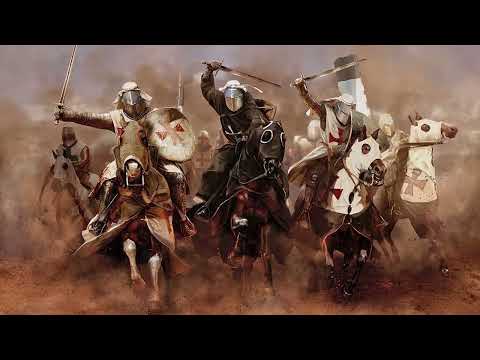
The Knights Templar were one of the most famous military orders during the Middle Ages, founded in the 12th century to protect Christian pilgrims during the Crusades. They were not only warrior monks devoted to their faith but also formidable heavy cavalry. Their fighting discipline, sturdy armor, and trained horses made them an impressive unit on the battlefield. The Templars led devastating charges against enemy armies, particularly in battles against Muslims in the Holy Land. Their shock and awe tactics, centered on coordinated and forceful strikes, disrupted enemy formations and paved the way for victory in many campaigns.
Originating from Hungary in the 15th century, the Hussars became one of the most proficient and feared light cavalry forces in history. They emerged as an agile and strategic force during a time when hand-to-hand combat was evolving. Recognized for their lightness and mobility, the Hussars excelled in skirmishing tactics, ambushes, and lightning-fast attacks. Armed with lances and sabers, and protected by lighter armor than heavier knights, they conducted rapid assaults that encircled and wore down enemy armies. Their pivotal role in battles such as Vienna in 1683 showcased their effectiveness against the Ottoman Empire.
Hailing from the Russian and Ukrainian steppes, the Cossacks became iconic cavalry troops with origins dating back to the 15th century. As nomadic horsemen, they ruled the rugged terrain and became a powerful force in light cavalry combat. Their incredible horse riding skills and knowledge of the terrain allowed them to employ guerrilla tactics, conducting surprise attacks and rapid sieges. The Cossacks played significant roles in various wars, including campaigns against the Ottoman Empire and Napoleon's invasions.
Formed by slave soldiers, the Mamluk cavalry rose to power in Egypt and other parts of the Islamic Empire. Trained from an early age to be elite warriors, they became the backbone of Egypt's military. The Mamluks were adept at using curved swords, spears, and bows, excelling in both hand-to-hand combat and rapid maneuvering tactics. Their major triumph came at the 1260 Battle of Ain Jalut, where they achieved a significant victory against the Mongols, halting their expansion into the Middle East.
The Mongol cavalry was one of the fiercest and most effective fighting forces in history, forming the mainstay of the Mongol Empire during the 13th and 14th centuries. Their incredible mobility, tactical organization, and long-distance combat skills allowed them to seize vast territories across Asia and Eastern Europe. Riding small, sturdy steppe horses, Mongol horsemen conducted surprise attacks and sustained military campaigns. Their overwhelming power was evident in historic battles such as the 1223 Battle of the Kalka River and the 1258 Baghdad invasion.
Under the command of Napoleon Bonaparte, the Napoleonic cavalry became one of the most brilliant and impressive fighting forces of the age. They played a decisive role in conflicts that shook Europe between the late 18th and early 19th centuries. A blend of speed, discipline, and brute force, these elite troops achieved many of Napoleon's most important victories. Organized into heavy, mixed, and light cavalry, they executed sweeping charges and scouting missions, significantly contributing to victories such as the 1805 Battle of Austerlitz.
The samurai on horseback were the military elite of feudal Japan, shaping the country's course for centuries. While known for their swordsmanship, samurai were also highly trained and disciplined mounted warriors. Skilled in using the bow and spear, they practiced kyujutsu, the art of mounted archery, allowing them to hit targets with deadly precision. Their dexterity in firing arrows while in motion made them proficient in long-distance combat, particularly in the rugged terrain of Japan.
Led by Attila in the 5th century, the Hun cavalry was one of the most formidable forces of ancient times. Hailing from the Central Asian steppes, they were experts in mounted combat, renowned for their agility, terror tactics, and archery precision. Riding small but sturdy horses, the Huns could cover great distances quickly, enabling surprise attacks. The Battle of the Catalaunian Fields in 451 exemplified their power, where they nearly defeated a Roman and Visigoth coalition.
Emerging as a light cavalry troop in the late 18th century, the Polish Uhlans became legendary for their battlefield bravery and skills. Outfitted with long lances and sabers, they were known for their speed and smash-and-grab tactics. The Uhlans distinguished themselves in various conflicts, including the Napoleonic Wars, where they played a crucial role in engagements such as the 1808 Battle of Sommeil, breaching Spanish defenses and paving the way for a French victory.
Following the Napoleonic Wars, the Prussian cavalry blossomed into one of the most respected and organized cavalry corps in Europe. Renowned for their strict discipline and innovative tactics, they played a pivotal role in the Napoleonic Wars, particularly at the 1806 Battle of Jena-Auerstedt. Their skill in rapid maneuvering and tactical coordination led to a decisive victory over French forces, cementing their reputation. The Prussian cavalry continued to evolve, incorporating new technologies and combat methods, maintaining its significance in military strategy even as modern warfare emerged.
In conclusion, these ten legendary cavalry forces have left an indelible mark on military history, showcasing the evolution of warfare and the enduring impact of mounted troops on the battlefield.



















