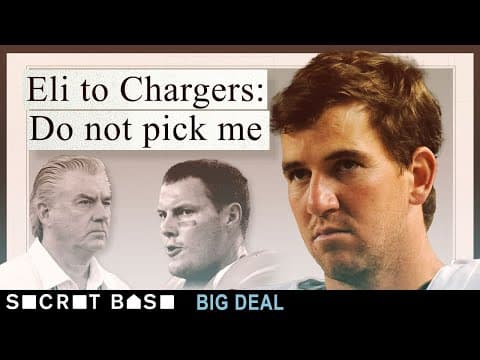
The San Diego Chargers' decision to draft Eli Manning in 2004 was fraught with drama and controversy. Manning's camp expressed a strong preference to avoid the Chargers, leading to a trade with the New York Giants. This blog explores the intricate details of the draft, the motivations behind Manning's reluctance, and the eventual outcomes for both franchises.
The 2004 NFL Draft was a pivotal moment in football history, particularly for the San Diego Chargers and quarterback Eli Manning. As the owners of the number one pick, the Chargers faced a unique situation that would lead to significant drama and controversy. This blog post delves into the events surrounding the draft, the motivations of the key players involved, and the long-term implications for both the Chargers and the New York Giants.
On the night of the draft, the Chargers were in a position to select the top-rated prospect, Eli Manning, out of Ole Miss University. Manning was not just any quarterback; he was the son of former NFL quarterback Archie Manning and the brother of two-time Super Bowl MVP Peyton Manning. With such a pedigree, expectations were high.
However, the situation was complicated. Manning and his camp, which included Archie and agent Tom Condon, made it clear that they did not want Eli to be drafted by the Chargers. They requested that the team pass on selecting him, a request that would soon become public knowledge.
Chargers General Manager A.J. Smith publicly revealed Manning's disinterest in joining the team, which was a significant misstep. Instead of keeping the matter private, Smith's comments opened the floodgates for speculation and drama. The Manning camp, feeling cornered, escalated their stance, with Condon threatening that Eli would sit out the entire season if drafted by San Diego.
This situation echoed a similar incident from 1983 when quarterback John Elway threatened to play baseball rather than join the Baltimore Colts. The stakes were high, and the Chargers were caught in a precarious position.
Archie Manning's own experiences in the NFL played a crucial role in Eli's reluctance to join the Chargers. Drafted second overall in 1971, Archie spent much of his career with the New Orleans Saints, a franchise known for its struggles. Many believed that Archie wanted to protect Eli from a similar fate, fearing that the Chargers, who had a history of poor performance, would not provide a stable environment for his son.
The Chargers had a checkered past with quarterback selections. In 1998, they drafted Ryan Leaf second overall, a decision that would haunt the franchise as Leaf's career quickly flamed out. Additionally, in 2001, they passed on Michael Vick, who went on to have a successful career with the Atlanta Falcons. These past mistakes contributed to the skepticism surrounding the Chargers as a desirable destination for a young quarterback like Eli Manning.
As the draft approached, the Chargers had multiple options. They could trade down to acquire more picks or select another player. Despite the pressure, Smith ultimately decided to stick with the plan and selected Eli Manning with the first overall pick. However, the moment was anything but celebratory. Manning appeared visibly uncomfortable, holding a Chargers jersey with a forced smile, clearly indicating his reluctance to join the team.
The situation took a dramatic turn when the New York Giants selected quarterback Philip Rivers fourth overall and subsequently traded his rights to the Chargers, along with a package of picks. This unexpected development allowed both teams to save face. The Giants secured their desired quarterback, while the Chargers received valuable assets in return.
In the years that followed, the trade proved beneficial for both franchises. Eli Manning led the Giants to two Super Bowl victories, solidifying his legacy as one of the great quarterbacks in NFL history. Meanwhile, Philip Rivers became a reliable starter for the Chargers, helping the team achieve sustained success.
Years later, Smith revealed that executing the trade required a covert operation. He had minimal contact with the Giants leading up to the draft and used strategic leaks to prepare New York for the trade. This maneuvering showcased the complexities of NFL draft negotiations and the lengths to which teams will go to secure their desired players.
Eli Manning, in post-retirement interviews, eventually clarified that his reluctance to join the Chargers stemmed from his perception of the franchise's instability. He wanted to leverage his position to avoid a situation he felt was unfavorable.
The 2004 NFL Draft remains a significant chapter in NFL history, illustrating the power dynamics between players and franchises. As player empowerment continues to grow in professional sports, the events surrounding Eli Manning's draft serve as a reminder of how quickly situations can evolve and the impact of strategic decision-making in the world of sports. The Chargers and Giants both emerged from the draft with their respective quarterbacks, but the drama surrounding Manning's selection will be remembered for years to come.