The 2026 oil crisis, triggered by the US-Israel air campaign against Iran and Iran's subsequent shutdown of the Strait of Hormuz, has caused a 95% collapse in oil shipping through this critical chokepoint. This crisis threatens global energy supplies, food production, and the US dollar's dominance, while reshaping geopolitical alliances and exposing vulnerabilities in global infrastructure and military readiness.
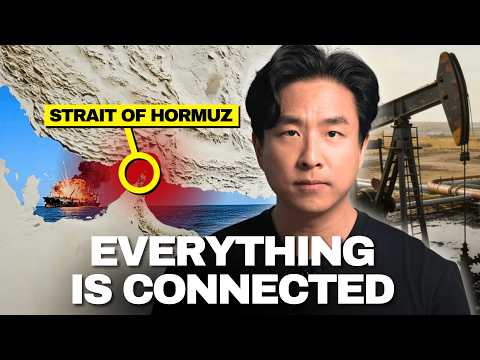
There is a massive oil crisis unfolding in 2026 that is far worse than most people realize. If you drive or shop for groceries, you have likely noticed the sharp rise in gas prices and the looming increase in food costs. This crisis stems from a complex geopolitical conflict centered around Iran and the strategic Strait of Hormuz, a narrow waterway through which about 20% of the world's oil supply passes daily.
In the United States, gas prices have surged from under $3 a gallon to nearly $4 in just a month, with California already exceeding $5.60 a gallon. Diesel prices, critical for trucking and food delivery, have risen over 35%, threatening to increase grocery prices and worsen inflation.
On February 28, 2026, the US and Israel launched the largest coordinated air campaign of the 21st century against Iran, targeting over 7,000 military and nuclear-related sites. Iran's Supreme Leader, Ayatollah Ali Khamenei, was killed on the first day, effectively decapitating the regime's leadership.
However, Iran quickly responded by installing Khamenei's son as the new Supreme Leader and launching a devastating economic and military counterattack. This included firing over 500 ballistic missiles and nearly 2,000 drones at Israel, US military bases, and even neutral countries like the UAE and Qatar.
Iran targeted critical energy infrastructure, including airports and the world's largest liquefied natural gas (LNG) facility in Qatar, which supplies 20% of the global LNG. Qatar suspended LNG production, causing significant disruptions.
The Strait of Hormuz, a 21-nautical mile wide channel between Iran and Oman, is the world's most strategically important oil chokepoint. Approximately 20% of global oil and 25% of LNG pass through this narrow passage daily. Iran declared that no oil would pass through the strait until the conflict is resolved.
The Persian Gulf region holds about 48% of the world's proven oil reserves. Iran alone has 12%, making it the third largest holder globally. Venezuela holds the largest reserves at 17%, but the Persian Gulf remains the critical supply region.
Most Gulf countries export oil through the Strait of Hormuz. Saudi Arabia has a pipeline to the Red Sea port Yanbu, but it cannot fully replace the strait route. Iran has also targeted this alternative route.
Oil became globally strategic after Winston Churchill switched the British Navy from coal to oil before World War I. The first major Middle Eastern oil discovery was in Iran in 1908 by a British company that later became BP.
Iran's oil industry was nationalized in 1951 by Prime Minister Mohammad Mosaddegh, but a CIA and British intelligence coup in 1953 reinstated the Shah, sowing deep mistrust of the West. The 1979 Islamic Revolution further entrenched this sentiment.
Daily, about 100 ships pass through the strait, including 50 tankers carrying 20 million barrels of oil worth over $2 billion. The shipping lanes are only two miles wide each for inbound and outbound traffic, separated by a two-mile buffer.
The US Navy's Fifth Fleet, based in Bahrain, has protected the strait since 1995, alongside a 34-country coalition and naval forces from Japan and South Korea.
Iran has effectively shut down the Strait of Hormuz using three main tactics:
Naval Mines: Iran has 5,000 to 6,000 mines, including contact mines, bottom mines with sensors, and rising rocket-propelled mines. Mines can be deployed easily by small boats and take weeks or months to clear.
Swarm Boats: The Islamic Revolutionary Guard Corps (IRGC) operates fast attack speedboats that swarm ships with machine guns, missiles, and explosive drone boats.
Missiles and Attack Drones: Iran controls islands in the strait with missile launchers capable of firing Mach 3 to 5 missiles, and has tens of thousands of drones costing $20,000 to $35,000 each.
Since late March 2026, at least 20 commercial vessels have been attacked, resulting in deaths and severe damage. Maritime insurance companies have withdrawn war-risk coverage, effectively halting shipping through the strait. Daily traffic has dropped by 95%, stopping Saudi, Qatari, and Iraqi exports.
The US Navy has decommissioned its dedicated minesweeping ships and lacks sufficient combat-tested vessels in the region. Escorting tankers would require massive resources and expose ships to missile and drone attacks in a narrow, heavily mined corridor.
Taking Kharg Island, a key Iranian oil export hub, is feasible but holding it would be perilous and would not reopen the strait due to mines and missile threats.
China is the largest customer of Gulf oil, with 45% of its crude imports passing through the strait. Chinese investments in the Gulf exceed $260 billion.
China has dispatched naval forces and conducted joint exercises with Iran and Russia. Iran continues to export oil to China via a "shadow fleet" of tankers operating outside international systems and US dollar transactions.
This challenges the petrodollar system, as Iran demands payment in Chinese yuan, potentially undermining the US dollar's global reserve currency status.
Gulf Cooperation Council (GCC) countries are pressuring the US for military intervention. The US faces a dilemma balancing defense commitments in Asia and the Gulf.
The crisis exposes the fragility of global supply chains and the interconnectedness of energy, food, water, technology, and geopolitics.
The 2026 oil crisis, sparked by conflict in the Persian Gulf and the closure of the Strait of Hormuz, threatens to disrupt the global economy, food security, and geopolitical stability. The world depends heavily on this narrow chokepoint, and the current conflict reveals vulnerabilities that have been ignored for decades.
As oil prices surge and supply chains falter, ordinary people worldwide face rising costs and insecurity. The reopening of the Strait of Hormuz is critical to stabilizing the global economy and preventing further hardship.
Understanding this crisis requires recognizing the complex interplay of history, energy infrastructure, military strategy, and global finance shaping our modern world.