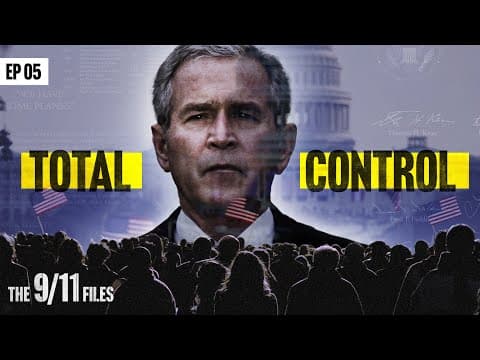
The 9/11 Commission failed to explain how and why the attacks happened, instead protecting the Bush administration and enabling sweeping reforms that expanded government surveillance and detention powers. The CIA's torture program, flawed intelligence, and lack of accountability have left many questions unanswered. The post-9/11 era saw increased budgets for intelligence agencies but also significant loss of life and civil liberties, with winners and losers emerging from the tragedy.
The 9/11 attacks were a defining moment in modern American history, but the official investigation and aftermath have left many questions unanswered and led to profound changes in government power and civil liberties.
The 9/11 Commission was tasked with explaining how and why the attacks happened. However, it failed in this mission and instead protected the Bush administration, which subsequently won a decisive re-election in 2004. The Commission's report included recommendations that led to sweeping reforms, expanding the powers of intelligence and law enforcement agencies that had failed to prevent the attacks.
Some reforms, such as the Patriot Act, were enacted even before the Commission's report was released. These laws allowed extensive surveillance and wiretapping with minimal judicial oversight, including access to business, library, and bookstore records, roving wiretaps, and national security letters enabling the FBI to obtain personal records without court approval.
Kristen Brightweiser, a 9/11 widow and lawyer, emphasized that the attacks could have been prevented since the government had all necessary information beforehand. Instead of accountability, the government expanded surveillance powers, often infringing on constitutional rights.
After 9/11, the CIA transformed from an intelligence-gathering agency into a paramilitary organization focused on capturing or killing threats. Operations in Pakistan involved raids on suspected terrorist safe houses, leading to the detention of many individuals, including some innocent civilians.
Due to overcrowded prisons in Pakistan, detainees were sent to Guantanamo Bay, where hundreds were held indefinitely without formal charges or trials. The CIA implemented a torture program, euphemistically called "enhanced interrogation techniques," including waterboarding, stress positions, sleep deprivation, and confinement in cold cells.
These techniques were authorized by a 2002 Department of Justice memo, despite torture being illegal under U.S. and international law. The CIA operated secret black sites worldwide, often without the knowledge of host country leaders.
Information obtained through torture was often unreliable, with detainees providing false confessions to end their suffering. For example, Khaled Sheikh Mohammed, the alleged 9/11 mastermind, confessed to crimes he did not commit under torture.
In October 2001, psychologists James Mitchell and Bruce Jessen proposed enhanced interrogation techniques to the CIA, which were approved through a chain of legal offices up to the President. This led to the official start of the CIA's torture program.
Guantanamo Bay held up to 780 detainees at its peak, most of whom were never charged with crimes. Vice President Dick Cheney played a key role in denying detainees legal rights.
John Kiriakou, a former CIA counterterrorism officer, became a whistleblower in 2007 by revealing the CIA's torture policies. The government responded harshly, investigating him under the Espionage Act and eventually charging him with multiple felonies. Kiriakou was the only CIA officer to go to prison related to 9/11 disclosures.
The CIA was a major beneficiary of the post-9/11 environment, receiving a massive budget increase and expanded powers. It led paramilitary operations in Afghanistan and Pakistan, providing cash and weapons to anti-Taliban groups.
However, the CIA also failed to capture Osama bin Laden early on and provided false intelligence that led to the 2003 invasion of Iraq. Despite failures, CIA officials often faced no consequences and moved on to lucrative careers in academia, government, and defense contracting.
The FBI's budget and focus shifted dramatically towards counterterrorism and intelligence, reducing resources for traditional crime fighting, including drug enforcement. This shift coincided with the deadliest drug epidemic in American history.
The immediate losers were the 2,977 civilians killed, their families, first responders, and later, thousands of U.S. service members killed or wounded in wars in Iraq and Afghanistan. The American public lost constitutional rights and trillions of dollars with little to show for it.
Winners included political figures like President George W. Bush, who gained historic approval ratings and political victories, and intelligence agencies that received increased funding and power.
Many officials involved in the failures and abuses post-9/11 have enjoyed successful careers and honors, while whistleblowers and victims have suffered.
More than 20 years later, many questions remain unanswered:
A new, honest, and nonpartisan commission with subpoena power and adequate resources could uncover these truths. The American people, especially the families of victims, deserve transparency and accountability.
The 9/11 attacks changed America forever, leading to expanded government powers, controversial policies, and ongoing debates about truth and justice. Understanding the full story is essential for honoring the victims and safeguarding the nation's future.
This article is based on the investigative series "The 9/11 Files," which aims to uncover the truth behind the tragedy and its aftermath.