
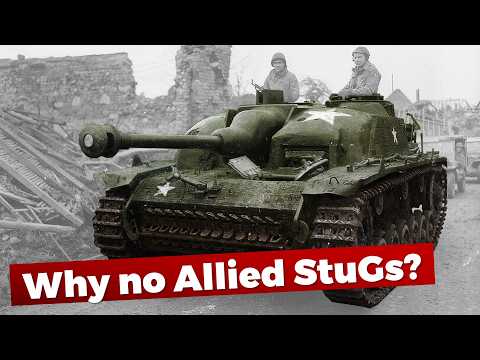
This article explores the reasons behind the limited production of casemated armored vehicles and self-propelled guns by the Western Allies during World War II, contrasting their strategies and production capabilities with those of the Germans and Soviets.
In the context of World War II, the Western Allies, particularly the British and Americans, had a notably lower production of casemated armored vehicles and self-propelled guns compared to their German and Soviet counterparts. This article delves into the reasons behind this disparity, examining factors such as production capabilities, military doctrine, and the urgency of need.
While the British did produce some self-propelled guns, such as the Church Gun Carrier and the Archer tank destroyer, these numbers were minimal. The Americans had even fewer options, with only a single prototype of a converted Stuart tank that was never mass-produced. In contrast, the Germans produced approximately 17,300 Sturmgeschütz (StuG) vehicles and the Soviets over 14,000 SU-76s, highlighting a significant gap in numbers.
One of the primary drawbacks of casemated vehicles is the absence of a turret, which makes them more vulnerable in combat. Without a turret, these vehicles are more prone to being flanked, and their crew must work in concert to adjust the vehicle's position and aim, which can lead to complications during combat.
Firing while on the move is generally not feasible for casemated vehicles, which limits their effectiveness in dynamic combat situations. This was a significant consideration for the Allies, who preferred turreted tanks that allowed for greater maneuverability and firepower.
Despite their drawbacks, casemated vehicles offered certain advantages:
The urgency to produce more firepower was a significant factor for the Germans and Soviets, who faced immediate threats on their fronts. The Western Allies, protected by the English Channel, did not experience the same level of urgency, allowing them to adopt a more strategic approach to vehicle production.
Production capabilities and costs played a crucial role in the Allies' decisions. For instance, the cost of producing a StuG was significantly lower than that of a turreted tank, allowing for quicker deployment of firepower. The Germans capitalized on this by rapidly converting existing chassis into more powerful vehicles.
The military doctrines of the Allies also influenced their vehicle designs. The U.S. focused on mobility and firepower, leading to the development of fast tank destroyers rather than heavy casemated vehicles. In contrast, the Germans prioritized heavy armor and firepower, often at the expense of mobility.
The limited production of casemated armored vehicles and self-propelled guns by the Western Allies during World War II can be attributed to a combination of factors: economic constraints, a lack of urgency due to geographical advantages, and differing military doctrines. While the Allies did produce some self-propelled guns, their overall strategy and production capabilities did not align with those of the Germans and Soviets, resulting in a significant disparity in armored vehicle types on the battlefield.
This analysis highlights the complexities of military production during wartime and the various factors that influence strategic decisions in the face of conflict.



















