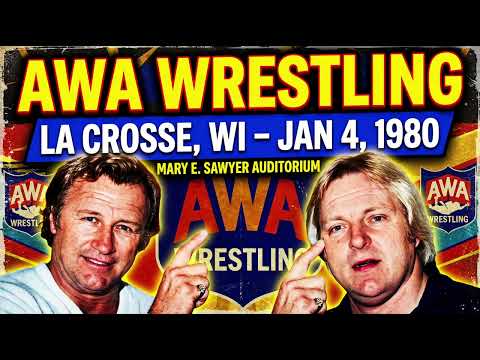
The AWA event in Lacrosse on January 4, 1980, featured strong wrestling action but was marred by multiple non-decisive finishes, including a double countout and a disqualification in the main event. While the tag team match provided a clear winner, the overall lack of definitive conclusions left fans with mixed feelings about the show.
The American Wrestling Association (AWA) held a notable event at the Mary E. Sawyer Auditorium in Lacrosse, Wisconsin, on January 4, 1980. The show attracted a strong crowd eager to witness some of the best wrestling action of the time. However, the night ended with more questions than answers, leaving fans with mixed emotions about the outcomes and the overall experience.
The event kicked off with Buddy Wolf facing Ron Richie. This match set the tone for the evening with a straightforward and decisive victory for Buddy Wolf. Such clean finishes are what fans typically expect to build excitement and momentum early in the card.
Following the opening bout, the audience witnessed a highly anticipated match between Super Destroyer Mark II and Super Destroyer Mark III. Unfortunately, this showdown did not deliver a clear winner. The match ended in a double countout after both masked wrestlers brawled outside the ring, forcing the referee to call the match off.
While one non-finish can be used effectively to build heat and anticipation for future encounters, it also leaves the crowd wanting a more definitive result later in the event.
The middle of the card featured a tag team match that brought some clarity to the evening. Steo and Buck Zumoff secured a solid victory over Jesse Ventur and Bobby Heenan. This win gave the audience at least one satisfying payoff and demonstrated the importance of delivering decisive results to maintain fan engagement.
The main event saw Mad Dog Vashon challenge Nick Bachwinkle for the AWA World Heavyweight title. The match was intense, with Vashon pushing Bachwinkle to his limits. However, instead of a definitive conclusion, Bachwinkle was disqualified, which allowed him to retain the championship but denied the fans a conclusive finish.
This disqualification, combined with the earlier double countout, meant that two of the night's biggest matches ended without clear winners.
As has been discussed in wrestling circles, while fans tolerate disqualifications and countouts occasionally, stacking multiple non-finishes on the same card can be detrimental to a promotion's reputation. Fans want to feel that they received value for their money, and too many ambiguous endings can lead to frustration and decreased confidence in future events.
The AWA's January 4th show flirted with this issue, as the lack of decisive finishes in key matches risked cooling fan enthusiasm.
The AWA event in Lacrosse on January 4, 1980, showcased strong wrestling action and moments of excitement. However, the prevalence of non-decisive finishes, including a double countout and a disqualification in the main event, left the audience with a sense of incompleteness. The tag team match victory by Steo and Buck Zumoff was a highlight that provided some satisfaction.
For wrestling promotions, balancing storytelling with clear outcomes is crucial to maintaining fan interest and business success. This event serves as a reminder of the importance of delivering decisive results to keep audiences engaged and eager for future shows.