
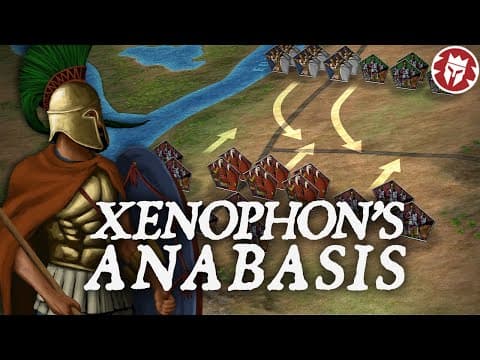
The Anabasis of Xenophon recounts the harrowing journey of Greek mercenaries, known as the Ten Thousand, as they navigate through hostile Persian territory after their patron, Cyrus, is killed in battle. This blog post explores the historical context, key events, and themes of leadership and survival in Xenophon's narrative, highlighting the challenges faced by the Greeks during their retreat home.
The tale of the Anabasis, or the Expedition of Cyrus, is a gripping narrative penned by Xenophon, an Athenian mercenary and historian. This account chronicles the journey of a diverse group of Greek mercenaries who ventured into Persia to support Cyrus in his bid for the throne against his brother, Artaxerxes. However, after Cyrus's death in battle, the mercenaries found themselves stranded in hostile territory, leading to a perilous retreat through the heart of Iran.
Xenophon was not only a historian but also a soldier and philosopher. A student of Socrates, he lived during the tumultuous period of the Peloponnesian War and later became sympathetic to Spartan ideals. His experiences as a mercenary in Persia provided him with a unique perspective, making the Anabasis both a historical account and a personal narrative.
Cyrus, the younger son of Darius, sought to usurp the throne from his elder brother, Artaxerxes. Despite lacking support from the Persian nobility, Cyrus leveraged his connections with Greek mercenaries, who were eager for adventure and riches. This diverse group, known as the Ten Thousand, set out from Sardis in 401 BCE, unaware of the challenges that lay ahead.
The Ten Thousand were not alone; they were joined by various contingents, including Spartan hoplites and Paphlagonian cavalry. However, logistical issues soon arose, leading to tensions within the ranks. As they marched through Cilicia and Syria, the mercenaries faced supply shortages and growing anxiety about their mission.
Upon reaching the Euphrates, the Greeks prepared for battle against Artaxerxes's forces at Cunaxa. The battle commenced with Cyrus leading the charge, but despite initial successes, he was ultimately mortally wounded. The Greeks, unaware of their leader's fate, continued to fight until they learned of his death, leading to chaos and despair among the ranks.
In the wake of Cyrus's death, the Greek generals sought a truce with Artaxerxes. However, they were betrayed by Tissaphernes, who executed them for treason. This treachery left the remaining mercenaries leaderless and desperate, prompting Xenophon to step forward as a new leader.
Xenophon inspired his men to embark on a daring retreat through hostile territories. They faced numerous challenges, including attacks from local tribes and harsh environmental conditions. Despite these obstacles, Xenophon’s leadership and strategic acumen helped the Ten Thousand navigate their way back towards safety.
As the Greeks entered Armenia, they encountered local satraps and faced the treacherous terrain of the mountains. Xenophon’s narrative highlights the hospitality of some Armenians, contrasting with the hostility of others. The Greeks managed to secure provisions and horses, which were crucial for their continued journey.
After enduring months of hardship, the Greeks finally glimpsed the Black Sea, leading to jubilant cries of "Thalatta! Thalatta!" This moment marked a significant turning point in their journey, symbolizing hope and the prospect of returning home.
Upon reaching Paphlagonia, the Greeks faced new challenges, including internal disputes over leadership and strategy. Xenophon’s ability to navigate these tensions was crucial as they sought safe passage back to Greece.
The journey culminated in the Greeks reaching Lampsacus, where they received a warm welcome. However, their adventures were not yet over, as they encountered further political intrigues and military engagements before finally returning to their homeland.
Xenophon’s Anabasis is more than just a military account; it is a profound exploration of leadership, survival, and the human spirit in the face of adversity. Through his narrative, we gain insights into the complexities of ancient warfare, the dynamics of power, and the resilience of those who seek to return home against all odds. The Anabasis remains a timeless tale of adventure and philosophical reflection, illustrating the enduring quest for identity and belonging in a tumultuous world.



















