
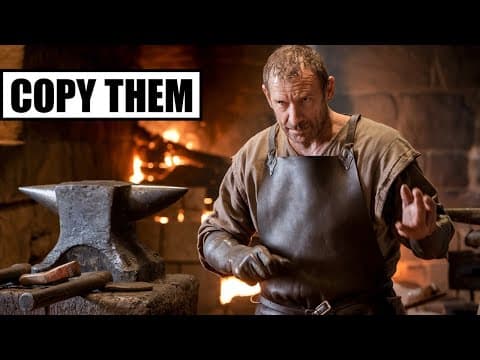
Explore the intricate world of medieval blacksmiths who, without modern tools, forged weapons and tools that shaped history. This post delves into their techniques, materials, and the legacy they left behind.
Imagine a world devoid of modern machines, factories, or advanced technology. In the heart of medieval villages, master blacksmiths forged weapons and tools that shaped the fate of entire kingdoms. This blog post uncovers the secrets of medieval blacksmiths, from selecting the perfect metal to the techniques that made their blades deadly. By the end, you will discover the mystery behind legendary swords that seemed indestructible.
If there was one essential profession in any medieval village, it was the blacksmith. Without them, there would be no tools for farmers, nails for carpenters, horseshoes for knights, or weapons for soldiers. Being a blacksmith was not merely about hammering iron into shape; it was a true art passed down through generations and mastered only by the most skilled artisans.
In small villages, blacksmiths crafted everything from household utensils to iron fittings for doors and windows. In larger cities and castles, specialized blacksmiths focused solely on forging weapons and armor for armies. The path to becoming a blacksmith was long; a young apprentice would start with basic tasks like fueling the forge and organizing materials under the watchful eye of a master. They would gradually learn to shape small objects before finally being allowed to craft larger items, such as blades or tools. This training could take years before they were recognized as master blacksmiths and permitted to open their own workshops.
Beyond manual skill, a good blacksmith needed a deep knowledge of metals. Not all iron was the same, and choosing the wrong type could result in weak tools or ineffective weapons. Experienced blacksmiths could identify the quality of metal just by the sound it made when hammered, a testament to their mastery.
In the Middle Ages, iron was the foundation of nearly every tool and weapon. However, acquiring high-quality metal was no easy task. Unlike today, where refined steel is readily available, medieval blacksmiths had to work with whatever metal they could obtain, often through mining, trade, or repurposing old iron objects.
Most of the iron used in medieval Europe came from bog iron deposits or recycled metal from broken tools and weapons. Bog iron, found in marshy areas, was one of the easiest sources to collect but required extensive refining to be usable. Iron ore had to be mined from deep underground, a process that demanded considerable effort and manpower. Once extracted, raw iron needed to be smelted in a bloomery, a type of furnace that heated the ore with charcoal to separate usable iron from impurities. However, medieval smelting was far from perfect, and the resulting iron was often filled with impurities. Skilled blacksmiths had to refine it further by repeatedly heating and hammering the metal to remove excess slag, a process known as puddling or forging out impurities.
Not all metals were equal, and a blacksmith had to choose carefully depending on what they were forging.
Blacksmiths relied on experience and intuition to determine the quality of their metal, judging by the sound of the hammer against the iron and how it reacted to heat.
Forging metal without modern machinery was a labor-intensive and highly skilled process. Medieval blacksmiths relied on heat, muscle, and experience to shape raw iron into useful tools and deadly weapons. The key to their success lay in their mastery of fire, hammer, and anvil—three essential elements that defined their craft.
The heart of any blacksmith's workshop was the forge, a furnace used to heat metal until it became malleable. Unlike today's industrial forges, which use controlled gas flames, medieval forges relied on charcoal as fuel. Charcoal burned hotter and cleaner than regular wood, making it ideal for reaching the high temperatures needed to work iron. To maintain these high temperatures, blacksmiths used bellows—large hand-operated air pumps that increased oxygen flow to the fire, making it burn hotter.
Once heated, the glowing metal was placed on an anvil and shaped using various hammers and chisels. This process required not only strength but precision. Blacksmiths would repeatedly reheat and hammer the iron, slowly refining its shape with each strike. Different hammering techniques allowed blacksmiths to control the thickness, strength, and flexibility of the final product. Common methods included:
Once the desired shape was achieved, the blacksmith had to harden the metal through quenching—rapidly cooling it in water or oil. This process locked in the shape and increased durability, but if done incorrectly, it could make the metal too brittle.
Before forging mighty swords or armor, blacksmiths had to master the creation of everyday tools. In medieval society, knives, axes, and farming equipment were just as important as weapons, sustaining daily life and keeping communities functioning.
A knife was often the first blade a blacksmith learned to forge. Essential for cooking, crafting, hunting, and self-defense, knives were among the most commonly produced items in a forge. The process involved heating and shaping a small iron or steel bar on the anvil, drawing out the blade to refine its edge, grinding and sharpening the cutting edge, and tempering the blade to balance hardness and flexibility.
Axes were crucial for chopping wood, clearing land, and even as weapons in battle. Unlike knives, an axe head had to be heavier and more robust, requiring careful forging to ensure it wouldn't crack under impact. Blacksmiths would forge a thick wedge-shaped blade, sometimes wrapping and welding the metal to form a socket for the handle.
The survival of medieval villages depended on efficient farming, which meant blacksmiths were constantly making and repairing tools such as plowshares, sickles, and horseshoes. These tools had to be strong but not brittle, requiring the blacksmith to carefully balance hardness and flexibility in the metal.
While blacksmiths crafted countless tools for daily life, their most respected work was undoubtedly the forging of weapons. A well-crafted blade could mean the difference between life and death on the battlefield.
Forging a sword was one of the most complex tasks a blacksmith could undertake. The process required skill, patience, and a deep understanding of metallurgy. Steps included:
Not every soldier carried a sword; many relied on spears and axes, which were easier to produce and just as effective in battle. Spears were relatively simple to forge, while war axes were heavier and often featured a bearded blade designed to hook onto enemy shields or armor.
A sword or tool was only as good as its durability. If a blade was too soft, it would bend or dull easily; if too hard, it could shatter upon impact. Medieval blacksmiths relied on critical techniques of hardening and tempering, perfected through centuries of trial and error.
Quenching was done by heating the metal to a high temperature and then rapidly cooling it. Water quenching resulted in a very hard but brittle blade, while oil quenching made the blade slightly softer but much tougher and less prone to breaking. Blacksmiths could judge the temperature of the metal by its color, a skill that took years to master.
After hardening, the metal was often too brittle for battle. To fix this, blacksmiths would temper it by reheating the blade at a lower temperature and letting it cool gradually, relieving internal stress and making the blade more flexible and impact-resistant.
A blacksmith's success depended not only on skill but also on the quality of their tools. Since there were no factories to mass-produce equipment, blacksmiths had to forge their own hammers, tongs, anvils, and chisels.
A well-made anvil was the foundation of any blacksmith's workshop. Made of wrought iron or steel, its hard surface allowed metal to be hammered into shape efficiently. Medieval anvils often had a flat working surface for general shaping, a horn for bending metal, and a hardy hole for various shaping tools.
Blacksmiths used different hammers depending on the type of work, including cross peen hammers for drawing out metal, straight peen hammers for refining edges, and sledgehammers for large-scale forging. Tongs were essential for handling hot metal, with various types designed to hold different shapes and sizes securely.
Blacksmiths used chisels to cut and engrave metal, punches to create holes for rivets, and files and rasps for smoothing rough edges. Despite the lack of modern precision tools, medieval blacksmiths crafted intricate, functional, and durable items, proving their expertise compensated for the absence of industrial technology.
Throughout history, blacksmithing has been surrounded by mystery and legend. Some techniques were closely guarded secrets, while others have been lost to time, leaving modern historians and metalworkers searching for answers.
One of the most famous lost techniques is the production of Damascus steel, known for its wavy patterns, extreme sharpness, and durability. The exact method for making these swords remains unknown, though historians believe it involved high-carbon steel with unique forging and tempering methods.
A popular myth claims that medieval blacksmiths quenched swords in human or animal blood to give them extra strength. While this may have some basis in reality, the science does not support it. The small amount of carbon in blood would not significantly alter the blade's composition.
Many blacksmithing families passed down their best techniques only through apprenticeships, keeping their knowledge exclusive. Techniques included surface hardening methods, special folding techniques to remove impurities, and secret quenching formulas.
Although medieval blacksmiths worked without modern tools or machines, their influence can still be seen today. Their techniques laid the foundation for modern metallurgy, and their craftsmanship continues to inspire artisans, historians, and industrial metalworkers.
Even in the age of mass production, traditional blacksmithing exists. Many modern blacksmiths use medieval techniques to create handcrafted knives, swords, and tools, studying historical methods to ensure authenticity.
Despite advancements in metalworking, some ancient techniques still surpass modern industrial methods in terms of durability and flexibility. Hand-forged tools and weapons remain highly valued by collectors and martial artists for their strength and authenticity.
The fascination with medieval blacksmithing continues in modern media, from historical documentaries to fantasy shows. The image of a skilled blacksmith forging powerful weapons remains a symbol of strength, craftsmanship, and tradition.
Now that we've explored the techniques and secrets of medieval blacksmiths, we can finally answer the question posed at the beginning: how did they forge powerful weapons and tools without modern machines? The answer lies in their skill, experience, and deep understanding of metalwork. Even without industrial technology, medieval blacksmiths were masters of their craft, and their knowledge continues to shape the world in ways they never could have imagined.



















