
Eric Wolf's analysis of the Atlantic slave trade reveals its profound impact on capitalism and the devastating consequences for African societies, highlighting the complex interplay between European demand for labor and the exploitation of African people.
In this discussion, we delve into the influential works of Eric Wolf and Walter Rodney, focusing on the Atlantic slave trade and its implications for both Europe and Africa. Eric Wolf's book, "Europe and the People Without History," provides a critical lens through which we can understand the origins of capitalism and the human cost of the slave trade.
Wolf posits that America represented the major demand for slaves, while Africa was the primary supply. The 18th century marked a peak in the slave trade, with over 6 million Africans forcibly exported between 1701 and 1810. Despite Britain abolishing the slave trade in 1807, nearly 2 million more slaves were transported from Africa until 1870, primarily to Cuba, a leading sugar producer.
The slaves in the Americas were primarily engaged in the production of cotton, sugar, and tobacco. These commodities were essential to the burgeoning economies of Europe, and the slave trade was integral to their production. The conditions aboard slave ships were horrific, with individuals packed tightly together, leading to significant loss of life during transport.
Initially, European traders, particularly the Portuguese, sought gold and spices in West Africa. However, as the Industrial Revolution gained momentum in the late 18th century, the focus shifted to slave labor to support the agricultural demands of cotton production. The labor-intensive nature of cotton agriculture necessitated a large workforce, which was met through the enslavement of Africans.
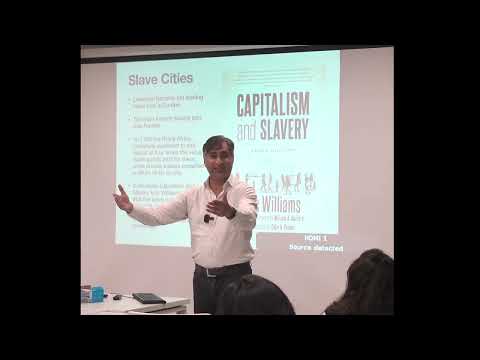
The competition among European powers for control of the slave trade intensified, with England emerging as a dominant force. Between 1701 and 1810, England exported over 2 million slaves from West Africa, accounting for two-thirds of the total slave trade. This trade led to the establishment of slave cities, particularly Liverpool, which became the leading slave port in Europe due to its proximity to the industrial heartland of Lancashire.
Wolf's analysis raises critical questions about the nature of capitalism. While capitalism is often associated with wage labor, the transatlantic slave trade relied on a different model. The labor of enslaved Africans was essential to the production processes that fueled the Industrial Revolution. Eric Williams, in his work "Capitalism and Slavery," argues that the wealth generated from the slave trade was crucial for England's industrial growth.
The slave trade was not only profitable for individual traders but also for governments, which became increasingly involved in regulating and facilitating the trade. The Royal African Company, for instance, expected significant returns on investments in slave trading, highlighting the lucrative nature of this horrific enterprise.
The majority of enslaved Africans were transported to Brazil, which received 42% of the total slave shipments during the 17th century. Spanish America and the British and French Caribbean also received significant numbers of slaves. The shift in the sources of slaves over time saw West Africa become the primary supplier, with devastating effects on local populations.
Slavery has a long history, predating the Atlantic slave trade. European nations had previously supplied slaves to Muslim and Byzantine empires. However, the scale and brutality of the Atlantic slave trade were unprecedented, leading to significant demographic and social changes in Africa.
In Africa, the capture and enslavement of individuals were often facilitated by existing social structures. Mechanisms such as pawnship, warfare, and judicial separation were used to obtain slaves. The introduction of firearms by Europeans altered the balance of power among African states, leading to increased warfare and the capture of individuals for the slave trade.
The consequences of the slave trade for African societies were catastrophic. Large portions of the population were enslaved, leading to demographic collapse in many regions. The social and political structures of African societies were fundamentally altered, with some states becoming heavily reliant on the slave trade for their economic and political power.
While the Europeans played a significant role in organizing the slave trade, many African leaders and groups also participated in the capture and sale of their fellow Africans. This collaboration often strengthened existing states and led to the formation of new political entities centered around the slave trade.
Eric Wolf's examination of the Atlantic slave trade reveals the complex interplay between European capitalism and the exploitation of African people. The legacy of this trade is a stark reminder of the human cost of economic development and the profound impact of historical injustices that continue to resonate today. Understanding this history is crucial for addressing the ongoing consequences of colonialism and slavery in contemporary society.



















