
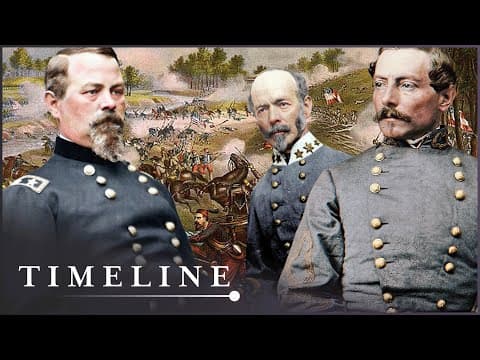
The Battle of Bull Run, also known as Manassas, marked the first major confrontation of the American Civil War, revealing the harsh realities of war and the deep divisions within the nation. The battle showcased the romanticized notions of warfare held by many, particularly in the South, and set the stage for a long and brutal conflict that would reshape the United States.
The American Civil War, ignited by deep-seated ideological differences, reached a critical juncture with the events surrounding Fort Sumter in April 1861. The surrender of this fort marked the end of any hope for a peaceful resolution between the Union and the newly formed Southern Confederacy. As the nation prepared for war, it became clear that the conflict would not be against a foreign enemy but rather a battle within its own borders, fundamentally challenging the future of the United States.
In the South, the outbreak of war was met with a wave of nationalism and romanticism. Young men flocked to enlist in local militias and the Confederate Army, driven by a belief that they were fighting for their way of life against what they perceived as an oppressive North. This romanticized view of war, however, was starkly contrasted by the industrial realities of the time, which the South largely underestimated.
In the North, the firing on Fort Sumter galvanized public sentiment. Many who were previously ambivalent about secession now rallied around the Union cause, viewing the conflict as a fight against treason. The North's response was swift, with men rushing to enlist in the Union Army, driven by a sense of duty to preserve the nation.
As the war unfolded, Virginia emerged as a crucial state for the Confederacy, providing significant resources and strategic advantages. However, not all Virginians supported secession; many from the western part of the state sided with the Union, leading to the creation of West Virginia. Similarly, Maryland's loyalty was vital for the Union, as it controlled key transportation routes. President Lincoln took measures to ensure Maryland remained in the Union, deploying federal troops to suppress any secessionist sentiments.
The conflict forced many individuals to grapple with their loyalties. Robert E. Lee, a prominent military figure, faced a personal crisis when offered command of Union forces. Ultimately, his loyalty to Virginia led him to join the Confederate Army, highlighting the complex nature of allegiance during the war.
Both sides entered the war with the belief that it would be short-lived, expecting quick victories. This misconception led to the recruitment of soldiers for only 90 days, as many believed they would return home shortly after a decisive battle. However, the reality of war was far more brutal and protracted than anticipated.
On July 21, 1861, the Union and Confederate armies faced off at Bull Run, known as Manassas in the South. Initially, the Union forces gained the upper hand, pushing back Confederate lines. However, the arrival of reinforcements under General Thomas "Stonewall" Jackson turned the tide of the battle. Jackson's troops held firm, earning him the legendary nickname as they stood like a stone wall against the Union advance.
As the battle progressed, the Confederate forces launched a counterattack, leading to a chaotic retreat of Union troops, famously referred to as the "Great Skedaddle." The battle resulted in approximately 4,500 casualties, a staggering number that foreshadowed the immense bloodshed to come in the war.
The outcome of Bull Run shocked both the North and the South, dispelling any illusions of a quick resolution to the conflict. The Union's defeat led to a reevaluation of military strategies and highlighted the need for better organization and leadership. In the South, the victory brought a sense of overconfidence, yet it also revealed the disorganization within their ranks.
The battle underscored the harsh realities of war, as both sides faced the grim prospect of a long and bloody conflict. The political and military leaders began to understand that the war would not be won in a single engagement but would require sustained effort and sacrifice.
The Battle of Bull Run marked a significant turning point in the American Civil War, illustrating the complexities of loyalty, the harsh realities of warfare, and the deep divisions within the nation. As both sides braced for the challenges ahead, the war would continue to evolve, leading to further bloodshed and a struggle for the very soul of the United States.



















