
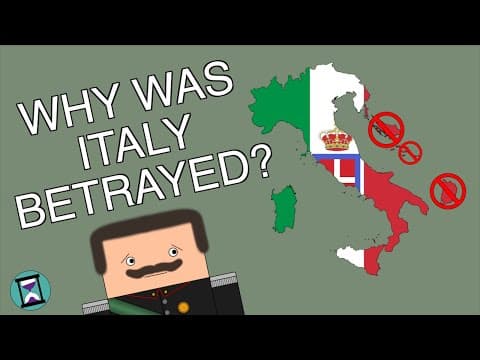
After World War I, Italy felt betrayed by the Entente powers due to unfulfilled territorial promises made in the Treaty of London. This blog post explores the reasons behind Italy's disappointment, including the collapse of Austria-Hungary, the rise of Yugoslav nationalism, and the differing interests of the Entente powers.
Italy's experience after World War I is often characterized by a profound sense of betrayal. Despite the sacrifices made and the promises received, Italy found itself receiving far less than expected. This blog post delves into the reasons behind this disillusionment, examining the political landscape of the time and the decisions made by the Entente powers.
In 1915, Italy was firmly neutral while the First World War raged across Europe. Both the Allied and Central Powers recognized that securing Italy's support could open a new front and stretch their enemies' resources. Consequently, the Entente powers sought to bribe Rome into joining their cause.
The culmination of these negotiations was the Secret Treaty of London, where Britain, France, and Russia agreed to honor Italy's claims to territories in the Adriatic. The treaty outlined several key points:
The Italian government was enthusiastic about these promises, as they aligned with Italy's ambitions of becoming a major Mediterranean power.
However, the landscape changed dramatically by the end of the war. Italy's expectations were dashed for several reasons:
One of the primary reasons Italy received little in Anatolia was the collapse of the Ottoman Empire. The newly formed Turkish Republic successfully resisted attempts to carve up its territory, leaving Italy with nothing.
The Treaty of London had been predicated on the assumption that Austria-Hungary would remain a viable entity. As the war progressed, it became clear that the empire was disintegrating. This shift forced the Entente powers to reconsider their commitments to Italy.
Serbia's demands for territory grew significantly, and the aspirations of the Slavic peoples in the region complicated matters further. The idea of Yugoslavism emerged, advocating for the unification of South Slavic peoples into a single state. This movement posed a threat to Italy's ambitions in the region, as annexing these territories would likely lead to dissent and conflict.
Britain, France, and the United States had differing views on Italy's role in the post-war settlement. Britain was relatively indifferent to the Adriatic region, while France saw an opportunity to expand its influence with the establishment of Yugoslavia. France was particularly concerned about Italy controlling access to the Adriatic, which would undermine its new ally.
The United States, under President Woodrow Wilson, championed the principle of self-determination. Wilson did not sign the Treaty of London, which meant that the commitments made to Italy were not binding in his eyes. As a result, Italy received minimal concessions in the Adriatic and only minor adjustments in Africa.
The outcome of the post-war negotiations left Italy feeling betrayed and resentful towards the Entente powers, particularly Britain, France, and the United States. The unfulfilled promises and the shifting political landscape contributed to a sense of injustice that would have lasting implications for Italy's future.
In conclusion, Italy's experience after World War I serves as a poignant reminder of the complexities of international agreements and the often unpredictable nature of geopolitical dynamics. The betrayal felt by Italy not only shaped its post-war policies but also influenced its role in subsequent global conflicts.
Special thanks to the patrons who support this content, including James Banet, Kelly Money Maker, Sky Chappelle, and many others who contribute to the ongoing exploration of history and its lessons.



















