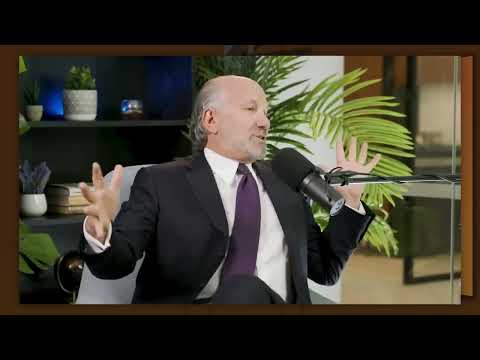
The Bitcoin Strategic Reserve Fund is viewed as a potential land grab rather than a genuine financial initiative. The U.S. balance sheet, valued at $500 trillion, holds significant land and mineral resources that could be monetized. The discussion highlights the implications of Bitcoin's limited supply and the challenges of leveraging it for real asset acquisition.
In recent discussions surrounding the Bitcoin Strategic Reserve Fund, a troubling narrative has emerged. This initiative is not merely about Bitcoin; it is fundamentally about a land grab. Understanding the implications of this fund requires a closer examination of the U.S. balance sheet and the potential monetization of its vast resources.
According to Howard Lutnick, who runs Cantor Fitzgerald and has insights into the back office of Tether, the U.S. balance sheet is estimated to hold around $500 trillion in land and mineral resources. This staggering figure raises questions about how these assets can be monetized or privatized. The ongoing discussions suggest various schemes aimed at leveraging these resources for financial gain.
In a notable encounter, the speaker recounts a meeting with Elon Musk in Brownsville, Texas. During their two-hour conversation, the idea of creating a "Department of Doge" was humorously proposed. This department, intended to enhance government efficiency, reflects the innovative spirit that Musk embodies. The light-hearted exchange underscores the importance of engaging with influential figures in the capitalist landscape.
The core of the discussion revolves around the asset value of the United States. With a valuation of $500 trillion, the question arises: can a quarter of a percent return be generated from these assets? The speaker emphasizes that while the U.S. holds significant land and mineral wealth, the challenge lies in effectively utilizing these resources to generate revenue.
As the global economy approaches a critical juncture, the concept of collateral fraud becomes increasingly relevant. The speaker argues that a reset of the financial system is imminent, and the key issue will be determining who owns the real assets. The land and resources in the U.S. represent a wealth of opportunity, but the question remains: how can these assets be acquired?
The conversation touches on the potential for Bitcoin to be sold into the reserve, allowing for tax-free reinvestment into real estate. This strategy, reminiscent of the 1031 exchange proposed by President Kennedy, could facilitate the acquisition of valuable land and properties. The speaker suggests that this approach could lead to generational wealth creation.
However, a significant challenge looms over the Bitcoin Strategic Reserve Fund. The limited supply of Bitcoin, capped at 21 million coins, poses a problem for those seeking to leverage it for real asset acquisition. The speaker warns that attempting to hijack Bitcoin for this purpose could complicate the financial landscape, making fraudulent activities more difficult to execute.
The Bitcoin Strategic Reserve Fund raises critical questions about the future of asset ownership and financial systems. As discussions continue, it is essential to consider the implications of monetizing the U.S. balance sheet and the role of Bitcoin in this complex equation. The potential for a land grab, coupled with the challenges of limited cryptocurrency supply, paints a picture of a rapidly evolving financial landscape that warrants close attention.