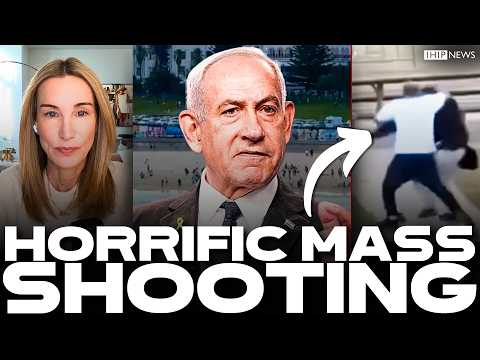
The Bondi Beach mass shooting during a Hanukkah celebration tragically killed 15 people, including children and a rabbi. The attack, carried out by a father and son, highlights rising hatred and extremism. Israeli Prime Minister Netanyahu controversially blamed Australia's recognition of Palestinian statehood. Amidst the tragedy, a Muslim immigrant heroically disarmed a shooter, challenging divisive narratives and emphasizing shared humanity.
Over the weekend, a Hanukkah celebration at Bondi Beach, Australia, was marred by a horrific mass shooting that claimed the lives of 15 people, including children, a rabbi, and innocent bystanders. This tragedy has cast a dark cloud over the Jewish community and raised urgent questions about rising extremism, hatred, and the political narratives that often follow such events.
Jewish Australians gathered to celebrate Hanukkah, a time of joy and reflection, when the attack occurred. The shooters were identified as a father and son, a detail that underscores the generational breeding of hate. The victims included children and a rabbi, highlighting the indiscriminate nature of the violence.
The incident is a stark reminder of the increasing prevalence of mass shootings and targeted attacks based on identity. The Jewish community, already burdened by the historical shadow of the Holocaust, now faces renewed threats simply for their faith and heritage.
The attack is part of a broader pattern of escalating hatred and violence targeting various groups. There has been a noticeable increase in antisemitism, racism, and Islamophobia globally. The challenge lies in addressing these issues without falling into binary choices that pit one group against another.
The generational aspect of the Bondi Beach shooters reflects a disturbing trend where hatred is passed down, perpetuating cycles of violence and discrimination. This phenomenon is not limited to antisemitism but extends to cruelty inflicted on Muslims, LGBTQ+ individuals, and others who are perceived as different.
Immediately following the shooting, Israeli Prime Minister Benjamin Netanyahu responded by blaming Australia's recognition of Palestinian statehood for fueling antisemitism. He stated:
"Your call for a Palestinian state pours fuel on the anti-semitic fire. It rewards Hamas terrorism. It emboldens those who menace Australian Jews and encourages the Jew hatred now stalking your streets. Antisemitism is a cancer. It spreads when leaders stay silent. It retreats when leaders act."
This response sparked significant controversy. Critics pointed out that Netanyahu himself is implicated in policies that have led to the targeting and killing of Palestinian children, actions described by some as intentional and genocidal. The narrative that frames Palestinians solely as terrorists ignores the humanity of many who simply seek to live peaceful lives.
The binary choice often presented—either fully supporting Israel or being labeled as supporting terrorism—oversimplifies a complex conflict and alienates those who seek justice and equality for all.
Amid the horror, a remarkable act of bravery emerged. Ahmed al Ahmed, a 43-year-old Muslim immigrant and fruit stand owner, tackled one of the shooters, wrestled the gun away, and risked his life to save others. Despite being shot twice, his quick and courageous response prevented further loss of life.
Initially, some political figures, including Netanyahu, attempted to portray Ahmed as Jewish to fit a particular narrative of heroism. However, it was confirmed that Ahmed is Muslim, challenging attempts to co-opt his heroism for divisive purposes.
Ahmed's actions serve as a powerful reminder that heroism transcends religious and ethnic boundaries. His courage exemplifies the shared humanity that is often overshadowed by political and ideological conflicts.
The Bondi Beach shooting and its aftermath highlight the urgent need to move beyond divisive narratives. Hatred and violence against any group ultimately threaten the safety and dignity of all.
Acknowledging the pain and fears of the Jewish community is essential, especially given their historical experiences with antisemitism. At the same time, recognizing the humanity of Palestinians and other marginalized groups is crucial to fostering peace and justice.
The cycle of hatred, fueled by extremist ideologies and political agendas, must be broken. This requires empathy, understanding, and a commitment to equality and human rights for all.
The Bondi Beach mass shooting was an extreme act of terror that devastated a community during a sacred holiday. The heroic intervention of Ahmed al Ahmed offers hope and a model for courage and solidarity.
However, the political responses and attempts to frame the tragedy within narrow, binary narratives reveal the complexities and challenges in addressing such incidents. Moving forward, it is imperative to reject hatred in all its forms and to embrace a vision of shared humanity that transcends divisions.
As we reflect on this tragedy, let us honor the victims, celebrate the heroes, and commit ourselves to building a world where no one is targeted for their identity and where peace and justice prevail for all communities.
This article aims to provide a comprehensive understanding of the Bondi Beach shooting, the societal and political reactions, and the broader implications for combating hatred and fostering unity.