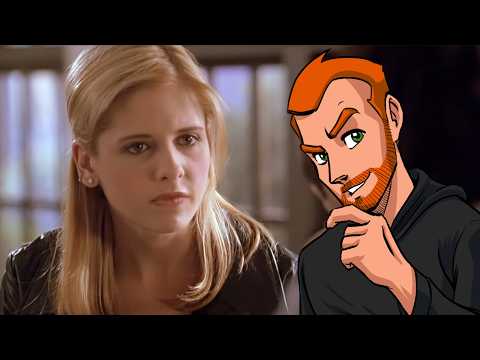
The Buffy reboot was cancelled primarily because the leaked pilot script was poorly written, lacking the original's wit and character depth. Buffy Summers appeared only briefly, and the new storyline felt disconnected from the beloved original. Additionally, the script's heavy use of feminist buzzwords and a corporate setting for Buffy alienated fans. Disney's cautious approach and internal challenges also contributed to the decision.
The much-anticipated reboot of the iconic series Buffy the Vampire Slayer was recently cancelled, and the reasons behind this decision have become clearer following the leak of the pilot script online. Fans and critics alike have expressed disappointment with the script, citing several key issues that likely led to the project's demise.
The leaked pilot script, written by Nora and Lila Zuckerman rather than the original creator Joss Whedon, has been widely criticized for its poor quality. The dialogue was described as awful, with characters lacking three-dimensional depth and the script itself feeling very low energy. Unlike the original series, which was known for its clever wit and engaging storytelling, this script came across as bland and reminiscent of uninspired fanfiction.
One notable change was the inclusion of mild swearing, a departure from the original series' tone. While many franchises have embraced more mature language in recent years, this shift did not seem to enhance the script's appeal.
The reboot, titled Buffy New Sunnydale, focused primarily on a new cast of characters, especially the new Slayer named Nova. Buffy Summers herself only appeared in the very last scene, delivering a single line of dialogue. In this cameo, Buffy was portrayed as having retired from her Slayer duties and working a corporate office job under the name "An." This portrayal of Buffy as a disillusioned, corporate employee was met with dismay by fans who expected the titular character to be front and center.
The script also introduced the idea that Buffy was more of a myth or urban legend, with some characters doubting the existence of vampires and the Slayer. This approach suggested that Buffy would have a larger role in subsequent episodes, but since only the pilot was filmed, this never came to fruition.
The depiction of Buffy as a world-weary, retired hero living a mundane life draws parallels to other recent franchise reboots. For example, Star Trek: Picard features Captain Jean-Luc Picard as a disillusioned admiral living in retirement, and the recent Star Wars films portray Luke Skywalker as a hermit who has lost faith in the Jedi Order. This trope of the fallen hero has become somewhat clichéd and was seen as a lazy narrative choice for Buffy.
The pilot script contained several references to feminism and solidarity, using buzzwords that many viewers have grown tired of. One particular exchange highlighted in an article from cosmicbooknews.com involved a character accusing another of "trying to weaponize my feminism against me." Such dialogue was perceived as heavy-handed and detracted from the storytelling.
This aspect of the script led some to speculate that the reboot was "too woke," which may have influenced Disney and Hulu's decision not to move forward with the series. The timing coincides with Disney scaling back some of its diversity, equity, and inclusion (DEI) initiatives, further complicating the reboot's prospects.
Sarah Michelle Gellar, who originally portrayed Buffy, reportedly blamed an executive involved in the reboot who was not a fan of the original series and openly admitted to not having watched it in its entirety. This lack of enthusiasm and understanding from leadership likely contributed to the reboot's struggles.
Additionally, the pilot episode is a critical test for studios to decide whether to greenlight a full series. If the pilot does not meet expectations, it is common for projects to be cancelled. In this case, the combination of a weak script, poor character focus, and internal studio challenges made the decision to cancel the reboot unsurprising.
The television industry is evolving, with audiences becoming less tolerant of mediocrity. Studios like Disney, which owns the rights to Buffy and Hulu, are becoming more cautious about which projects they support. The failure of the Buffy reboot reflects a broader trend where studios prioritize quality and fan engagement over simply reviving popular franchises.
Ultimately, the Buffy reboot was not a good idea without the involvement of Joss Whedon, whose unique vision and writing style were integral to the original show's success. The reboot's attempt to modernize the series by sidelining Buffy and focusing on new characters, combined with a script filled with uninspired dialogue and clichéd tropes, alienated fans and failed to capture the spirit of the original.
Buffy the Vampire Slayer was a show that resonated with a particular generation during the late 1990s and early 2000s. While reboots can sometimes breathe new life into beloved franchises, this attempt did not meet the mark. The cancellation of the reboot was likely the right decision to preserve the legacy of the original series.
Readers are encouraged to share their thoughts on the reboot and its cancellation, reflecting on what made the original Buffy series special and what they hope to see in future adaptations or continuations.