
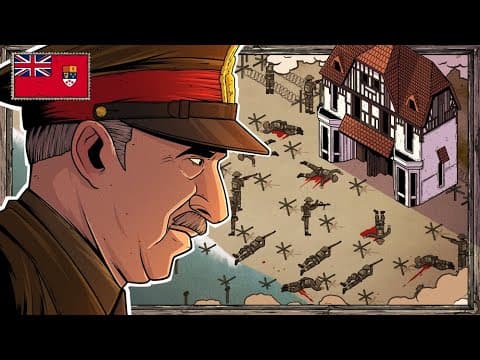
This blog post explores the Canadian perspective of D-Day, focusing on the challenges faced by the Third Infantry Division during the assault on Juno Beach, their strategic objectives, and the subsequent battles that unfolded.
In the previous installment of our D-Day series, we examined the British landings at Gold and Sword Beach. This time, we turn our attention to the Canadian Third Infantry Division's assault on Juno Beach, a critical yet harrowing chapter in the Normandy invasion.
Juno Beach stretched approximately eight kilometers from Santo Balsumer in the east to Corso Sumer in the west, nestled between the British sectors of Gold and Sword. The most significant landmark in this area was the Cap K Airfield, located about 17 kilometers inland, which was vital for expanding Allied air superiority. The Canadian forces were tasked with capturing this airfield and severing the Paris-Cherbourg railway line.
The Canadian Third Infantry Division faced the German 716th Static Infantry Division, which had fortified positions along the beach. The Germans had established pillboxes and strongholds in various fishing villages, particularly in Bernier Sumer and Santo Balsumer, where they had excellent vantage points to defend against the incoming assault.
As dawn broke on June 6, 1944, the Allied fleet began its bombardment of German defenses in the Juno Beach sector. At 7:30 AM, the first landing craft departed, but rough waters delayed their arrival on the beach. Despite the preliminary bombardment, the Germans were largely unscathed and prepared to meet the Canadian forces with fierce resistance.
At approximately 7:50 AM, the Royal Winnipeg Rifles were the first to land in the Mike sector near Corso Sumer. Unfortunately, many of the amphibious tanks intended to support the infantry were lost in the channel, leaving the Winnipeg soldiers vulnerable to intense German fire. Meanwhile, other units faced varying degrees of resistance.
Despite the initial setbacks, reinforcements began to arrive, allowing the Canadians to push forward. By 10:00 AM, the Canadians had captured key towns, including Corsol, Bernier, and Santo Balsumer. The advance southward commenced in earnest, with the Quebecois regiment reaching the outskirts of Benny Sumer.
The Canadian forces linked up in the marshes around Santo Balsumer, and as they advanced, the defenders of the 716th Infantry Division struggled to hold their ground. The fall of Benny Sumer opened the path to the Cap K Airfield and the Paris-Cherbourg railway line.
As the Canadians continued their advance, they faced a counterattack from the 21st Panzer Division, which attempted to push the Allies back into the channel. However, this attack failed to dislodge the Canadian forces, who pressed on toward their objectives.
By the end of D-Day, the Canadian Third Infantry Division had established a beachhead stretching around 16 kilometers inland, further than any other Allied beach on the first day of the invasion. However, this success came at a high cost, with significant casualties during the landings.
While the Canadians made remarkable progress on D-Day, they fell short of capturing the Cap K Airfield, a strategic oversight that would have lasting implications. The arrival of powerful German reinforcements, including the 12th SS Panzer Division, marked the beginning of a month-long struggle that would not conclude until the airfield was finally captured on July 9th. The events of D-Day at Juno Beach highlight the bravery and sacrifice of the Canadian forces in one of history's most significant military operations.



















