
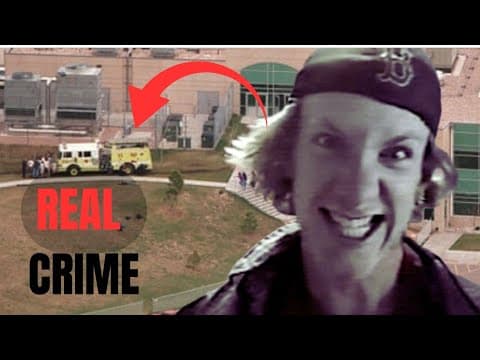
On April 20, 1999, the Columbine High School massacre shocked America, resulting in 13 deaths and over 20 injuries. This blog explores the events leading up to the tragedy, the shooters' backgrounds, the attack itself, and its lasting impact on school safety and mental health awareness.
April 20th, 1999. What was supposed to be a normal school day in Littleton, Colorado, turned into one of the darkest days in American history. Two students walked into Columbine High School, armed and prepared to carry out a plan that would shock the world. By the end of the day, lives were lost, families were shattered, and the very idea of safety inside a school was forever changed. This is the story of the Columbine High School massacre, a tragedy that left scars still felt decades later.
Eric Harris and Dylan Klebold had been hiding a chilling plan. For over a year, they had been plotting an attack on the very school where they were supposed to be finishing their teenage years. That morning, as classmates chatted about homework in the approaching summer, Eric and Dylan loaded their cars with weapons, ammunition, and homemade explosives. No one could have imagined the darkness about to descend on Columbine High School.
To teachers, they were just two more seniors moving through the hallways. To friends, they were familiar faces. But by late morning, these two young men would become the perpetrators of one of the deadliest school shootings in American history.
To understand the horror of Columbine, we must first step back and look at the two young men at the center of it all. Eric David Harris was born on April 9th, 1981, in Wichita, Kansas. His father was a US Air Force transport pilot, which meant the family moved frequently before finally settling in Littleton, Colorado. Outwardly, Eric seemed like the kind of boy who adapted well to change. He played soccer, loved computers, and appeared intelligent and sharp. But beneath that exterior lay a darker side. Eric often felt a deep resentment toward authority, society, and even his peers. He kept a journal where he poured out his hatred and violent fantasies, words that few people ever saw until after the massacre.
Dylan Bennett Klebold, on the other hand, was born on September 11th, 1981, in Lakewood, Colorado. Unlike Eric, Dylan had lived in the Denver suburbs for most of his life. His parents were loving, attentive, and supportive, encouraging his talents in academics and technology. Dylan was bright, often excelling in school projects. But he was also painfully shy, awkward, and plagued by feelings of loneliness. His writings revealed self-hatred, depression, and even suicidal thoughts long before April 1999.
The two met in middle school, drawn together by their shared sense of being outsiders. While they had friends and were not complete loners, they often felt alienated in the high school social hierarchy. Some classmates remember them as part of a small group sometimes referred to as the trench coat mafia. Though in reality, Eric and Dylan were not official members. Still, the long black coats became a symbol of the identity they projected: rebellious, angry, and detached.
Their friendship became a dangerous bond. Eric, the more dominant of the two, was calculating, manipulative, and filled with rage. Dylan was quieter, more withdrawn, but also deeply troubled. Together, their relationship created a destructive cycle. Eric fed Dylan's despair with anger and hatred, while Dylan fueled Eric's grandiose plans with his willingness to follow.
In the years leading up to the massacre, there were signs that something was wrong. In 1998, the two were arrested for breaking into a van and stealing equipment. They were ordered into a juvenile diversion program where they attended counseling sessions and performed community service. To the probation officers and counselors, they seemed to improve. They smiled, acted polite, and gave every impression of being remorseful. In reality, Eric was manipulating the system.
In his private journals and on websites he created, Eric wrote openly about his hatred for the world and his desire for destruction. Eric and Dylan also began to amass weapons. They learned how to make pipe bombs and experimented with explosives in secret. They acquired firearms illegally through friends and acquaintances. In their writings and videotapes, later known as the basement tapes, they described their plan not as a simple shooting, but as a large-scale attack meant to rival terrorist acts. Their goal was not only to kill but to leave a legacy of fear and destruction.
Despite these warning signs, very few people recognized the true danger. Teachers noticed their dark writing assignments but dismissed them as teenage angst. Classmates recalled angry rants but didn't think they were serious. Even Eric's website, where he posted violent threats, caught the attention of police at one point, but the case was never fully pursued.
By the spring of 1999, Eric and Dylan were living in two separate worlds. On the surface, they were just high school seniors playing video games, attending class, and preparing for graduation. But in secret, they were finalizing a plan that had been in motion for over a year. They had built bombs, stockpiled ammunition, and chosen a date. April 20th, 1999, Hitler's birthday, a date Eric had deliberately chosen, would be the day they unleashed their anger on Columbine High School.
April 20th, 1999, began like any other Tuesday for the students of Columbine High School. By late morning, the building was alive with the sound of conversations, the shuffle of feet, and the anticipation of lunch. Few could have imagined that within minutes those familiar sounds would be replaced by screams, gunfire, and chaos.
At 11:10 a.m., Eric Harris and Dylan Klebold arrived in separate cars, parking them in different areas of the school lot. Each car was rigged with homemade bombs set to detonate later in the day, intended to kill first responders and fleeing survivors. Wearing long black trench coats to conceal their weapons, they calmly walked toward the school, their plan ready to unfold.
At 11:17 a.m., they carried duffel bags containing propane bombs into the cafeteria and set them beneath the tables. The bombs were timed to explode at the height of lunch when the room would be most crowded. Then they stepped outside to wait, but the bombs never went off. Frustrated yet undeterred, Eric and Dylan began their shooting rampage at 11:19 a.m. near the west entrance of the school.
The first victims were students Rachel Scott and Richard Costin, who were eating lunch on the lawn. Rachel was killed instantly while Richard was severely wounded. The massacre had begun. As they moved toward the building, they fired at students sitting outside, sending others running in terror. Panic swept across the school as gunfire echoed through the hallways. Many students and teachers thought it was a prank at first until the screams made it horrifyingly clear that it was real.
Inside, chaos erupted. Teachers rushed to lock classroom doors and hide students. Some students fled through exits. Others dove beneath desks or hidden storage rooms. The fire alarm blared, triggered by smoke from explosives, adding to the confusion. At 11:29 a.m., Eric and Dylan entered the library where nearly 50 students were hiding. What followed was the most terrifying and deadly part of the massacre.
They shouted for everyone to get up, but when students stayed hidden, the shooters began firing indiscriminately. Eyewitnesses later described the scene as unimaginable. The shooters laughed, taunted their victims, and asked some if they believed in God before pulling the trigger. Cassie Bernal, a 17-year-old, was reportedly asked this question. When she answered yes, she was shot and killed, her death becoming a symbol of faith and courage in the face of terror.
Others acted with quiet bravery. Teacher Dave Sanders, a beloved coach, had been shot earlier while guiding students to safety. Despite his wounds, he managed to help dozens of students escape before collapsing. Students in classrooms used their bodies to barricade doors, whispering encouragement to one another as the gunmen stalked the halls. For 26 harrowing minutes, the library became a killing ground. By the time Eric and Dylan left, 10 students lay dead and many more were injured. The survivors, those who managed to hide under tables, in cupboards, or behind bookshelves, were left in stunned silence, afraid to breathe.
By 12:00 p.m., law enforcement had surrounded the school, but the shooters still roamed the hallways, firing sporadically. SWAT teams began the dangerous process of evacuating survivors room by room, leading terrified students out with their hands raised. Parents gathered outside, desperate for word, many watching the nightmare unfold live on television. At 12:08 p.m., the terror inside Columbine came to an end. Eric and Dylan turned their weapons on themselves in the library, ending their lives. But the devastation they left behind was irreversible. 13 people were murdered, more than 20 injured, and a community forever scarred.
In the aftermath, stories of courage shone through the darkness, students who shielded others, teachers who risked their lives, and first responders who rushed into danger, all became reminders that even in moments of unimaginable evil, humanity can show resilience and bravery. April 20th, 1999, would never be remembered as just another school day. It became the day the illusion of safety inside America's schools was shattered, replaced by grief, questions, and a haunting memory that still echoes decades later.
When the final gunshots faded and law enforcement confirmed that the two shooters had taken their own lives, Columbine High School was no longer just a school. It had become the site of one of the darkest tragedies in American history. What followed in the immediate aftermath was chaos, grief, and questions that would linger for decades. Police and SWAT teams had arrived quickly after the first reports of gunfire, but the situation was unlike anything they had ever faced.
For hours, officers moved cautiously through the school, unsure of how many shooters were inside or whether bombs were still set to detonate. The sounds of gunfire, alarms, and terrified screams had filled the building, creating confusion and fear. As heavily armed teams entered room by room, they encountered injured students, teachers hiding with their classes, and the heartbreaking sight of lives that could not be saved. For many of the officers, the scenes they witnessed that day would haunt them for the rest of their lives.
Outside the school, the world was watching. Helicopters circled overhead, broadcasting live images to television screens across the nation. Parents rushed to the scene, desperate for any word about their children. Some were reunited with relief. Others waited in anguish for news that would shatter their lives forever. The media coverage was relentless. Columbine was no longer just a local tragedy. It was a national horror unfolding in real time.
The shock spread far beyond Littleton. Across the country, parents held their children tighter that night. Students returned to schools filled with fear and uncertainty. How could such violence happen in a suburban community, in a place meant to be safe? Columbine became the center of every conversation, forcing Americans to confront questions about youth, violence, and security that had never seemed so urgent.
Within hours, the community began to grieve together. Candlelight vigils were held with thousands gathering to mourn the 13 lives lost. Flowers, letters, and crosses were placed near the school as makeshift memorials. Strangers embraced, offering comfort to one another, even when words failed. Churches opened their doors for prayer, counseling, and solace. Students painted murals, wrote poems, and searched for ways to honor their classmates and teacher whose lives had been taken.
At Columbine itself, the hallways that once echoed with laughter were now crime scenes, sealed off with yellow tape. Investigators worked to collect evidence. While the community struggled to understand the unimaginable, families prepared for funerals instead of graduation celebrations. The weight of grief pressed down on Littleton. But alongside it grew resilience, a determination to remember the victims, not for the violence of their deaths, but for the light of their lives.
In the days that followed, Columbine became a symbol. It was a wound that belonged not only to one community but to a nation that had been forced to confront its own vulnerability. The tragedy was no longer just about what happened inside a single high school. It had become a story of loss, of mourning, and of a society forever changed.
When the gunfire finally ended and silence fell over Columbine High School, the full weight of what had been lost began to emerge. 13 lives were gone. Young students and a beloved teacher. Each of them with dreams, talents, and futures that would never be realized. Their absence was felt not only in their classrooms and homes but in the hearts of an entire nation that struggled to understand how such horror could unfold within the walls of a school.
The victims of Columbine were not just numbers on a list. They were teenagers who laughed with friends in the hallways, who studied for exams, who looked forward to prom, summer vacations, and the exciting uncertainties of adulthood. They were mentors and protectors, showing kindness to those around them. Each one represented promise, a promise stolen in a matter of minutes.
To speak of them collectively is to remember the light they carried into their community, a light extinguished too soon. The tragedy did not end with those who lost their lives. More than 20 others were wounded, many sustaining injuries that would change the course of their lives forever. Some faced long recoveries in hospitals, enduring surgeries, rehabilitation, and the painful reality of living with permanent scars or disabilities. Others bore wounds that were invisible, but no less devastating.
Survivors described the sound of gunfire echoing in their ears, the memory of hiding under tables, the fear of waiting for footsteps to pass. Many carried those moments with them long after the cameras left and the world moved on. The trauma rippled outward beyond the walls of the school. Families were left shattered. Parents who sent their children off to school that morning only to return home with unbearable silence. Siblings grew up in the shadows of grief, missing brothers and sisters who should have walked beside them through life. Friends carried survivor's guilt, questioning why they had lived when others had not. Teachers and staff, once the



















