
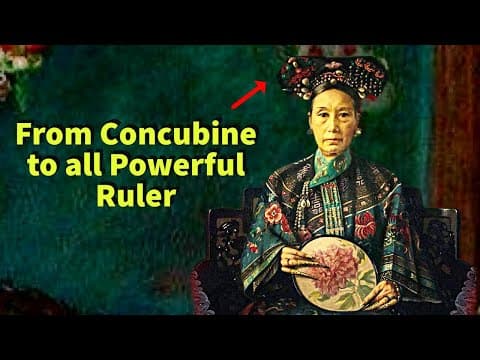
Empress Dowager Cixi, born in 1835, rose from a low-ranking concubine to become a powerful figure in the Qing Dynasty, influencing China's modernization efforts amidst political turmoil. Her reign was marked by significant reforms, military challenges, and controversies, ultimately leading to the decline of the dynasty she sought to strengthen.
Empress Dowager Cixi was a formidable figure of female authority and power in China, navigating the patriarchal traditions of her time. Her reign saw the Qing Dynasty face immense challenges, including rebellions and foreign incursions, yet she played a crucial role in reforming the empire. Born in 1835 as Yahanara to a prominent Manchu family, Cixi's journey from a low-ranking concubine to a powerful empress is a testament to her intelligence and political acumen.
At the age of 16, Cixi entered the Forbidden City as a concubine for Emperor Xianfeng. Despite her initial low status, she quickly rose to prominence after giving birth to the emperor's eldest son, Zaichuan. This event brought joy to the court, but outside the palace, China was embroiled in the Taiping Rebellion and the Second Opium War. Following the emperor's death in 1861, Cixi became the Dowager Empress, sharing power with the emperor's widow and a Regency Council tasked with governing the young Tongzhi Emperor.
Cixi's influence became apparent as she maneuvered against the co-regents who resisted her authority. In a bold coup, she allied with Prince Gong to eliminate the co-regents, consolidating her power. Over the next five decades, Cixi effectively ruled China from behind the scenes, despite the limitations imposed on women by court protocol. She presided over meetings from behind a screen, ensuring her decisions were carried out by loyal officials.
Under Cixi's leadership, China experienced a temporary revitalization. The devastating Taiping Rebellion was quelled, and significant reforms were initiated. Schools focused on science were established, a modern customs service was created, and Western-style arsenals were built. Cixi's collaboration with Prince Gong marked a period of modernization, although her achievements were often overshadowed by negative perceptions of her character.
In 1873, power was returned to the young Tongzhi Emperor, but his poor experience with governance allowed Cixi to regain control after his untimely death in 1875. She maneuvered to place her nephew, Zaitian, on the throne, breaking traditional succession laws. This led to the continuation of the self-strengthening movement, bolstering China's commerce, agriculture, and military under the guidance of her trusted aide, Li Hongzhang.
As China modernized, Cixi grew increasingly wary of Western influences. The death of her co-regent, Kian, in 1881 allowed her to tighten her grip on power, removing pro-Western reformists from the court. Her conservative stance culminated in a coup against the reform-minded Guangxu Emperor in 1898, effectively reversing the last chance for peaceful reform and hastening the dynasty's decline.
The Boxer Rebellion of 1899 marked a turning point for Cixi and the Qing Dynasty. As anti-foreign sentiment surged, Cixi supported the Boxers, leading to a violent backlash from foreign powers. The subsequent defeat of Chinese forces and the signing of the Boxer Protocol in 1901 further weakened the empire. Cixi, recognizing her role in the crisis, embarked on a campaign to rebuild China's reputation, initiating reforms in education, military, and governance.
Despite her efforts, Cixi's reforms were insufficient to reverse the empire's decline. The death of the Guangxu Emperor under suspicious circumstances in 1908 raised further questions about her legacy. Cixi passed away shortly after, leaving behind a complex and controversial reputation. Her last act was to install a two-year-old as the new emperor, ensuring her influence would continue even after her death.
Cixi's reign ended with the fall of the Qing Dynasty in 1912, marking the end of imperial rule in China. While she is often portrayed as a ruthless and manipulative leader, her contributions to modernizing China are significant. Historians have often been biased in their assessments of her, and a more balanced view of her legacy is needed to appreciate the complexities of her rule.
In conclusion, Empress Dowager Cixi remains one of the most controversial figures in Chinese history. Her life and reign encapsulate the struggles of a nation in transition, and her impact on modern China is undeniable, even if her methods and motivations continue to spark debate.



















