
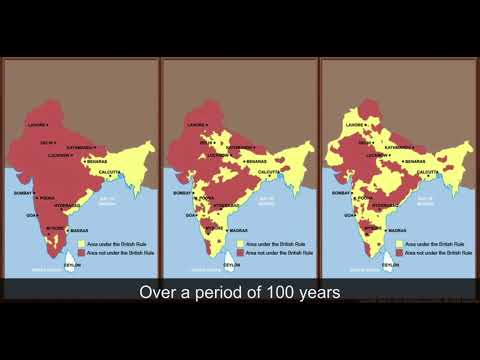
This blog post explores the intricate history of British imperialism in India and Africa, detailing the economic motivations, cultural impacts, and the eventual rise of nationalist movements in response to colonial rule. It highlights key events such as the Sepoy Rebellion, the establishment of the Indian National Congress, and the Boer Wars, illustrating the profound effects of imperialism on local societies and economies.
Imperialism has left a significant mark on the history of nations, particularly in India and Africa. This blog post delves into the intricacies of British imperialism in these regions, examining the economic motivations, cultural impacts, and the rise of nationalist movements that emerged in response to colonial rule.
The beginnings of British imperialism in India were primarily economic. The British East India Company capitalized on the fragmented state of the Mughal Empire, establishing trade outposts and making deals with local leaders known as nawabs. The British hired local Indian soldiers, called sepoys, to protect their interests, ruling primarily from Calcutta and Bengal.
Initially, the British focused on economic exploitation rather than political control. However, following the execution of some company men in Calcutta, the British began to strengthen their influence, leading to a more direct form of governance known as the British Raj. This shift marked a transition from economic imperialism to direct rule, with Queen Victoria eventually taking the title of Empress of India.
The British imposed a dual message on the Indian populace: they encouraged the practice of local religions and cultures while simultaneously demanding adherence to British customs for business dealings. This created confusion among Indians as their economy was drastically altered. The British shifted India's textile production from finished goods to raw cotton, undermining local industries and leaving the Indian economy vulnerable.
The culmination of discontent led to the Sepoy Rebellion in 1857, sparked by cultural insensitivity regarding rifle cartridges coated with animal fat. The rebellion united sepoys and local farmers against British rule, but it was ultimately suppressed. In the aftermath, the British transitioned to direct imperial rule, further entrenching their control over India.
As British control tightened, educated Indians began to organize for independence. Figures like Ram Mohan Roy promoted pan-Indian nationalism, advocating for unity among diverse ethnic and religious groups. The Indian National Congress was founded in 1885 to represent Indian interests, although it initially struggled to gain widespread support.
In Africa, imperialism took on a different character. The exploration of the continent was facilitated by advancements in transportation, weaponry, and medicine, allowing European powers to penetrate deeper into the continent. The discovery of mineral wealth, particularly diamonds and gold, intensified the competition among imperialist nations.
In Northern Africa, Egypt was modernized under Muhammad Ali, who focused on cotton production to meet British demands. However, after the American Civil War, the British shifted their focus back to American cotton, leading to Egypt's economic decline and eventual control by Britain, particularly after the construction of the Suez Canal.
In Southern Africa, the British took control of the Cape Colony from the Dutch and faced resistance from the Boer settlers. The discovery of gold and diamonds revitalized interest in the region, leading to the Boer Wars (1899-1902). The British emerged victorious, allowing the Boers to self-govern while maintaining access to the region's wealth.
The legacy of imperialism in India and Africa is complex, characterized by economic exploitation, cultural conflicts, and the eventual rise of nationalist movements. The impacts of British rule continue to resonate in these regions today, shaping their political and social landscapes. Understanding this history is crucial for comprehending the ongoing effects of colonialism in the modern world.



















