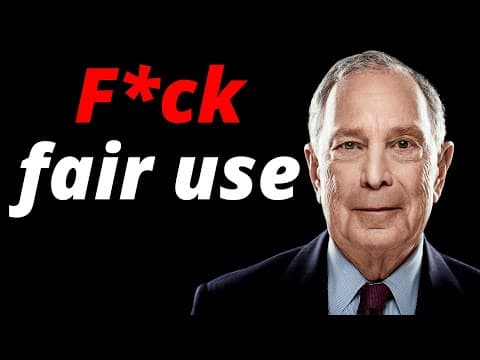
The recent DMCA takedown of Gamers Nexus's documentary by Bloomberg LP raises significant questions about fair use, especially regarding the quoting of public figures like the president. This blog explores the implications of such actions on free speech and the accessibility of information.
Imagine a scenario where the president declares chocolate illegal. If a content creator wants to discuss this statement, they might include a clip of the president saying it to provide context. However, what if the company that filmed the president issued a DMCA takedown on that video? This hypothetical situation mirrors a real-life incident involving Bloomberg LP and Gamers Nexus, where a documentary was removed due to copyright claims. This blog post delves into the implications of this event on fair use and public discourse.
Steve from Gamers Nexus traveled to China to create a three-and-a-half-hour documentary exploring how GPUs are smuggled into the country, circumventing export controls. The documentary raises critical questions about the demand for these GPUs, the methods of smuggling, and the implications of export restrictions. It highlights bizarre smuggling tactics, such as hiding GPUs in baby bumps, and draws parallels to past incidents involving tech companies like Apple.
Upon attempting to view the documentary, many found it had been taken down by Bloomberg LP, which claimed copyright infringement. This action sparked outrage, as it seemed to undermine the principles of fair use, especially when discussing statements made by public figures like the president. The president's words should be accessible for public discourse, and the ability to quote them is essential for transparency and accountability.
The concept of fair use is designed to allow for commentary, criticism, and educational purposes without infringing on copyright. In this case, the inclusion of a brief clip of the president speaking on export controls was directly relevant to the documentary's subject matter. The question arises: if a news outlet records a public figure, do they gain exclusive rights to that content? This situation poses a slippery slope for journalists and content creators who rely on public statements to inform their audiences.
The incident with Bloomberg raises concerns about media monopolies and censorship. If one outlet can claim exclusive rights over a public figure's statements, it could stifle diverse perspectives and limit the public's access to important information. This is particularly troubling in a democratic society where transparency is crucial.
Bloomberg has faced scrutiny in the past for its relationship with the Chinese government, including allegations of censoring stories to maintain access. Reports suggest that Bloomberg shelved an investigative piece linking a wealthy businessman to top Communist Party officials due to fears of retaliation. This history raises questions about the motivations behind the DMCA takedown and whether it was an attempt to protect relationships rather than uphold journalistic integrity.
The DMCA takedown of Gamers Nexus's documentary by Bloomberg LP is a clear example of the challenges surrounding fair use in the digital age. It highlights the need for a robust discussion about the rights of content creators to quote public figures and the implications of copyright claims on free speech. As consumers of media, it is essential to advocate for transparency and access to information, especially when it involves statements from those in power. The documentary by Gamers Nexus is a vital contribution to understanding the complexities of GPU smuggling and export controls, and it deserves to be seen and discussed widely.
In closing, the principles of fair use must be upheld to ensure that public discourse remains vibrant and informed. The actions taken by Bloomberg should prompt a reevaluation of how copyright laws are applied in the context of journalism and public interest.