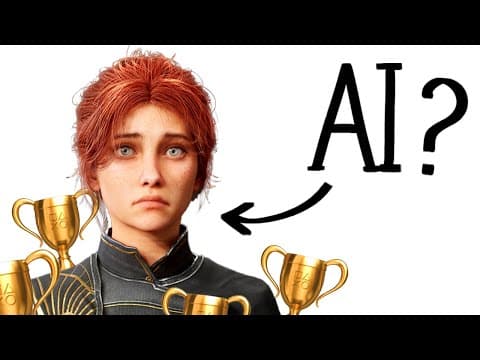
Clair Obscur Expedition 33, a critically acclaimed indie game, lost its Game of the Year award amid controversy over the use of generative AI for placeholder textures. The developer clarified that AI use was minimal, limited to temporary placeholders removed before release, and that all creative content was human-made. This incident highlights the need for nuance and transparency in discussions about AI in creative industries.
Clair Obscur Expedition 33 is widely regarded as one of the best games developed in the last decade. Created by a small independent developer, the game boasts beautiful art direction, intricate character design, and delicately crafted environments. Its artistic excellence earned it eight awards at the 2025 Game Awards, including the prestigious Indie Game of the Year.
However, the game recently became embroiled in controversy over allegations of using generative AI (gen AI) in its development process. This controversy led to the Indie Game Awards revoking Expedition 33's Game of the Year award and awarding it to another title. This article explores the details of this situation, the context behind the AI usage claims, and the broader implications for the gaming and art industries.
Following this, the game continued to receive praise until another studio CEO publicly criticized Expedition 33 for allegedly using AI to develop concept art and placeholder text. This reignited public outrage, leading to the Indie Game Awards withdrawing the Game of the Year award from Expedition 33.
The initial claim focused on textures that appeared to have AI-generated artifacts. The developer, Sandfall Interactive, acknowledged that some placeholder textures generated by AI were briefly used during development but were removed before the game's release. These placeholders were temporary and intended to be replaced with proper textures, which was confirmed by the patch shortly after launch.
Further clarifications from Sandfall Interactive and their CEO emphasized that:
The CEO stated that using AI for creative content "takes away all the joy of creating a game" and firmly rejected AI-generated content in their work.
The developers have been relatively open about their limited use of AI tools, explaining that the placeholder textures were an early experiment and were removed as soon as they were identified. The game's composer also expressed confidence that AI cannot replace the heartfelt creativity of human artists and performers.
This transparency contrasts with the backlash the game received, which many argue was disproportionate given the minimal and temporary nature of AI use.
The controversy around Expedition 33 reflects a larger debate about the role of AI in creative fields such as gaming, art, music, and voice acting. Key points include:
Some argue that AI tools integrated into game development platforms, such as Unreal Engine 5, are used primarily to speed up workflows with assets sourced from legitimate databases, not to replace human creativity.
The public response to the Expedition 33 controversy has been polarized. While many fans and industry insiders sympathize with the developers, others have launched hate campaigns based on the presence of AI in any capacity.
A notable perspective shared on social media pointed out that over 5 million players experienced the game, and only one minor instance of AI use was found, which was promptly addressed. This suggests that the backlash may be fueled more by fear and misunderstanding than by the actual facts.
The situation underscores the need for:
This incident may set a precedent for how AI-generated content is treated in the gaming industry moving forward. It highlights the importance of:
The controversy also serves as a reminder that while AI is a powerful tool, its integration into creative processes must be handled thoughtfully to preserve the integrity and joy of creation.
The case of Clair Obscur Expedition 33 illustrates the complexities surrounding AI in game development. While the game briefly used AI-generated placeholder textures early in development, these were removed before release, and the core creative work remained human-made.
The backlash and award revocation appear to be an overreaction fueled by a lack of context and understanding. This situation calls for more nuanced conversations about AI's role in creativity, emphasizing transparency and respect for human artistry.
As the industry continues to evolve, balancing innovation with ethical considerations will be crucial to fostering a healthy creative environment.
This story serves as a valuable case study for developers, artists, and consumers navigating the rapidly changing landscape of AI in entertainment.