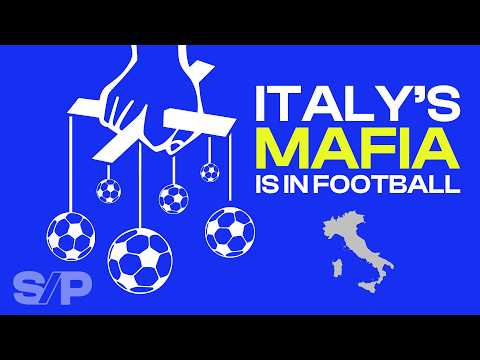
Italian football is facing a severe mafia problem, with organized crime infiltrating fan groups and clubs. The 'Ndrangheta has taken control of the San Siro stadium, leading to violence and corruption. Recent events highlight the ongoing struggle between the mafia and football culture, raising concerns about the future of the sport in Italy.
On September 4th, 2024, a shocking incident unfolded in Milan, Italy, highlighting the deep-rooted connection between Italian football and organized crime. Two friends left a gym, only to be embroiled in a violent confrontation that left one dead and the other wounded. The deceased, Antonio Bellocco, was an heir to a powerful mafia family, while the survivor, Andrea Beretta, led the hardcore fan group of Inter Milan. This incident underscores the alarming reality: Italian football has a mafia problem.
The mafia's influence in Italy is not a new phenomenon. Originating in rural Sicily during the 1800s, the Cosa Nostra began as a group of men hired to protect farmers from bandits. Over time, it evolved into a network of clans that extorted businesses and eliminated anyone who crossed them. Alongside the Cosa Nostra, two other mafia groups emerged: the Camorra in Campania and the 'Ndrangheta in Calabria. These organizations infiltrated nearly every business in their territories, leading to significant economic impacts. A 2015 study indicated that mafia activities contributed to a 20% decline in GDP in certain southern Italian regions.
The violent turf wars of the 1980s weakened the Cosa Nostra but allowed the 'Ndrangheta to rise. This group adopted a more subtle approach, focusing on drug trafficking and money laundering through legitimate businesses, establishing a presence in major cities, including Milan.
Italians are passionate about football, and the atmosphere at matches is electric. However, the mafia has long profited from this love for the sport. Notable players, such as Diego Maradona, have been linked to mafia groups, and numerous match-fixing scandals have plagued Italian football. In the 1990s and 2000s, mafia clans began to own small football clubs to gain prestige and loyalty within their territories.
As the 'Ndrangheta expanded into an international criminal organization, its ambitions grew. With top European clubs generating substantial revenue, the 'Ndrangheta sought to tap into the financial resources surrounding clubs like AC Milan and Inter Milan, both based in Milan and sharing the iconic San Siro stadium.
The Ultras, passionate fan groups that create an electric atmosphere at matches, play a significant role in this narrative. They are known for their loyalty and community spirit but also have a dark side, with some groups involved in violence and crime. In Milan, the Ultras are divided into two main factions: AC Milan's Curva Sud and Inter's Curva Nord, each led by powerful figures.
The 'Ndrangheta's strategy was to infiltrate these Ultras groups to gain control over the San Siro. Vittorio Boiocchi, the head of Inter's Ultras, was a notorious figure with a criminal background. After his murder in 2022, Beretta and Bellocco, both linked to the mafia, took control of the Ultras, demanding free tickets and threatening violence to ensure compliance from the clubs.
Under the leadership of Beretta and Bellocco, the Ultras expanded their influence, seizing control of parking, food stalls, and merchandise around the stadium, generating millions in revenue. This transformation turned the San Siro into a lucrative operation for the 'Ndrangheta, further entrenching their power in Italian football.
However, the alliance between Beretta and Bellocco was fraught with tension, ultimately leading to betrayal. Beretta's murder of Bellocco provided law enforcement with an opportunity to crack down on the mafia's influence in football. In June 2023, several Ultras were convicted of serious crimes, including murder and extortion.
The fallout from these events has been significant. Beretta received a relatively light sentence of ten years after cooperating with police, while the leaders of both AC Milan and Inter Milan faced scrutiny. The clubs were fined for their reputational damage, and investigations into Ultras groups across Italy intensified.
The infiltration of the 'Ndrangheta into football has raised alarms about the future of the sport in Italy. With ongoing investigations into other clubs, including Juventus and Lazio, the threat of organized crime looms large over Italian football.
The intertwining of the mafia and football culture in Italy presents a complex challenge. While Ultras groups have historically represented local pride and community, the mafia's influence has corrupted these values. As clubs attempt to distance themselves from the criminal elements, the future of Italian football hangs in the balance. The vibrant culture that once defined the sport is now at risk, overshadowed by the dark legacy of organized crime. The battle against the mafia's grip on football is far from over, and the consequences will continue to unfold in the coming years.