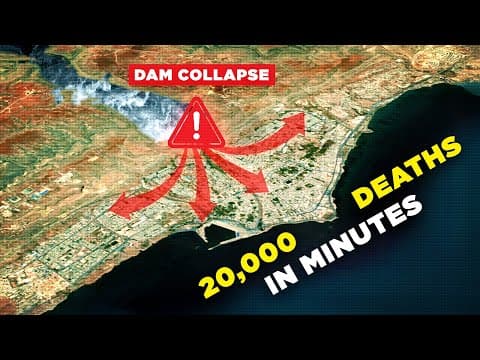
On September 11, 2023, a catastrophic dam collapse in Libya resulted in the deaths of up to 24,000 people, marking it as one of the deadliest disasters in history. This tragedy was caused by a combination of extreme weather, poor maintenance, and political instability that plagued the region for decades.
September 11th is a date that resonates with tragedy, particularly in the United States due to the terrorist attacks in 2001. However, on the same date in 2023, another monumental disaster struck on the other side of the world in Libya. A catastrophic dam collapse in the city of Durna resulted in the deaths of thousands, overshadowing the event in the global headlines but no less catastrophic in scale.
On the morning of September 11, 2023, a once-in-a-thousand-year storm unleashed unprecedented rainfall across eastern Libya. This storm rapidly filled the reservoirs behind two dams along the Wadi Derna, which flows into the city of Durna, home to approximately 90,000 residents. The enormous water load proved too much for the dams, leading to their catastrophic failure. At around 3:00 a.m., with little warning, a massive surge of water crashed into the city, obliterating entire blocks and buildings, and resulting in the deaths of as many as 24,000 people—nearly a third of Durna's population.
Durna is located on the northeastern coast of Libya, in the Jabel Akhdar region, known for its fertile uplands and seasonal rivers. The Wadi Derna, a seasonal river, has a history of flash floods, with significant events recorded as far back as 1942. In response to these floods, the Libyan government commissioned the construction of two dams in the 1970s to control the flooding.
The dams were built by a Yugoslavian company between 1973 and 1977. The smaller Al-Baida dam, located closest to Durna, was 45 meters high with a reservoir capacity of 1.5 million cubic meters. The larger Boumansur dam, situated further upstream, was 75 meters high with a capacity of 22.5 million cubic meters. Both dams were designed with a clay core and rock-filled embankments, a sturdy configuration but vulnerable to erosion if overflowed.
Over the years, significant cracks and defects were reported in the dams, with a Swiss consultancy firm warning in 2003 that the dams were not built to withstand the flood volumes they might encounter. Despite these warnings, the dams were not maintained for over 21 years, largely due to Libya's internal chaos following the Arab Spring in 2011. The political instability prevented any construction company from resuming maintenance work, despite contracts and funding allocated for repairs.
On September 10, 2023, Storm Daniel formed over the Mediterranean, evolving into a medicane—a Mediterranean cyclone. It made landfall near Benghazi, bringing record rainfall. The Al-Baida weather station recorded 414.1 mm of rain in just 24 hours, equivalent to an entire year’s worth of rainfall for the region. This deluge overwhelmed the dams, which were not designed to handle such volumes of water.
As the storm intensified, the reservoirs began to fill rapidly. By 2:00 a.m. on September 11, the water levels reached critical heights, leading to the overtopping of the Boumansur dam. Despite warnings from security personnel, the local authorities issued mixed messages, leading residents to remain in their homes instead of evacuating. At approximately 2:40 a.m., the Boumansur dam collapsed, sending a massive flood surge of approximately 30 million cubic meters of water rushing towards Durna.
The flood struck Durna at around 3:00 a.m., catching most residents asleep. The surge obliterated entire city blocks, destroyed thousands of buildings, and left the city geographically split. Estimates of the death toll vary, with some reports suggesting as many as 24,000 fatalities, making it one of the deadliest dam collapses in history.
In the days following the disaster, search and rescue operations were complicated by the destruction of infrastructure. Many bodies were found washed away, and survivors were left homeless. The disaster was attributed to a combination of factors: poor dam design, lack of maintenance, political instability, and climate change. In 2024, several Libyan officials were arrested and convicted for their roles in the disaster, highlighting the systemic failures that led to this tragedy.
The dam collapse in Durna on September 11, 2023, serves as a stark reminder of the consequences of neglect and mismanagement in the face of natural disasters. It stands as one of the deadliest events in modern history, paralleling the tragic events of September 11, 2001, in the United States. Both events underscore the importance of preparedness and the need for robust infrastructure to withstand the challenges posed by nature and human governance.