
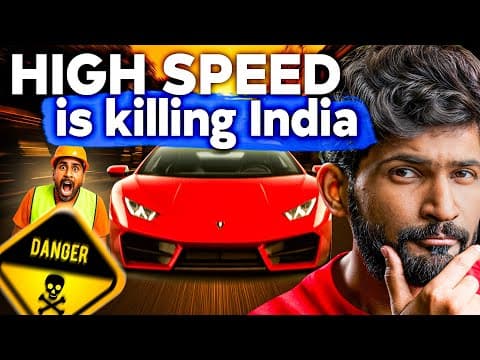
Indian roads are among the most dangerous in the world, with a staggering number of accidents and fatalities. This blog post explores the alarming statistics, the societal issues contributing to road safety failures, and proposes actionable solutions to improve road safety in India.
Today, many people feel a sense of despair when it comes to the state of roads in India. The dangers posed by these roads often seem more threatening than terrorism itself. With luxury cars like Porsches, BMWs, and Lamborghinis being driven at reckless speeds, the consequences can be catastrophic. Just recently, a Lamborghini driver in Noida was reported to have caused the deaths of three people while allegedly driving at speeds of 300 km/h. This incident highlights a troubling trend where affluent individuals can evade serious consequences for their reckless behavior.
The statistics surrounding road safety in India are shocking. Over the past decade, more than 1.5 million people have lost their lives in road accidents, a number that surpasses the population of Chandigarh. To put this into perspective, in 2017, around 800 people died due to terrorism, while potholes alone are responsible for more than 3,500 deaths. This comparison underscores the severity of the road safety crisis in India.
National highways, which constitute only 2% of the total road network, account for 35% of all accidents. Despite having only 1% of the world's vehicles, India experiences 11% of global road accidents. The economic impact is staggering, with road accidents costing the country approximately 5.96 lakh crores annually, which is about 3% of the GDP—more than double the national education budget.
A significant portion of road accidents—68%—is attributed to overspeeding. This raises questions about driver behavior and societal attitudes towards road safety. Many drivers seem to prioritize speed over safety, often disregarding the fact that arriving a few minutes earlier does not significantly alter their lives. The culture of reckless driving is exacerbated by a lack of respect for traffic rules and pedestrian safety.
For instance, during festive occasions like Eid, many riders neglect to wear helmets, leading to thousands of fatalities each year. Furthermore, a staggering number of accidents—34,000 in 2023—were caused by individuals driving without a license, indicating a systemic failure in driver education and enforcement.
The current state of road safety in India is a reflection of broader societal issues. There is a pervasive culture of negligence, where individuals prioritize their convenience over the safety of others. Pedestrians, who account for 20% of road accident fatalities, often suffer due to poor infrastructure and a lack of respect from drivers.
Moreover, the judicial system often fails to hold reckless drivers accountable. High-profile cases reveal a troubling trend where affluent individuals receive leniency, while ordinary citizens face harsher penalties. This disparity breeds a sense of injustice and frustration among the public.
To address these pressing issues, several solutions can be implemented:
Reforming bail policies for road accidents is crucial. If a driver causes a fatal accident due to speeding or negligence, they should not be granted bail. Treating road fatalities as serious offenses will deter reckless driving.
Introducing speed cameras connected to vehicles can help monitor and control speeding. Similar systems in other countries have proven effective in reducing accidents. Cars should be equipped with technology that prevents them from exceeding speed limits.
Improving driver education is essential. Current driving schools often fail to teach critical aspects of safe driving, such as lane discipline and traffic rules. Regular assessments should be mandated, and driving licenses should be renewed every five years, with practical tests conducted on actual roads.
Encouraging a culture of civic responsibility is vital. Drivers should be educated on the importance of helping accident victims rather than merely assigning blame. Society must shift its focus from punitive measures to proactive assistance in emergencies.
Investing in better road infrastructure, including pedestrian pathways and proper signage, can significantly enhance safety. Authorities must prioritize the maintenance of roads and the elimination of potholes, which pose serious hazards.
The state of road safety in India is a pressing issue that requires immediate attention. By addressing the root causes of accidents and implementing effective solutions, we can work towards making Indian roads safer for everyone. It is not just a matter of personal safety; it is about the collective responsibility we share as a society. Let us strive to make our country a better place, starting with our roads.



















