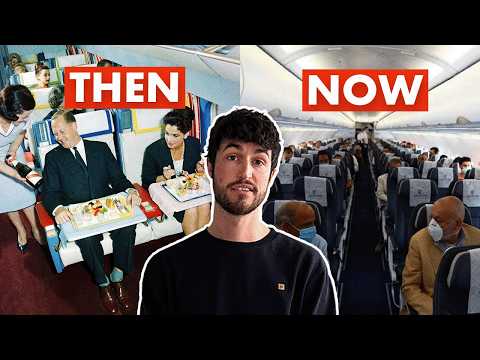
Flying has transformed from a luxurious experience to a frustrating ordeal filled with surprise fees, cramped seating, and safety concerns. This decline is largely due to deregulation, the rise of low-cost carriers, and a focus on cutting costs at the expense of quality.
Flying has become synonymous with frustration, marked by surprise fees, record-breaking lines, cramped seating, and even safety issues. Despite the airline industry generating more revenue than ever, the flying experience has deteriorated significantly. This blog post explores the reasons behind this decline and what the future may hold for air travel.
To understand the current state of air travel, we must first look back at its golden age. In the 1950s, flying was a luxurious experience. Passengers enjoyed fresh-cooked meals, ample legroom, and a sense of elegance as they dressed to impress. However, this luxury came at a price; an economy flight from New York to London would cost the equivalent of $4,000 today. Flying was primarily accessible to the wealthy, making it a high-end experience rather than a common mode of transportation.
The turning point for the airline industry came in 1978 with the Airline Deregulation Act. This legislation removed federal regulations that controlled ticket prices and routes, allowing airlines to set their own fares. While this led to the emergence of more airlines and lower ticket prices, it also marked the beginning of the decline in flying quality. The focus shifted from providing a premium experience to competing on price, leading to a race to the bottom.
The introduction of low-cost carriers like Spirit and Ryanair revolutionized air travel by offering incredibly cheap flights. While this made flying accessible to a broader audience, it also introduced a host of hidden fees. Passengers now face charges for carry-on luggage, seat selection, and even printing boarding passes at the airport. This practice, known as unbundling, separates essential services from the ticket price, leading to a frustrating experience for travelers.
Today, the flying experience is often compared to public transit. Airlines have packed planes to maximize profits, resulting in cramped seating and a lack of comfort. The public perception of flying has become increasingly negative, with terms like "flight delays" and "flight delay compensation" trending on Google. The industry is also grappling with safety concerns, as reports of planes breaking down mid-flight have become more common.
The relentless pursuit of lower prices has led airlines to cut corners, impacting safety and service quality. Despite record-breaking revenues, airlines are struggling with rising costs, including fuel and wages. This has resulted in a paradox where ticket prices are not as low as they seem, and the overall flying experience continues to decline.
In response to the growing dissatisfaction with air travel, the Biden-Harris administration has introduced new regulations requiring airlines to issue cash refunds for significantly delayed or canceled flights. Airlines must also disclose all fees upfront, which could help improve transparency in the industry. However, the damage may already be done, as many travelers are beginning to realize that the savings from low-cost flights often come with significant trade-offs.
The transformation of air travel from a luxurious experience to a frustrating ordeal is a complex issue rooted in deregulation, the rise of low-cost carriers, and a relentless focus on cutting costs. While flying is more accessible than ever, the quality of the experience has suffered. As travelers weigh their options, it may be time to consider alternatives to flying, such as trains or road trips, for a more enjoyable journey.
Thank you for reading, and we hope this exploration of the airline industry's challenges has provided insight into why flying sucks now.