
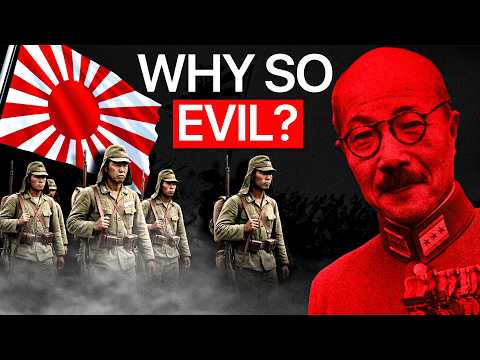
This blog post explores the historical context and factors that led to Japan's brutal actions during World War II, including its military takeover, cultural beliefs, and the impact of international humiliation.
Japan's actions during World War II are often described as horrific, marked by massacres, human experimentation, and widespread atrocities against civilians. This blog post delves into the historical context that led to such behavior, examining whether Japan's brutality was a result of long-standing cultural values or a more recent phenomenon.
In the mid-1800s, Japan was a feudal society, isolated from the rest of the world. The political power was held by regional warlords, leading to constant internal conflict. This changed dramatically in 1853 when an American naval expedition forced Japan to open its ports for trade, leading to a constitutional revolution known as the Meiji Restoration.
The Meiji Restoration marked Japan's transition from a feudal state to a modern nation. The power of regional warlords diminished, and the emperor became a central figure in governance. Japan adopted a parliamentary system and underwent rapid industrialization, transforming into an economic powerhouse with a modern military.
With newfound confidence, Japan sought to assert its dominance in Asia, particularly over China. The First Sino-Japanese War (1894-1895) resulted in Japan's victory and the independence of Korea, further fueling its ambitions. Japan's military successes against Russia in 1904-1905 solidified its status as a major power, leading to the annexation of Korea in 1910.
Despite its initial successes, Japan faced growing resentment towards Western powers, particularly after World War I. The rejection of Japan's proposal for a racial equality clause at the Versailles Conference and subsequent humiliations, such as the Washington Naval Treaty, fostered a sense of national humiliation and anti-Western sentiment.
The 1920s were marked by political instability, with numerous governments failing to address the growing economic problems exacerbated by the Great Depression. This instability allowed extremist factions within the military to gain power, leading to a series of assassinations of moderate leaders and a shift towards militarism.
By the 1930s, the Japanese military had effectively taken control of the government. The invasion of Manchuria in 1931 was a turning point, as military leaders acted independently of the civilian government, leading to a complete breakdown of political authority. The military's unchecked power resulted in increasingly brutal campaigns against China and other nations.
The atrocities committed by Japan during World War II are numerous and horrific. Notable examples include:
Japan's descent into brutality can also be traced to long-standing cultural beliefs. The samurai tradition, with its emphasis on loyalty and honor, glorified violence and contributed to a warrior mentality. Additionally, the divine status of the emperor, rooted in Shinto beliefs, was manipulated to justify military aggression and expansionism.
The series of humiliations Japan faced from Western powers fostered a deep-seated resentment that fueled nationalism and militarism. The assassination of pro-Western leaders and the rise of extremist factions further destabilized the political landscape, allowing the military to dominate.
Japan's actions during World War II were the result of a complex interplay of historical, cultural, and political factors. The military's takeover and the brutal culture that emerged from the Manchurian campaigns led to atrocities that shocked the world. Understanding this dark chapter in history is crucial to ensuring that such horrors are never repeated.



















