China is facing a severe population crisis, with millions disappearing from rural areas and cities, leading to abandoned villages and empty streets. This blog post explores the alarming trends in rural depopulation, the impact of the pandemic, and the government's response to encourage higher birth rates amidst a declining population.
In recent years, alarming reports have emerged from China, revealing a stark reality: entire villages are being abandoned, and cities are becoming eerily quiet. This phenomenon raises critical questions about the state of China's population and the underlying causes of this dramatic shift. In this blog post, we will delve into the stories of deserted towns, the impact of rural depopulation, and the government's attempts to address the crisis.
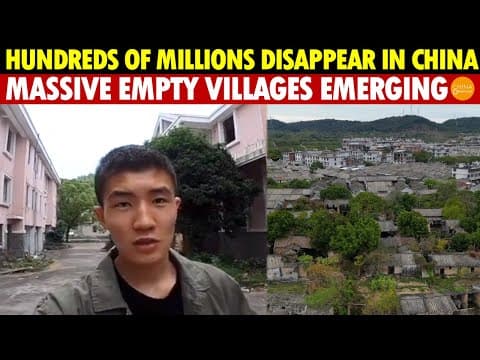
Imagine riding a motorcycle through a once-thriving village, now reduced to ruins. This is the reality for many who explore areas like the Swiming Mountain Village, now known as the village with no people. Once home to a vibrant community, it is now overgrown with weeds, with empty houses and silent streets. The sound of birds is the only reminder of life in a place that was once bustling with activity.
The trend of rural depopulation in China has become increasingly severe. Young people, seeking better job opportunities, have migrated to cities, leaving behind the elderly and a few remaining residents. This shift has led to a staggering decline in rural populations, with the National Bureau of Statistics reporting a decrease of 12.2 million people in rural areas in 2024 alone. The average population in villages has plummeted to under 200, and vast tracts of farmland have been abandoned.
As rural areas empty out, cities are also experiencing a noticeable decline in population density. Major urban centers like Beijing and Shanghai, once teeming with life, now exhibit signs of desolation. Streets that were once crowded are now eerily quiet, with businesses struggling to attract customers. Reports from various cities indicate that commercial areas, malls, and public transport systems are nearly empty, raising questions about the true state of China's population.
Despite official claims of a population of 1.4 billion, many observers are skeptical. The stark contrast between the bustling past and the current emptiness has led to speculation about hidden demographic changes. Some analysts suggest that the actual population may be significantly lower, with estimates ranging from 800 million to 1 billion based on various indirect indicators, including salt consumption and ID card registrations.
The COVID-19 pandemic has exacerbated the population crisis, with many theorizing that the true death toll has been concealed by authorities. Reports of increased cremation demands and rising fees suggest a significant loss of life during the pandemic years. The economic repercussions of this demographic shift are profound, leading to labor shortages and decreased consumer demand, further weakening China's economic vitality.
In response to the alarming trends, the Chinese government has initiated campaigns to encourage higher birth rates. Policies offering financial incentives for families to have more children have been introduced, including cash subsidies and tax breaks. However, the effectiveness of these measures remains uncertain, as structural issues behind low birth rates persist.
The situation in China is a complex interplay of demographic shifts, economic challenges, and government responses. As millions disappear from both rural and urban areas, the implications for the country's future are profound. The stark reality of abandoned villages and empty streets serves as a haunting reminder of the ongoing population crisis, prompting urgent discussions about the path forward for one of the world's most populous nations.