
This blog post explores the early history of Mewar, detailing the reigns of significant rulers from Bappa to Samar Singh, the impact of Islamic invasions, and the resilience of Hindu kingdoms in the face of foreign aggression, as documented in Colonel James Todd's work.
The history of Mewar, a prominent region in Rajasthan, is rich and complex, marked by the valor of its rulers and the challenges posed by foreign invasions. This post delves into the early history of Mewar, drawing from Colonel James Todd's seminal work, "Annals and Antiquities of Rajasthan," as presented by Dr. Vijay Raun.
In AD 728, Bappa Rawal ascended the throne of Chittor, marking the beginning of a significant era in Mewar's history. His reign set the stage for the subsequent rulers, including Samar Singh, whose reign from AD 1193 is particularly notable for the upheaval caused by Islamic invasions.
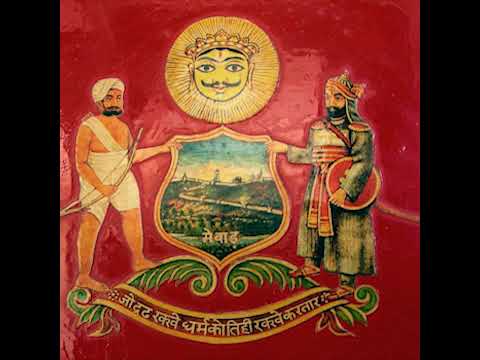
Bappa Rawal's lineage continued to influence Mewar's history through his descendants. The Guhilot dynasty, which included 18 princes, is characterized by its emblem of a golden sun on a crimson field. The inscriptions and records from this period, although scarce, provide valuable insights into the socio-political landscape of Mewar.
Samar Singh's reign is marked by a critical turning point in the history of the Hindu race, as it witnessed the first significant Islamic invasion. This period is documented in the ancient poetic chronicle, the Kumarasa, which highlights the defense of Chittor against foreign aggressors.
The Islamic incursions into India began during the rise of Islam, with the first notable attempts occurring under the Caliphate of Umar. The invasions intensified under Muhammad bin Qasim, who conquered Sindh in AD 711, leading to a series of conflicts that would plague the Hindu kingdoms for centuries.
During the reign of Kumar, the defense of Chittor became a focal point for the Hindu resistance against Islamic forces. The bravery of the Guhilot princes and their allies is celebrated in the Kumarasa, which recounts their efforts to repel the invaders and maintain the sovereignty of Mewar.
The defense of Chittor was bolstered by various Hindu princes who rallied to protect their homeland. The chronicles detail the valor of these leaders, who fought fiercely against the demands for tribute and the assaults on their territory.
Bappa Rawal's legacy is profound, as he not only established the Guhilot dynasty but also laid the foundations for the cultural and religious identity of Mewar. His marriage to the daughter of the Yusu Gold Prince of Bandar Diva brought the statue of Van Mata, the tutelary goddess, to Chittor, symbolizing the intertwining of political alliances and religious devotion.
The strategic marriages of Bappa and his descendants played a crucial role in consolidating power and influence in the region. These alliances often resulted in the expansion of territories and the strengthening of military capabilities against external threats.
The early history of Mewar, as chronicled by Colonel James Todd, reveals a narrative of resilience and valor in the face of adversity. The reigns of Bappa Rawal and Samar Singh, along with the challenges posed by Islamic invasions, highlight the enduring spirit of the Hindu kingdoms. This historical account not only serves as a testament to the rich heritage of Mewar but also provides valuable lessons on the importance of unity and resistance in preserving cultural identity against foreign domination.



















