
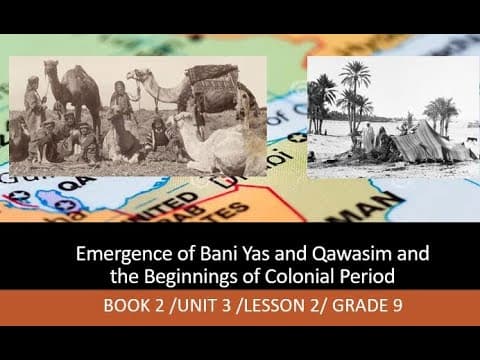
This blog post explores the rise of the Bani Yas and Qawasim tribes in the Arabian Peninsula, their socio-political structures, and the impact of colonialism during the early 19th century, highlighting key events and figures that shaped the region's history.
The Arabian Peninsula has a rich history marked by the rise and fall of various tribes and the influence of colonial powers. Among these tribes, the Bani Yas and Qawasim played significant roles in shaping the socio-political landscape of the region. This blog post delves into the emergence of these tribes and the beginnings of the colonial period that transformed their existence.
The Bani Yas tribe, one of the most prominent tribes in the United Arab Emirates, traces its origins back to the 18th century. They were primarily composed of several clans, including the Al Nahyan and Al Maktoum, which later became influential ruling families in the UAE. The tribe was known for its strong leadership and ability to unite various clans under a common banner.
The Bani Yas tribe established a significant presence in the region, particularly in Abu Dhabi and Dubai. Their leadership was characterized by a blend of traditional tribal governance and emerging modern political structures. The tribe's influence extended beyond mere governance; they were also involved in trade, fishing, and pearling, which were vital to the local economy.
The Qawasim tribe, primarily located in the northern emirates, particularly Ras Al Khaimah and Sharjah, emerged as a powerful maritime force in the late 18th century. They were known for their naval prowess and engaged in trade across the Arabian Gulf and beyond.
The Qawasim's expansion and control over maritime trade routes led to conflicts with other tribes and colonial powers. Their resistance against British naval forces during the early 19th century is a notable aspect of their history, showcasing their determination to maintain autonomy in the face of external threats.
The early 19th century marked the beginning of significant colonial influence in the Arabian Peninsula. The British Empire sought to secure trade routes and protect its interests in the region, leading to increased military presence and political maneuvering.
In response to the growing colonial pressure, the Bani Yas and Qawasim, along with other tribes, formed alliances and agreements known as the Trucial States. These agreements aimed to establish a degree of autonomy while navigating the complexities of colonial politics.
Several key events during this period shaped the future of the Bani Yas and Qawasim tribes:
The emergence of the Bani Yas and Qawasim tribes during the colonial period highlights the intricate dynamics of tribal governance and colonial influence in the Arabian Peninsula. Their legacies continue to shape the cultural and political landscape of the UAE today. Understanding this historical context is crucial for appreciating the region's development and the ongoing impact of its tribal heritage in modern times.



















