
This blog post explores the historical context of cotton production, the impact of slavery and colonialism on economies, and the evolution of labor movements, highlighting the interconnectedness of global capitalism and the exploitation of marginalized communities.
The narrative of cotton production is deeply intertwined with the history of slavery, colonialism, and economic transformation. This blog post delves into the complex relationships between these elements, focusing on the role of figures like Bob Marley, the implications of the American Civil War, and the global shifts in labor and production.
Bob Marley, a monumental figure in music, used his platform to address themes of revolution and resistance against oppression. His song "Buffalo Soldier" reflects the struggles of those stolen from Africa and brought to the Caribbean, where they endured the harsh realities of plantation life. Marley's dreadlocks symbolize a connection to Rastafarian beliefs, tracing back to the Ethiopian King Haile Selassie, representing a longing for a return to Africa, or Black Zionism.
The cotton industry has a tumultuous history, particularly in the United States, where the North's industrial capitalism clashed with the South's slave plantation economy. The American Civil War marked a significant turning point, leading to what is known as the cotton famine, where production plummeted due to the disruption of slave labor. This shift forced merchants to seek new sources of cotton in places like India, Egypt, and Brazil.
The cotton famine had far-reaching consequences. In Egypt, Muhammad Ali attempted to modernize cotton production but ultimately fell into debt, leading to British control over the region. Similarly, in India, the British exploited local farmers, forcing them to shift from food crops to cotton production, resulting in widespread famine and suffering. Between 1850 and 1899, approximately 15 million people died in India due to famines exacerbated by British policies prioritizing cotton exports over local needs.
Post-Civil War America saw the emergence of sharecropping and wage labor systems, which perpetuated economic struggles for freed Black individuals. Despite the abolition of slavery, many found themselves trapped in cycles of poverty and exploitation, as land ownership remained elusive. The Ku Klux Klan emerged as a violent force to maintain white supremacy and economic control.
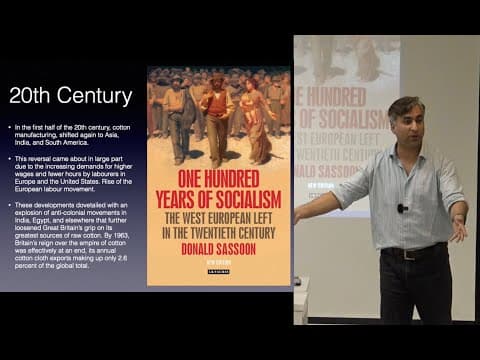
As industrialization progressed, labor movements began to organize in response to the harsh conditions faced by workers. Socialism gained traction as workers sought to reclaim control over their labor and demand better rights and conditions. The Bolshevik Revolution in 1917 marked a significant moment in this struggle, inspiring similar movements across Europe.
The transformation from war capitalism to industrial capitalism was not merely a result of market forces but was significantly influenced by state actions. The British Empire's policies facilitated the exploitation of colonies, ensuring that raw materials flowed to Western markets while stifling local industries. This led to a new international division of labor, where countries like China and India became leading cotton producers, often under oppressive conditions.
The concept of free trade imperialism emerged, where Western powers imposed economic policies that favored their interests at the expense of developing nations. This dynamic created a cycle of dependency, where local industries were unable to compete with cheaper imports, leading to economic stagnation and social unrest.
The history of cotton production is a stark reminder of the interconnectedness of exploitation, economic transformation, and resistance. From the struggles of enslaved individuals to the rise of labor movements, the legacy of cotton continues to shape global economies and societies. Understanding this history is crucial for recognizing the ongoing impacts of colonialism and the need for equitable economic practices in today's world.



















