This blog post explores the origins, transformations, and cultural significance of werewolves throughout history, tracing their evolution from ancient mythology to modern cinema, and examining the psychological and societal fears they embody.
Throughout time, people across the world have shared tales of heroes and monsters, romance and tragedy, death and rebirth. These myths helped shape the ancient world, explaining the unexplainable. One of the most captivating and terrifying figures in folklore is the werewolf.
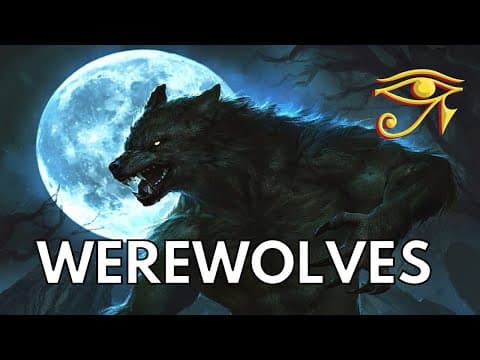
Picture this: as the sun sets and night falls, a full moon rises, casting silver light across the dark earth. A cry of pain echoes through the night as a poor soul undergoes a horrific transformation. Their bones break and reshape, coarse fur grows, and razor-sharp claws sprout from their fingertips. Once the transformation is complete, the creature emits a howl that chills the blood. This is the werewolf, a staple of horror and dark fantasy.
Werewolves are depicted as massive creatures with overwhelming strength, speed, and stamina. They possess sharp senses, claws, and teeth, making them formidable threats. The legends suggest various ways to become a werewolf, including:
Once transformed, the individual is cursed to wander the world, immune to age and disease, committing acts of brutality. The only salvation from the beast's wrath lies in the wolfsbane plant or a silver bullet, which can end the monster's life. Upon death, the werewolf reverts to its human form.
The werewolf myth has roots that stretch back to the late Stone Age, with tales of human-animal transformations found across Europe, Asia, Africa, and the Americas. In the northern hemisphere, wolves are apex predators, evoking awe and fear among ancient peoples. The idea of a human transforming into a wolf symbolizes a regression from civilization into primal chaos, where unchecked morality and savagery reign.
The oldest recorded tale of a transformation into a wolf comes from Mesopotamian mythology in the Epic of Gilgamesh, where a woman curses her ex-lover, turning him into a wolf. In Greek mythology, King Lycaon attempts to trick Zeus into cannibalism, resulting in his transformation into a wolf, giving rise to the term lycanthropy, which describes the belief in transforming into a wolf-like monster.
Other ancient accounts include:
The cautionary tale of Little Red Riding Hood is often interpreted as a werewolf story, with the wolf capable of disguising itself as a human. In Cajun folklore, the Ruguru is a person who becomes a werewolf after failing to observe Lent for seven years, transforming into a beast every night for 101 days.
These stories share common themes of transformation, savagery, and the consumption of human beings. While seen as fictional today, in the past, werewolf tales were taken seriously, leading to mass hysteria during the Middle Ages.
During the High Middle Ages and into the 16th century, thousands were accused of being werewolves amid witch trials and religious persecution. Telltale signs included connected eyebrows, rough palms, red hair, or being a societal outcast. Some were scapegoats for societal ills, while others were accused of heinous acts.
Notable cases include:
These trials reflect the rampant belief in werewolves, where heinous crimes were attributed to monstrous transformations.
Much of modern werewolf mythology stems from Hollywood, particularly the 1941 film The Wolf Man, which popularized the idea of transforming under the full moon. The notion of becoming a werewolf after being bitten is a cinematic invention, while folklore suggested other mystical means.
The power of silver weapons, especially silver bullets, became a staple in werewolf beliefs, further popularized by films. The chilling poem associated with werewolf lore states:
"Even a man who is pure in heart and says his prayers by night may become a wolf when the wolfsbane blooms and the autumn moon is bright."
As the horror movie genre evolved, films like An American Werewolf in London and The Howling explored psychological aspects and raw savagery, while others like Van Helsing and the Underworld series depicted werewolves in conflict with monster hunters and vampires.
Werewolves have become increasingly popular in fiction, appearing in countless books, films, and comics. Unlike other monsters, werewolves are only monstrous for a short time, returning to their human forms, which adds a layer of intrigue. The terrifying image of a person painfully transforming into a ravenous wolf continues to haunt the nightmares of many.
From ancient mythology to medieval superstition and modern cinema, the werewolf remains one of the most enduring and terrifying monsters in folklore, embodying deep-seated fears of savagery and loss of humanity.