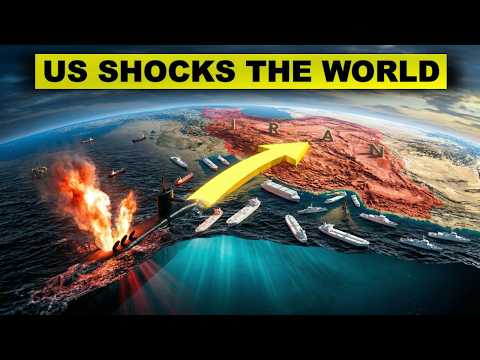
The U.S.-Iran conflict has entered a new, more challenging phase with nearly half of the U.S. Navy's operational ships deployed to the Middle East, including three supercarriers operating simultaneously. The U.S. is focusing on attrition bombing to destroy Iran's capacity to reproduce weapons, while facing logistical challenges and limited international support. Iran's underground missile facilities and asymmetric tactics continue to pose significant challenges.
The conflict between the United States and Iran has dramatically escalated, evolving into a new and more complex phase. Initially marked by Iran challenging the U.S. Navy, closing the Strait of Hormuz, firing on tankers, and striking U.S. bases, the war quickly resulted in significant losses for Iran, including its navy, air defense, leadership, and much of its nuclear infrastructure within 20 days. However, the war is far from over.
Currently, 41% of the U.S. Navy's operational ships are deployed in or around the Middle East, concentrating nearly half of American naval power in a single region. This massive force buildup is part of the second phase of the conflict.
The 31st Marine Expeditionary Unit (MEU), a fully equipped amphibious combat force of 2,500 sailors and marines, is en route from the Pacific to the Middle East aboard three amphibious warfare ships, including the USS Tripoli, which will be the second largest ship in the region. The Tripoli was recently detected near Taiwan and is expected to take at least another week to reach the Middle East. This deployment leaves a temporary gap in U.S. naval presence in the Pacific, a risk the Pentagon has accepted due to the urgency of the situation in Iran.
Two U.S. aircraft carriers are currently engaged in combat operations:
USS Abraham Lincoln: Operating in the Arabian Sea since the war's onset, it has been the target of Iranian ballistic missile claims, which the U.S. has refuted with evidence.
USS Gerald R. Ford: The world's largest warship, currently in the Red Sea, is undergoing an 11-month deployment—the longest since the Vietnam War. A fire in the ship's laundry room has temporarily rendered it operationally unsuitable, necessitating repairs in Greece. This situation requires the deployment of the USS George H.W. Bush to maintain aircraft carrier capacity in the region.
The USS George H.W. Bush, a 100,000-ton nuclear-powered supercarrier, has completed final training and certification in Virginia and is preparing to deploy to the Eastern Mediterranean. It is expected to relieve the USS Gerald R. Ford. With the arrival of the Bush, three American supercarriers will operate simultaneously in the region for the first time since the 2003 Iraq invasion, covering different sectors from the Mediterranean to eastern Iran.
The U.S. Navy's multiaxis structure, with carriers positioned in different sectors, forces Iran to spread its defenses thin. Additionally, Ohio-class guided missile submarines, each carrying 154 Tomahawk cruise missiles, are believed to be operating covertly in the region. These submarines pose a significant threat due to their stealth and ability to strike Iranian coastal targets rapidly.
The 82nd Airborne Division's leave cancellation suggests preparations for possible rapid deployment, indicating that limited ground operations may be considered. The MEU's arrival could signal plans for amphibious operations, such as securing strategic points like Kar Island, which is crucial for Iran's oil exports.
B2 Spirit stealth bombers are being rearmed with GBU-57 Massive Ordnance Penetrators, capable of penetrating 60 meters underground, targeting Iran's deep underground nuclear and missile facilities. Due to critical stock levels, Boeing has received a $62.55 million emergency contract to produce more.
B1B Lancers are being equipped with new GBU-72 bunker-busting bombs, which have already been effective against Iran's coastal tunnels. B-52 Stratofortresses continue to degrade Iran's logistical infrastructure with cruise missiles and conventional munitions.
The U.S. has shifted from using expensive Tomahawk cruise missiles (approximately $2 million each) to cheaper JDAM GPS-guided bombs, reflecting the collapse of Iran's air defenses. This shift allows for sustained operations with increased ammunition depth.
Despite heavy bombardment, Iran continues to operate its ballistic missile launchers and conduct attacks on Gulf countries. Iran's IMAD cities, massive tunnel systems hundreds of meters underground, house mobile missile launchers that can emerge, launch, and retreat quickly, complicating U.S. targeting efforts.
Iran's geography, including the Zagros mountains and extensive tunnels, makes locating and destroying mobile launchers extremely difficult and costly.
Iran has expanded its attacks geographically, including:
Iran has also targeted U.S. KC-135 tanker aircraft, damaging five at Prince Sultan Air Base in Saudi Arabia, which impacts U.S. aerial refueling capabilities and operational tempo.
Japan, Australia, the UK, France, and Spain have declined to join the U.S.-led Hormuz coalition or have restricted U.S. access to airspace and bases due to fears of Iranian retaliation. NATO has stated that this is not their war, leaving the U.S. to conduct operations largely alone with limited support from Israel and Saudi Arabia.
With a significant portion of the U.S. Navy deployed to the Middle East, the Pacific region is vulnerable, raising concerns about potential Chinese intervention in Taiwan during the conflict.
The USS Gerald R. Ford's extended deployment has exhausted its crew and strained mechanical systems. The transition to the USS George H.W. Bush will temporarily reduce carrier capacity. Ammunition stocks, especially of specialized bunker-busting bombs, are critically low, though efforts are underway to replenish them.
If Iran receives assistance from Russia or China to rebuild its air defenses, the U.S. may face increased challenges, as the current strategy relies on the collapse of Iranian air defenses to use cheaper munitions effectively.
The U.S. strategy in this second phase focuses on attrition bombing aimed at destroying Iran's capacity to reproduce weapons rather than just eliminating existing stockpiles. Targets include missile factories, drone production facilities, component supply chains, and the IRGC's logistics network.
Simultaneous operations from three aircraft carriers will increase pressure on Iran from multiple directions. Amphibious operations, such as securing Kar Island, could strategically cut off Iran's oil revenue without a full-scale invasion.
The U.S.-Iran conflict has entered a complex and challenging phase characterized by massive U.S. naval and air power deployments, strategic attrition bombing, and potential limited ground operations. Despite significant destruction, Iran continues to resist, leveraging its asymmetric capabilities and geography.
The outcome of this conflict will depend not only on military power but also on time, resolve, and the willingness to bear costs. The U.S. faces logistical challenges, limited international support, and strategic risks, while Iran's underground facilities and asymmetric tactics complicate efforts to achieve a decisive victory.
This conflict will test lessons learned from previous wars in Iraq and Afghanistan, highlighting the complexities of modern warfare in a geopolitically sensitive region.
What are your thoughts on this evolving conflict? Share your perspectives and stay informed with ongoing analyses.