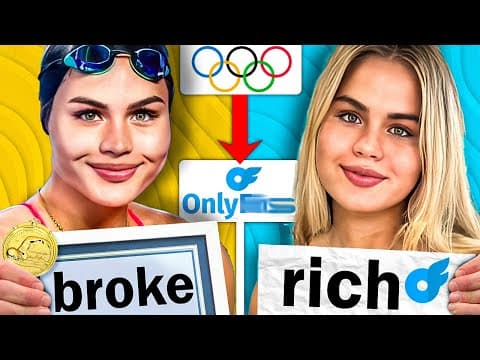
This blog post explores the financial exploitation of Olympians, revealing how many athletes resort to adult content and side jobs to fund their training. It discusses the broken economic model of the Olympics, the disparity in athlete compensation, and the societal implications of athletes turning to platforms like OnlyFans for financial stability.
When I was a kid, Olympians were living proof that hard work and discipline could earn you the world's respect. Today, however, the landscape has changed dramatically. Many Olympic-caliber athletes are resorting to softcore adult content to boost their income, with some even facing suspension for their edgy online behavior. This raises a critical question: why are these athletes, who have dedicated their lives to their sports, forced into such measures?
The financial reality of being an Olympic athlete in most countries is quite frankly embarrassing. Many athletes work regular part-time jobs in addition to training and competing at the highest level. For instance, one athlete shared, "If I can do that while working two jobs and door dashing, then I can imagine what I could do if I didn't have to do it." The struggle is real, with some athletes even facing times when they have no money in their bank accounts.
The Olympics hold a unique place in global culture, representing the pinnacle of human performance across various sports. Winning a medal is a testament to years of hard work and dedication. However, the financial compensation for these athletes is shockingly low. The International Olympic Committee (IOC), a non-profit organization based in Switzerland, generates billions through broadcast rights, sponsorships, and licensing deals but pays athletes nothing. No appearance fees, no prize money, and no share of the revenue.
In contrast, professional leagues like the NFL or NBA distribute nearly 50% of their revenue to players. If the IOC paid even just 10% of their earnings to athletes, each could receive around $67,000 for competing. Instead, athletes are left to fend for themselves, often relying on their home countries for any financial support.
While some countries offer substantial rewards for Olympic medals, the disparity is shocking. For example, gold medalists from Hong Kong receive $768,000, while American athletes earn only $38,000 for a gold medal. The costs of training to become an Olympic athlete can range from $25,000 to $40,000 per year, covering coaches, facilities, travel, and equipment. In the U.S., athletes often rely on minimal stipends from the U.S. Olympic and Paralympic Committee, which can be as low as $300 per month.
With such low financial support, many athletes are forced to take on side jobs. Some work as engineers, while others take on flexible hourly jobs to fund their Olympic dreams. The IOC even funded a docuseries titled "Day Jobs," highlighting the struggles of athletes who must work around the clock to support their training. However, this series raises ethical questions about why athletes need to work multiple jobs instead of being compensated fairly for their dedication.
In desperation, many athletes turn to crowdfunding platforms like GoFundMe. For instance, badminton player Jenny Xai raised nearly $22,000, while table tennis player Kanakh Ja garnered over $30,000. However, relying on the kindness of strangers can be exhausting and unpredictable. Some athletes have even taken to platforms like OnlyFans to secure a more stable income.
The pandemic has seen a surge in athletes turning to OnlyFans, a platform traditionally associated with adult content. Canadian track and field star Alicia Newman launched her account during this time, initially intending to share training content. However, she quickly realized that the demand skewed heavily towards adult material. In a matter of minutes, she gained 45,000 subscribers, potentially earning over $1 million.
This trend raises significant concerns about the implications of athletes commodifying their bodies. While some may view it as a form of empowerment, it also reflects a troubling reality where athletes feel pressured to exploit their image for financial gain.
The shift towards adult content has led to a re-evaluation of what it means to be an Olympian. Athletes like Jack Lowour, a decorated diver, have also joined OnlyFans, citing the lack of financial support in their sports. The public's reaction has been mixed, with some supporting their choices while others criticize the commodification of athleticism.
While platforms like OnlyFans provide a financial lifeline for some athletes, they also come with risks. The potential for obsessive fans, doxing, and other forms of harassment can create a hostile environment for athletes. Moreover, the normalization of such platforms raises ethical questions about the exploitation of athletes who feel they have no other options.
The current state of Olympic athlete compensation is a disgrace. The IOC's business model prioritizes profit over the well-being of the athletes it claims to support. If the only way for these elite athletes to make a livable wage is to sexualize themselves online, it reflects a significant societal failure.
As a society, we must advocate for better support and compensation for our Olympians. If we can fund various government projects, we should also ensure that those who represent our country on the world stage receive the financial backing they deserve. The time for change is now, and it is imperative that we address the exploitation of Olympians before it becomes the norm.