
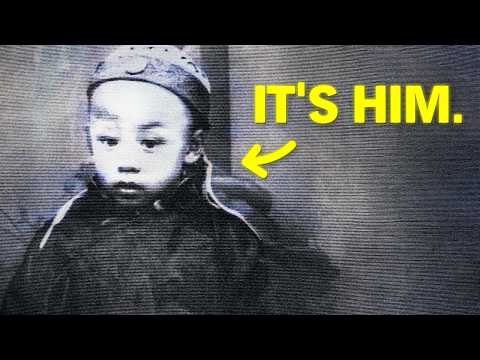
This blog post explores the tumultuous life of Pui, the last emperor of China, who was thrust into power at the age of two, navigated the complexities of imperial life, and ultimately faced the consequences of his reign during a time of national upheaval.
In the year 1908, a two-year-old boy named Pui was chosen to rule China, becoming the last emperor of the Qing dynasty. This blog post delves into the remarkable and tragic life of Pui, exploring his rise to power, the challenges he faced, and the eventual downfall of the dynasty he was meant to lead.
It was just after nightfall in Beijing when a mysterious group left the Forbidden City on a mission to retrieve Prince Chun's son, Pui. The young boy, frightened by the strangers, hid in a cupboard, resisting their attempts to take him away. Eventually, he was calmed and brought back to the Forbidden City, where he was to be crowned the next emperor of China.
Pui's coronation was a bewildering experience for the toddler. Surrounded by officials performing ritual bows and pledging allegiance, he was overwhelmed and frightened. His wet nurse, who provided him comfort, was not allowed to attend the ceremony, leaving him feeling isolated. As he fidgeted and cried, his father, Prince Chun, attempted to soothe him, but the palace staff overheard his words as a grim prophecy for the future of the Qing dynasty.
The Qing dynasty, which began in 1644, had reached its peak in 1790 but was now in decline. Internal power struggles had weakened the emperor's position, and Pui was selected as a puppet emperor due to his young age. The real power lay with Empress Dowager Cixi, who had ruled for nearly 50 years and was desperate to maintain control as the dynasty faced mounting pressures from foreign powers and internal strife.
At the age of five, Pui's daily life was filled with rituals and the presence of eunuchs, who served him and ensured he was treated as a living god. He was dressed in new clothes daily, and his every need was catered to by the eunuchs, who were forbidden from looking him in the eye. Despite the opulence, Pui's life was isolated, and he was unaware of the turmoil outside the Forbidden City.
By October 1911, a rebellion against the Qing dynasty was brewing. Soldiers mutinied, and the Imperial army sided with the rebels, leading to the abdication of Pui in February 1912. The Qing dynasty came to an end, and China transitioned into a republic. Pui, however, was allowed to remain in the Forbidden City, living a life of luxury but stripped of real power.
Eight years later, British gentleman Reginald Johnston entered Pui's life as his English teacher. Under Johnston's influence, Pui began to embrace Western culture, cutting his hair and dressing like an Englishman. He became fascinated with modern inventions, including the telephone, and dreamed of studying at Oxford. However, his aspirations were thwarted by the constraints of his position.
At the age of 16, Pui was pressured to choose a bride from photographs presented to him by the Dowager consorts. He selected a girl named Wang Rang, but on his wedding night, he panicked and fled, never consummating the marriage. This incident foreshadowed the chaos that would follow in his life.
In November 1924, Pui was forced to leave the Forbidden City as warlords took control of Beijing. Although he was now a private citizen, his life was far from ordinary. He became embroiled in the political turmoil of China, aligning himself with the Japanese during their occupation of Manchuria and serving as a puppet emperor.
After World War II, Pui was captured and tried as a war criminal for his role in legitimizing Japanese atrocities. He was imprisoned in a re-education center, where he underwent a process of ideological remolding. After nine years, he emerged a changed man, professing loyalty to communism.
After his release, Pui lived a quiet life, working as a gardener and even serving as a tour guide in the Forbidden City. He had gone from being a living god to a humble citizen, reflecting on the many roles he had played throughout his life.
Pui's life is a poignant tale of power, loss, and redemption. From a child emperor to a prisoner, his journey encapsulates the dramatic changes in China during the 20th century. He died on October 17, 1967, leaving behind a legacy that serves as a reminder of the complexities of history and the human experience.



















