
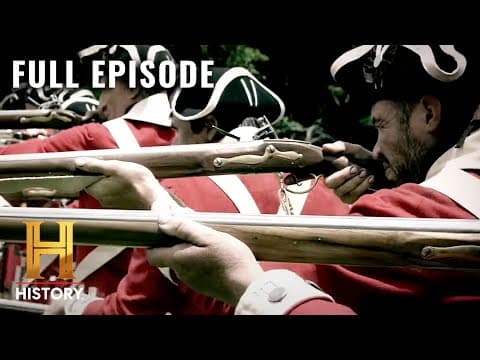
The early settlers of America, driven by the pursuit of freedom and opportunity, faced immense challenges and conflicts with Native Americans and the British Empire. Key figures like John Rolfe and the Pilgrims established settlements that laid the groundwork for a burgeoning nation, ultimately leading to the American Revolution as colonists united against British oppression.
Adventurers sailed across the Atlantic Ocean in search of a new life, leading to the birth of a nation that would become the envy of the world. However, in their quest for freedom, friends turned into foes, and these new Americans waged war against the world's greatest military power. This narrative explores the struggles and triumphs of early settlers, their dreams, and the eventual fight for independence.
In May 1610, 120 years after Columbus's voyage, shiploads of businessmen and true believers embarked on a perilous journey across the Atlantic. One ship, the Deliverance, carried John Rolfe, a 24-year-old English farmer, whose ambitions would change America forever. The journey took over two months, and the settlers faced a grim reality: seven out of ten would not survive their first year.
North America was seen as the ultimate land of opportunity, rich in untapped wealth. Vast forests, roaming bison, and rumors of gold fueled the settlers' dreams. However, upon arriving at Jamestown, Rolfe found a settlement in dire straits, known as the "starving time," where only 60 of the original 500 settlers remained.
The settlers arrived unprepared, bringing chemical tests for gold instead of livestock and tools for farming. They built Jamestown in the midst of the Powhatan nation, leading to inevitable conflict. Rolfe, however, had a different vision. He recognized the potential of tobacco, a crop that England was beginning to crave.
Rolfe secretly acquired South American tobacco seeds, which were illegal to sell to foreigners. In the fertile soil of the Chesapeake Bay, his tobacco thrived, yielding a harvest worth over a million dollars in today's currency. This marked the beginning of Jamestown's transformation from a struggling settlement to America's first boomtown.
In 1620, another group of settlers, the Pilgrims, arrived at Plymouth seeking religious freedom. They faced harsh conditions, including a mini Ice Age that made survival difficult. More than half of the original settlers perished during the first winter, but they persevered, forming alliances with local tribes like the Pokanoket.
The Pilgrims and the Pokanoket forged a partnership, leading to a successful harvest and the celebration of what would become known as Thanksgiving. This cooperation was crucial for the survival of the Pilgrims, who learned to cultivate crops in the challenging environment.
As more settlers arrived, including enslaved Africans, the population of Virginia grew significantly. Tobacco became the backbone of the economy, and by the mid-1700s, the colonies were thriving. The settlers, now more prosperous and healthier than their European counterparts, began to see themselves as distinct from their British roots.
By 1768, the British government sought to exert more control over the colonies, leading to increased tensions. The seizure of John Hancock's ship, the Liberty, sparked riots in Boston, marking the beginning of a radical rebellion against British taxation without representation.
On March 5, 1770, tensions boiled over when British soldiers fired on an unarmed crowd, killing five colonists. This event, known as the Boston Massacre, galvanized public opinion against British rule and fueled revolutionary sentiments across the colonies.
As anger grew, the British imposed further restrictions, including the infamous Tea Act, which led to the Boston Tea Party in 1773. Colonists dumped over a million dollars' worth of tea into Boston Harbor, a bold act of defiance that prompted the British to shut down the port.
In September 1774, delegates from the colonies convened at the First Continental Congress in Philadelphia, marking a pivotal moment in the push for American independence. They resolved that an attack on one colony would be seen as an attack on all, fostering a sense of unity among the diverse colonies.
In April 1775, the British marched to Lexington and Concord to seize colonial weapons. The confrontation that ensued marked the beginning of the American Revolution. The shot fired at Lexington, known as the "shot heard 'round the world," signified the colonists' determination to fight for their freedom.
The early settlers' journey was fraught with challenges, but their resilience and desire for freedom laid the foundation for a new nation. As they united against British oppression, they transformed their dreams into reality, setting the stage for the birth of the United States of America. The struggle for independence was not just a fight against tyranny but a quest for the fundamental rights of life, liberty, and the pursuit of happiness.



















