
This blog post explores the historical events surrounding the encounters between Spanish conquistadors, led by Hernán Cortés, and the Nahua peoples of Mexico from 1519 to 1521. It examines the political, social, and cultural dynamics of the Aztec Empire, the motivations and backgrounds of the conquistadors, and the complex interactions that led to the fall of Tenochtitlan and the establishment of Spanish colonial rule.
In this lecture, we delve into a pivotal moment in world history: the encounters between Spanish conquistadors and the Nahua peoples of Mexico from 1519 to 1521. This period marked the collision of two highly organized societies—the Spanish Empire and the Aztec Empire—resulting in significant historical transformations in the Americas.
The arrival of Hernán Cortés and his men in Mexico initiated a series of events that led to the fall of the Aztec capital, Tenochtitlan, and the establishment of Spanish colonial rule. Understanding the background of both the Aztec Empire and the Spanish Empire is crucial to grasping how a relatively small group of Spaniards managed to conquer a major power in just two years.
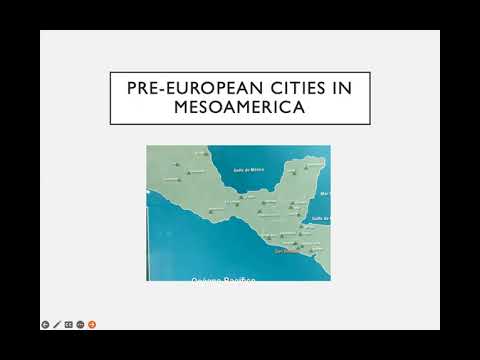
At the time of the Spanish arrival, Mesoamerica was densely populated by various indigenous cultures, primarily the Nahua and Maya. The Aztec Empire, centered in Tenochtitlan, was a sophisticated society with a complex political structure, extensive trade networks, and advanced agricultural practices, including the use of chinampas (floating gardens).
Tenochtitlan was a remarkable city, built on an island in Lake Texcoco, with an estimated population of 250,000. It featured impressive urban planning, including pyramids, temples, and a well-organized educational system. The political leader of the Aztecs, known as the tlatoani, was Montezuma II at the time of the Spanish conquest.
The Spanish Empire was in a period of expansion following the Reconquista, which culminated in 1492 with the fall of Granada. This unification under Catholic monarchs Isabel and Ferdinand spurred exploration and conquest, leading to Columbus's voyages and subsequent expeditions to the Americas.
Conquistadors like Cortés were not official military personnel but rather private individuals seeking wealth and glory. They operated under the authority of the Spanish crown, often forming alliances with local indigenous groups to further their conquests.
Cortés arrived in Mexico with approximately 500 men, including soldiers, sailors, and enslaved Africans. His expedition was marked by strategic alliances with indigenous groups, particularly the Tlaxcalans, who were enemies of the Aztecs. This alliance proved crucial in the Spanish campaign against Tenochtitlan.
Cortés's initial landing in the Yucatán Peninsula led to encounters with various Maya groups, where he began to establish his reputation and gather intelligence. The capture of the Nahua woman Malintzin (or La Malinche), who became his translator and advisor, significantly aided his efforts in navigating the complex political landscape of Mesoamerica.
The arrival of the Spanish also brought new diseases to which the indigenous populations had no immunity. Epidemics of smallpox and other illnesses decimated the Aztec population, further weakening their ability to resist the Spanish conquest.
Historians have long debated the reasons behind the rapid Spanish conquest of the Aztec Empire. Key factors include:
The encounters between the Spanish conquistadors and the Nahua peoples of Mexico were complex and multifaceted, involving a mix of military strategy, political alliances, and cultural exchanges. The fall of Tenochtitlan not only marked the end of the Aztec Empire but also set the stage for the establishment of Spanish colonial rule in the Americas, reshaping the region's history for centuries to come. Understanding these events is crucial for comprehending the broader implications of European colonization in the New World.



















