
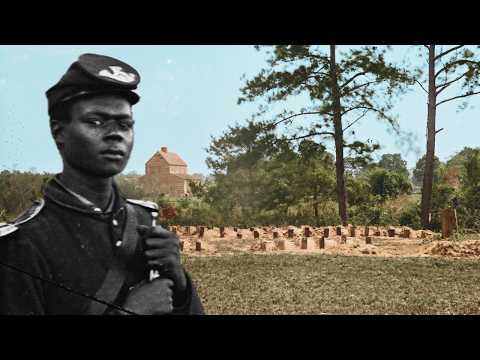
Memorial Day's origins are often misattributed, but a significant chapter in its history lies in Charleston, South Carolina, where freed African Americans honored fallen Union soldiers in 1865, marking a profound act of remembrance and resilience.
Memorial Day is a time for honoring those who have fallen in service to the nation, but its origins are often shrouded in mystery and misattribution. While many towns across the United States vie for the title of the birthplace of Memorial Day, a compelling and lesser-known story emerges from Charleston, South Carolina. This narrative, largely overlooked in history books, reveals a profound act of remembrance initiated by freed African Americans in the aftermath of the Civil War.
The story of the first Memorial Day is not rooted in official decrees but rather in the heartfelt actions of a community deeply affected by the war. Historians have long debated the origins of Memorial Day, with Columbus, Mississippi, often cited for its continuous commemoration beginning in April 1866. However, the events in Charleston in 1865 present a powerful alternative narrative.
In 1996, historian David Blight uncovered a handwritten account of the first Decoration Day while researching at Harvard's Houghton Library. This account, along with a clipping from the New York Tribune, highlighted the significance of the events that unfolded in Charleston shortly after the Civil War ended.
In the spring of 1865, Charleston lay in ruins, a somber reminder of the war's devastation. The city had been a site of great suffering, particularly at the makeshift prison located at Washington Race Course, where over 260 Union soldiers died from disease and exposure. Their bodies were hastily buried in a mass grave, a tragic end for those who had fought for freedom.
As Confederate forces evacuated, a remarkable event took place. Newly freed African Americans, who had endured the horrors of enslavement, stepped forward to honor the fallen soldiers. This act of remembrance was not a celebration of their own liberation but a solemn tribute to those who had fought and died for the cause of freedom.
In April 1865, approximately 10,000 people, predominantly black freemen, gathered at the racetrack to commemorate the fallen soldiers. This gathering was marked by a parade featuring 3,000 black schoolchildren who marched while holding roses and singing "John Brown's Body." The atmosphere was one of peaceful celebration rather than mourning, as families picnicked and shared stories under the warm spring sun.
Black pastors delivered moving sermons, and spiritual hymns filled the air, creating a tapestry of hope and renewal. The graves were adorned with flowers, transforming the site into a dignified resting place, a powerful display of unity and respect for those who had sacrificed their lives.
For many years, this poignant story remained hidden, overshadowed by the more formal observances that followed. In 1868, Union General John A. Logan called for a national day of remembrance, which became known as Memorial Day. As the years passed, the origins of this day in Charleston faded from collective memory, replaced by a more sanitized version of history.
The original site of the racetrack was eventually developed into urban spaces, and the graves were relocated to Beaufort National Cemetery, further obscuring the true origins of Memorial Day.
In the 20th century, historian David Blight presented this forgotten history at the Smithsonian National Museum of American History. After his talk, an older black woman approached him, sharing that her grandfather had told her stories of a parade led by freemen on an old racetrack. Her curiosity about whether these tales were mere family legends or rooted in truth was met with Blight's confirmation, reigniting interest in this significant chapter of American history.
As we celebrate Memorial Day each year, it serves as a reminder not only of those who died in past wars but also of the resilience and strength of those who, despite oppression, have contributed profoundly to our shared history. The story of the first Memorial Day in Charleston is a testament to the enduring spirit of remembrance and the importance of honoring all who have fought for freedom. This narrative, once lost to time, now stands as a powerful reminder of the human capacity for grace and dignity in the face of adversity.



















